

Urgent Care Front-End Checks: Eligibility and Charge Capture Before Volume Compounds
A practical guide for urgent care operations leads to standardize eligibility verification, registration data, and charge capture at the point of visit, with process metrics to confirm improvement.

An urgent care clinic can do everything right clinically and still lose money on the front end. The failure usually isn't dramatic: a walk-in whose coverage lapsed last month, a self-pay patient who was actually insured under a plan the front desk didn't check, a procedure added at the bedside that never made it onto the encounter form. At ten visits a day those are annoyances. At sixty or eighty, they become a pattern of denials and rework that eats staff time and delays cash. This guide is for the operations lead at an independent urgent care clinic who wants to standardize the pre-visit and point-of-visit sequence so volume stops compounding small errors.
Where urgent care eligibility and charge capture errors start
Urgent care is structurally different from a scheduled primary care practice. Most visits are unscheduled or same-day, patients arrive in clusters, and registration often happens at a kiosk or a clipboard while the patient is already being roomed. That compresses the window in which eligibility can be checked and charges can be captured. The three steps that matter most — eligibility, registration data, and charge capture — are usually treated as separate tasks owned by different people. They work better as one sequence with clear handoffs.
Eligibility is a point-in-time check, not a one-time event
Coverage changes constantly: plan terms, effective dates, and network status can all shift between visits. A patient who was covered at their last visit may not be covered today. A real-time eligibility check at or before registration can confirm active coverage and surface the details that affect the visit — copay, deductible status, and whether the clinic is in network — though real-time responses may be stale or incomplete, so secondary verification may be needed. The practical rule is to verify every visit, not just new patients, and to document what the check returned and when. Where a payer's specific rules matter (for example, how a plan treats urgent care versus emergency care), confirm them against that payer's current official guidance rather than relying on memory or a prior year's policy.
Registration data drives the claim before a clinician sees the patient
Most of the information that determines whether a claim pays is captured at registration: the correct member ID, the subscriber versus patient relationship, the payer and plan, and the patient's financial responsibility. A transposed digit or a stale address can trigger a denial that looks like a clinical problem but is really a data-entry problem. The fix is not more typing — it is a short, consistent set of fields that staff confirm out loud or on screen before the patient moves to the exam room.
Charge capture is a workflow, not a form
In urgent care, services are added during the visit: a rapid test, an injection, a splint, a procedure. If the charge isn't captured at the point of care, it either disappears or gets reconstructed later from memory, which is where undercoding and missed charges creep in. Charge capture should be tied to the clinical workflow so that what was done is what gets billed. Coding decisions themselves belong to qualified coders and must follow current official coding guidance; the operations job is to make sure nothing done at the bedside is lost before it reaches coding.
A pre-visit and point-of-visit checklist
The goal is a short, repeatable sequence staff can run under time pressure. Adapt the specifics to your EHR and payer mix, but keep the order.
Step 1: Before the visit (or at check-in for walk-ins)
- Run a real-time eligibility check for every visit and record the response, including the date and time.
- Confirm patient identity, member ID, and subscriber relationship against the card or portal record.
- Capture or update the patient's financial responsibility — copay, deductible, and any prior balance — and set expectations before the visit.
- Flag patients with known coverage gaps or self-pay status for a documented conversation at the desk.
Step 2: At the point of visit
Clinical documentation
- Confirm the reason for the visit and any services likely to be added, so the clinical team knows what to document.
- Make sure every service performed — tests, injections, supplies, procedures — is recorded in the clinical documentation as it happens.
Charge reconciliation
- Reconcile the encounter before the patient leaves: does the documentation match what was actually done?
- Route the completed encounter to coding and billing with the registration data attached, so the claim isn't rebuilt from scratch downstream.
If your clinic runs both urgent care and an emergency department, the front-end sequence needs to reflect the different registration and coverage rules that apply to each setting; that distinction is worth documenting explicitly rather than assuming one workflow covers both.
Front-end metrics: what to measure to confirm the fix is working
Don't measure this by revenue promises. Measure the process. The signals that tell you the front end is tightening are:
- Denial reasons, sorted by category. Track eligibility-related and registration-related denials separately from clinical or coding denials. If the front-end categories shrink, the sequence is working.
- Rework volume. Count how often staff have to re-contact a patient or payer to fix a claim that should have been clean. Falling rework is a leading indicator.
- Eligibility check coverage. What percentage of visits had a documented eligibility check before or at registration? Aim for near-complete coverage and investigate the exceptions.
- Charge reconciliation exceptions. How many encounters reach billing with a mismatch between documentation and charges? Fewer exceptions means fewer missed charges.
- Days from visit to clean claim. A shorter, steadier interval suggests the front end is feeding billing complete information.
Review these monthly with the front desk and billing staff together. The point is to find the specific step where errors enter, not to assign blame. A denial that traces back to a missing eligibility check is a process problem, and process problems are fixable.
What to do next
If you want a second set of eyes on your front-end sequence, Knight Medical Billing can walk through your eligibility and benefits verification, registration, and claims management workflow with you and help you review where handoffs may break down. There's no obligation; the conversation is about your process. You can schedule a consultation or contact us to start. If you'd rather read more first, our eligibility and benefits verification page describes how that step works inside the systems you already use.
Further reading and verification
This article draws on general revenue cycle practice. The following pages are provided as further reading, not as sources for the process guidance above: Medical Billing Company | Medical Healthcare Solutions and Top 10 Medical Billing Companies in Massachusetts. For the front-end steps described here, see our eligibility and benefits verification and claims management pages. No payer-specific rules, statistics, or outcome figures are asserted here. Any payer policy, coding rule, or regulatory requirement referenced in your own workflow should be verified against current official payer and regulatory guidance before you rely on it.
Where this work connects
Related articles.
 Revenue Cycle Management
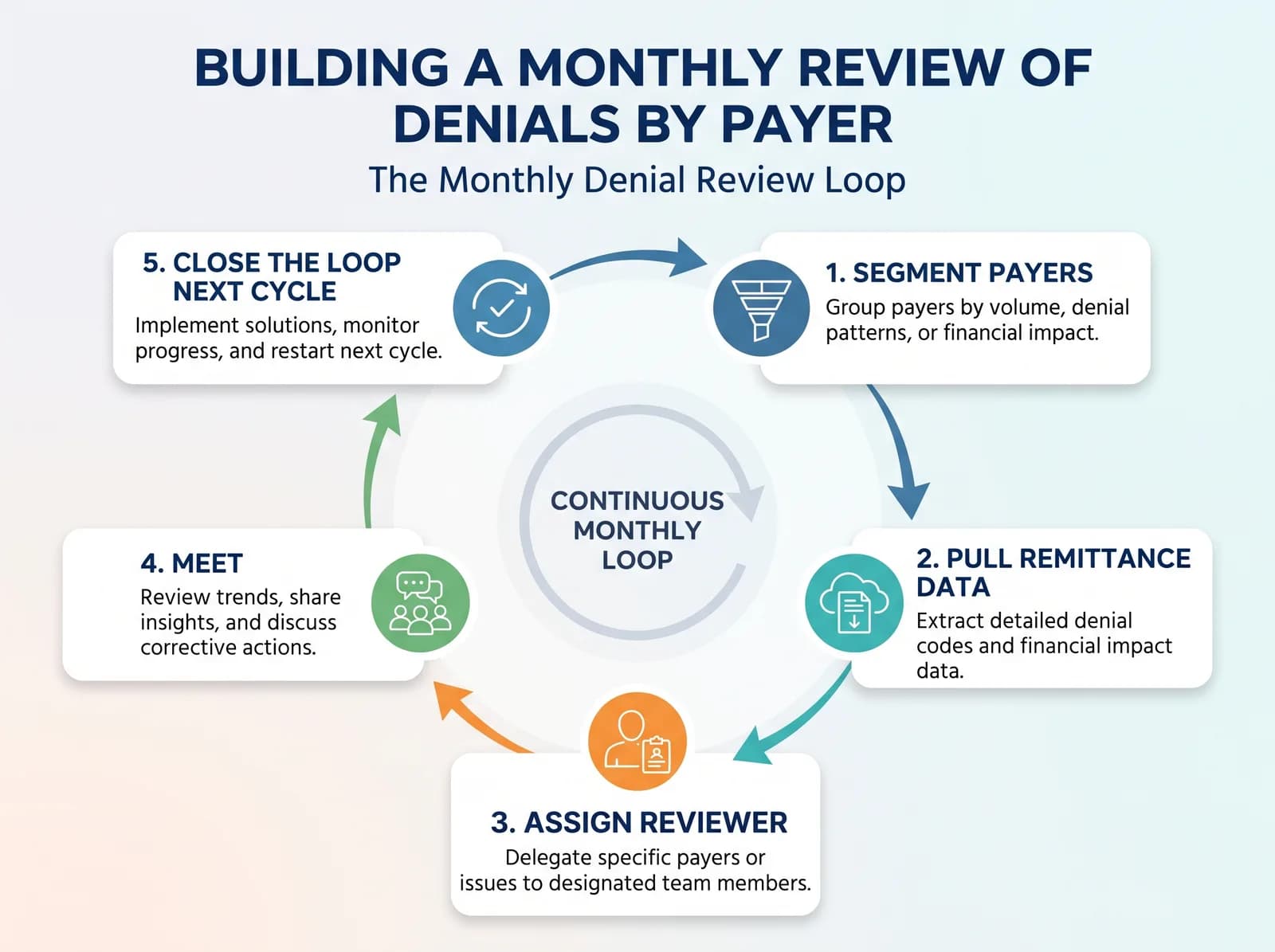
Payer-Specific Denial Patterns: Build a Review Routine
A practical monthly routine for independent practices to segment denials by payer, verify findings against official payer guidance, and route fixes back to the front end.
Read article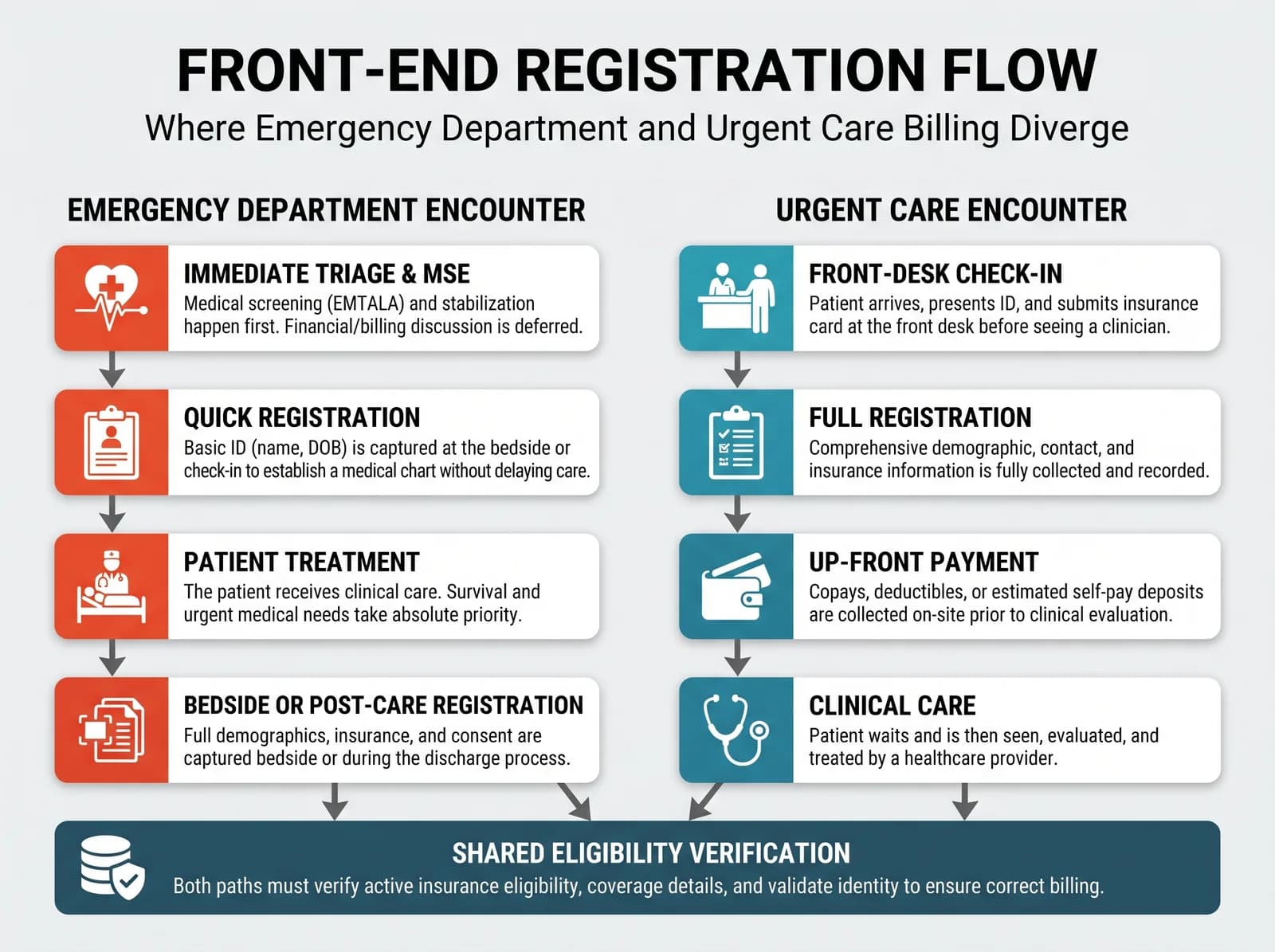 Revenue Cycle Management
Emergency Department and Urgent Care Billing: What Differs When One Organization Runs Both
A practical guide for revenue cycle leads running an emergency department and urgent care sites together: where the workflows diverge, what risks they share, and the questions to answer before consolidating billing.
Read article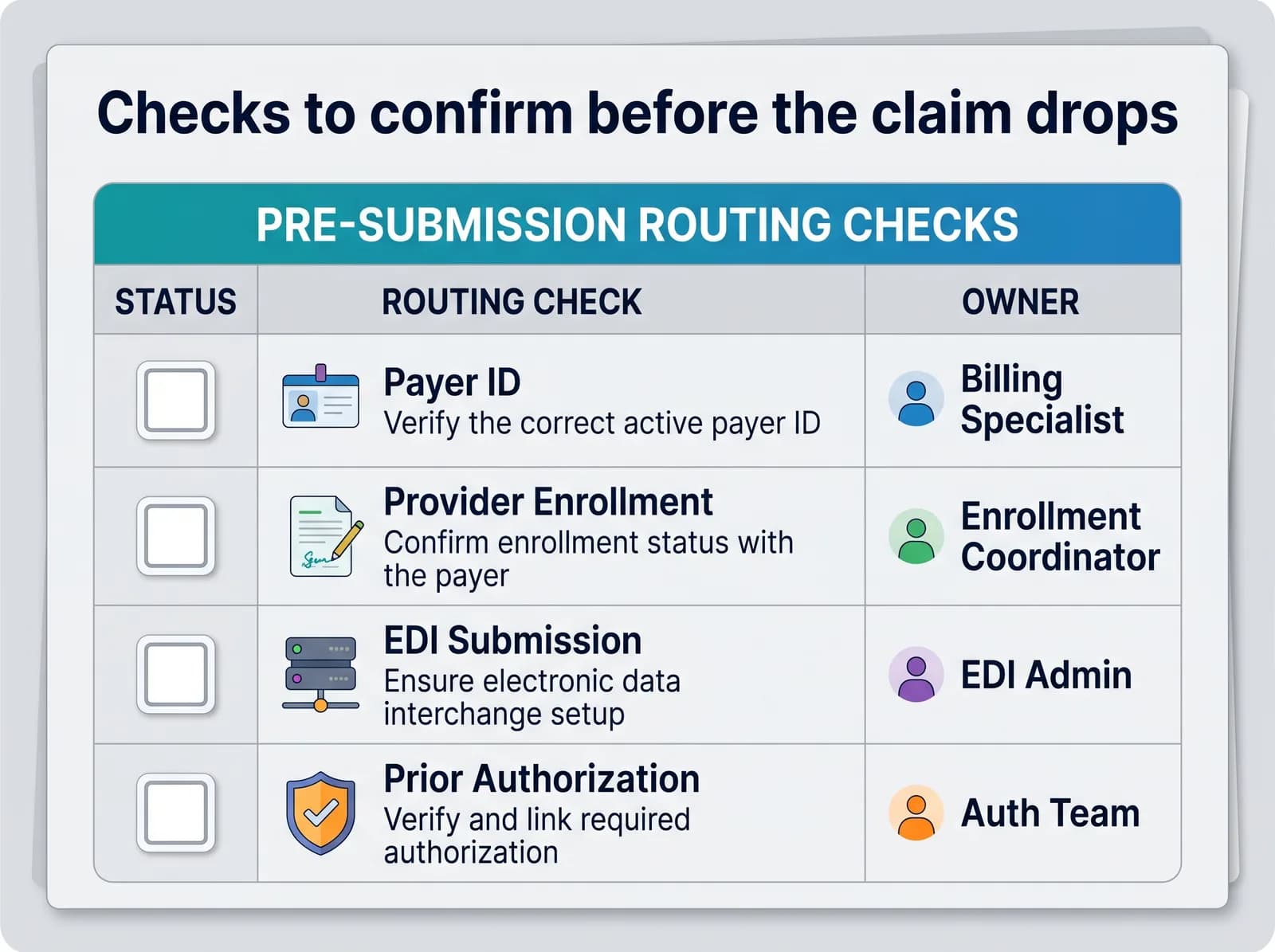 Revenue Cycle Management
Payer-Specific Claim Routing: What Independent Practices Should Verify
A practical pre-submission routine for independent practices: verify payer IDs, enrollment, EDI setup and payer-specific claim requirements before a claim leaves your system.
Read article