

Mental Health Claim Denials: A Weekly Review Routine for Therapy Practices
Most independent therapy practices don't have a denial problem so much as a denial review problem. Here's a short, repeatable weekly routine to sort, correct, and escalate mental health billing denials.

Most independent therapy practices do not have a denial problem so much as a denial review problem. Claims come back, someone opens the remittance, fixes the obvious ones, and the rest sit in a folder or an aging report until they are too old to work. The fix is not a better software module; it is a short, repeatable routine that sorts denials by cause, corrects the ones you can, and escalates the ones you cannot — every week, on the same day.
This guide is written for the owner or office manager of a small independent therapy or counseling practice, where the same person often handles scheduling, eligibility, and billing follow-up. It focuses on the review routine itself, not on authorization tracking, which is a separate discipline.
Denial reasons therapy practices see most often
Do not treat any list of denial reasons as a rulebook. Payer policies, code sets, and filing deadlines change, and they differ by contract and by state. What follows are categories to verify against the remittance advice and the payer's current published guidance — not assertions about what any payer requires.
Eligibility and coverage
The patient was not covered on the date of service, the plan terminated, or the service is excluded from the benefit. These denials are usually the cheapest to prevent and the costliest to discover late. Check the remittance for the exact reason code before assuming the cause.
Authorization and referral
Missing, expired, or mismatched authorization — wrong units, wrong dates, wrong rendering provider. Therapy practices often have the authorization but not the documentation trail that proves it was used correctly. Verify the payer's current requirements directly; do not rely on a prior year's process.
Provider and credentialing issues
Claims denied because the rendering provider is not enrolled, is out of network, or is linked to the wrong group or Tax ID. These are administrative, not clinical, and they tend to repeat until the underlying record is corrected.
Coding and documentation
Diagnosis and procedure mismatch, missing modifiers, time-based service documentation that does not support the billed unit, or a place-of-service conflict. Coding questions should go to a qualified coder or the payer — not to whoever is free that afternoon.
Timely filing and duplicate claims
Claims submitted after the payer's filing limit, or resubmitted without the correct frequency code and appearing as duplicates. Filing limits may vary by payer and contract; confirm them in writing against your contract and the payer's current published guidance rather than from memory.
A weekly denial review routine
Pick one day and one hour. The routine below is designed to fit a practice with one or two people doing billing, not a department. Time-box each step so the hour does not disappear into one claim: sort first, then work the correctable pile, then log the results and stop. If you miss a week, do not double up; run the current week's denials and note the gap in the log so the pattern stays visible.
Step 1: Pull and sort
Export the week's denials and sort them into the categories above. Do not open individual claims yet. The goal of the first pass is to see the shape of the week: if most denials are eligibility-related, the problem is upstream, not in the denial work.
Step 2: Separate "correctable" from "needs information"
Correctable denials — such as a missing modifier, a wrong frequency code, or a claim that needs correcting — can be worked immediately. Denials that need information from the clinician, the patient, or the payer go into a second pile with an owner and a date. Nothing should sit in a pile without a name attached.
Step 3: Correct and resubmit
Resubmit only after confirming the payer's current correction process, because payers may differ on whether corrections require a corrected claim, a reopening, or an appeal; verify the specific process in your contract and the payer's current provider manual. Record what you submitted and when. A resubmission without a record is a future denial you will not be able to explain.
Step 4: Log the cause, not just the outcome
Keep a simple running log: date, payer, category, dollar amount, action taken, and status. After four to six weeks, the log tells you where to spend prevention effort. That is more useful than any single month's denial rate.
Step 5: Feed the front end
Every recurring denial category should produce one change at the front of the process — such as a new eligibility check, a scheduling flag, or a documentation prompt. If the log never changes how claims go out, the routine is only cleanup. Our denial management services and eligibility and benefits verification services pages describe how those pieces fit together when a practice wants them handled outside the office.
When to escalate to the payer or a billing partner
Not every denial should be worked in-house. Escalate when:
- The denial cites a policy you cannot find in the payer's current provider manual.
- The same claim has been denied twice for different reasons.
- The dollar amount or volume is large enough that a wrong resubmission costs more than a phone call.
- The denial involves credentialing, contracting, or a network status question.
- The appeal window is close and the documentation is incomplete.
Before you call the payer, gather the claim number, date of service, remittance advice, authorization number if any, and the specific reason code. Ask for the reference number and the name of the representative, and confirm any instruction in writing where the payer allows it. Do not accept a verbal assurance as a resolution.
If denials are consuming more time than the practice can absorb, a billing partner can take over the review and resubmission while the practice retains responsibility for clinical documentation and coding decisions. Our mental health billing for therapy practices page and accounts receivable management page outline what that handoff typically covers. For practices weighing the trade-off, in-house vs. outsourced medical billing is a neutral starting point.
What to do next
Start with one week of denials and the five-step routine described above. If the log shows the same category repeating, that is the conversation to have — with your EHR vendor, your payer representative, or a billing partner. There is no obligation to change anything after a first conversation. You can schedule a denial review or contact us with questions about your current billing process. This article is provided for general information and does not constitute billing, coding, or legal advice; it also describes services we offer.
Sources and verification
This article is a process guide, not a statement of payer policy, coding rules, or filing deadlines. Those must be verified against current official payer and regulatory guidance, and against your own contracts. The following sources were supplied by the editor and are listed for reference only; no statistics or claims in this article are drawn from them:
- Medical Billing Company | Medical Healthcare Solutions: https://medicalhealthcaresolutions.com/
- 10 Best Medical Billing Services Reviewed for 2026: https://themedicalpractice.com/services/best-medical-billing-services/
No competitor denial data or search data was supplied for this article, so the categories above are framed as items to verify rather than findings.
Where this work connects
Related articles.
 Mental Health Billing
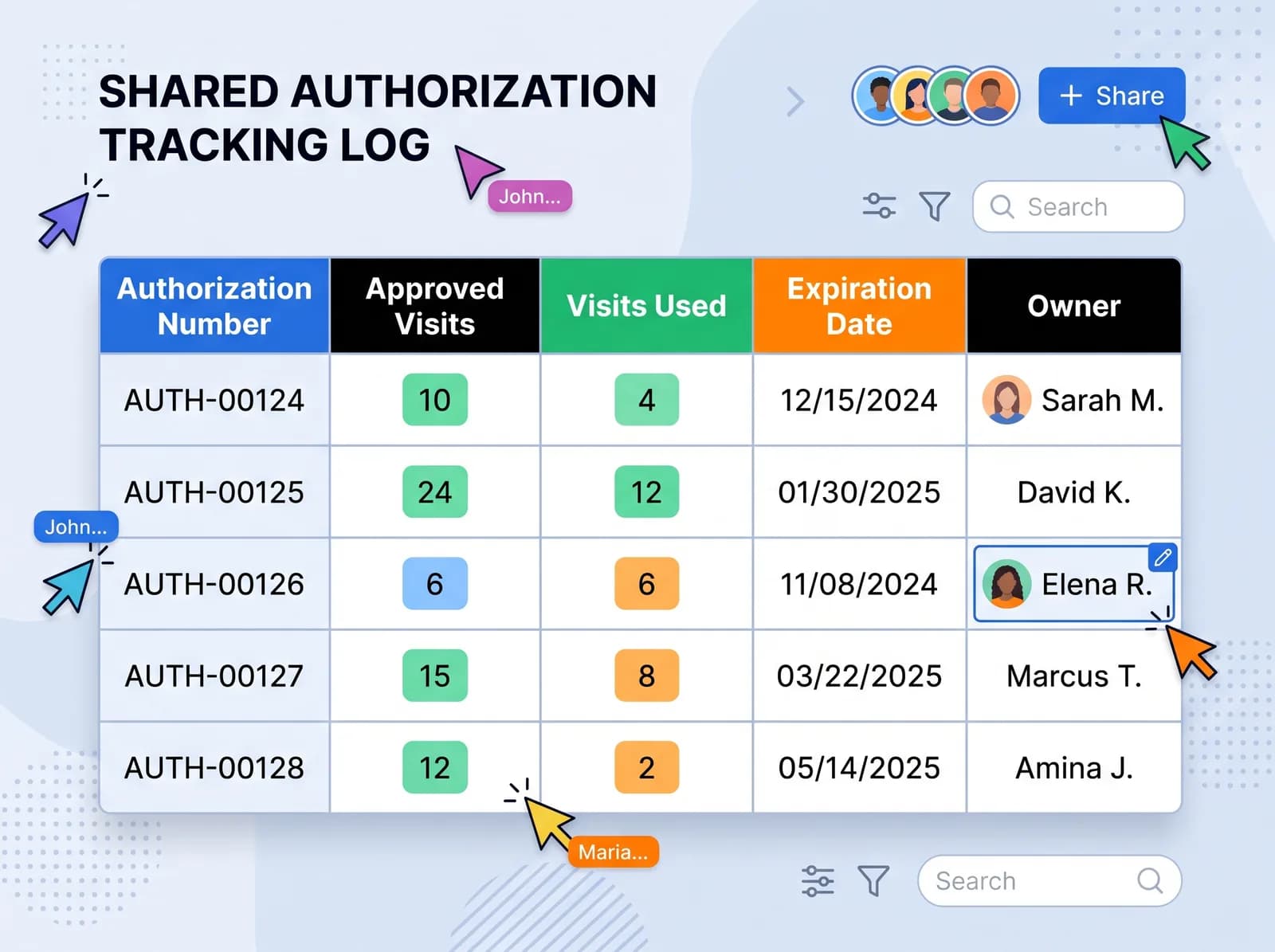
 Authorization Tracking: A Verification Checklist
A practical pre-claim checklist for therapy practices to verify authorizations and time-based documentation before claims go out, plus denial patterns to review monthly.
Read article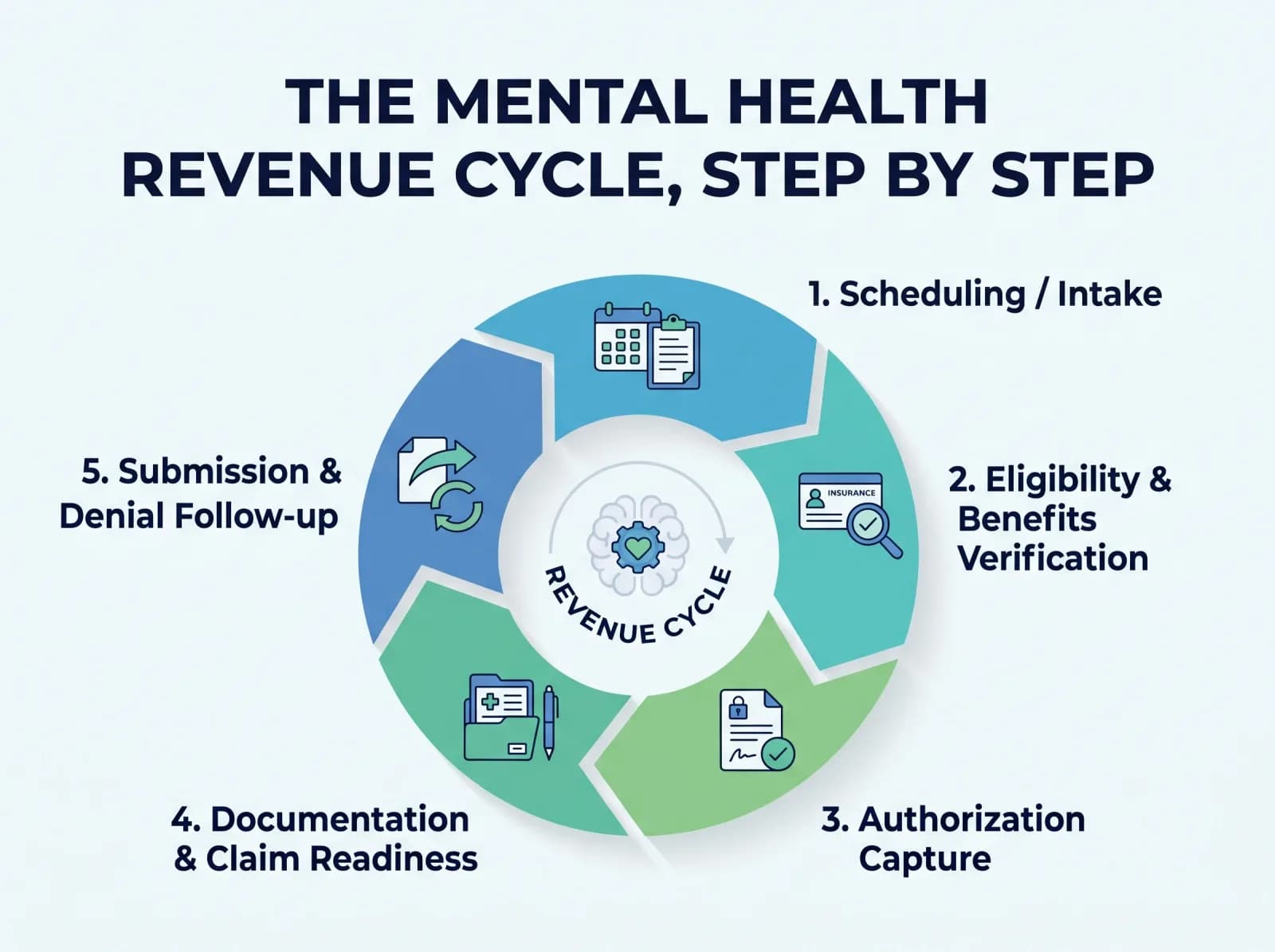 Mental Health Billing
Medical Billing for Mental Health Practices: A Process Guide
A practical walkthrough of the mental health revenue cycle — eligibility, authorization tracking, documentation timing, denial patterns, and how to evaluate an in-house or outsourced billing process.
Read article Mental Health Billing
 Services: What Independent Practices Should Expect
A practical guide for independent therapy, psychiatry and behavioral health groups on evaluating mental health billing services, covering authorization tracking, payer routing, denial patterns and the division of billing and clinical documentation responsibilities.
Read article