

Medical Billing for Mental Health Practices: A Process Guide
A practical walkthrough of the mental health revenue cycle — eligibility, authorization tracking, documentation timing, denial patterns, and how to evaluate an in-house or outsourced billing process.
Mental health billing looks simple from the outside: one clinician, one patient, one session, one claim. In practice, a therapy or psychiatry practice runs a high volume of small, recurring claims, each tied to a specific date of service, a specific authorization, and a specific benefit structure. That rhythm is what makes mental health billing different from procedure-based billing. Miss one eligibility check or one authorization renewal, and the loss can repeat across the sessions that follow.
This guide walks through how the revenue cycle actually works in an independent mental health practice, what to verify before and after each session, and how to decide whether your current billing process — in-house or outsourced — is holding up. It is a process guide, not coding or legal advice. Any payer-specific rule should be confirmed against that payer's current official guidance.
Why mental health billing needs its own process
Most billing workflows are built around episodes: a visit, a procedure, a discharge. Mental health care is built around continuity. A single patient may generate dozens of claims per year, often on a weekly or biweekly cadence, with authorizations that expire on their own schedule and benefits that reset mid-treatment.
That creates three recurring risks that generic workflows tend to underweight:
- Eligibility drift. A patient who was covered in January may have changed plans, exhausted a benefit, or moved to a different network by spring. A one-time check at intake may not be enough.
- Authorization gaps. Session-limited authorizations require tracking units used versus units approved, plus a renewal request before the limit is reached.
- Session-level tracking. Every date of service needs to reconcile to documentation, authorization, and payment. When that reconciliation is manual and delayed, denials surface weeks after the session.
None of this is exotic. It is simply a different operating rhythm, and it needs a process designed for it.
The mental health revenue cycle, step by step
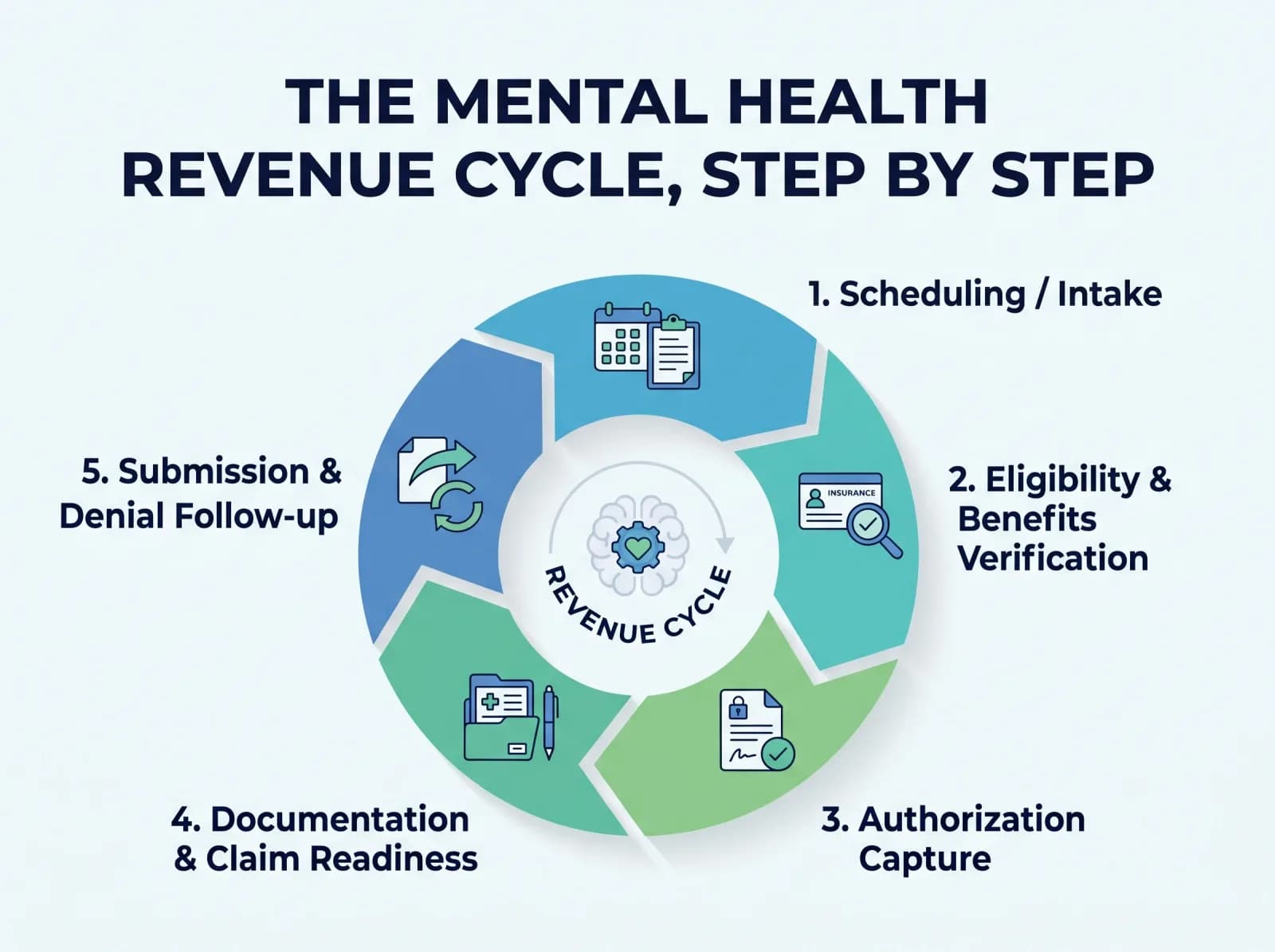
Think of the cycle as a loop that runs for every patient and every session, not a one-time onboarding sequence.
Scheduling and intake
Capture insurance information accurately at intake, including plan type, member ID, and any secondary coverage. Flag patients whose benefits need re-verification before recurring appointments.
Eligibility and benefits verification
Confirm active coverage, network status, copay and deductible status, and whether the specific service is covered. Document what you verified, when, and with whom.
Authorization capture
Record the authorization number, approved session count, effective dates, and any required re-authorization steps. Build a reminder to renew before the limit is reached.
Documentation and claim readiness
The clinician documents the session; billing staff confirm the claim reflects what was documented and authorized. Claims should go out promptly, within the payer's timely filing window, which varies by payer and contract and should be confirmed in writing.
Submission, posting, and denial follow-up
Submit clean claims, post payments and adjustments accurately, and work denials and unpaid claims on a defined schedule rather than when someone has time.
Before the session: eligibility, benefits, and authorization checks
For a new patient, verify coverage before the first appointment: active status, network participation, benefit coverage for the planned service, copay, deductible, and whether prior authorization is required. For established patients, re-verify on a schedule you define — at minimum when a plan changes, when a new authorization period begins, and periodically during long courses of treatment.
Authorization deserves its own tracking sheet or field in your practice management system. Record the approval number, the number of sessions approved, the date range, and the renewal contact. Set a reminder to request renewal before the approved sessions run out, not after.
Treat any checklist, including this one, as a starting point. Payer requirements, including timely filing deadlines and authorization rules, vary by payer and contract and change over time; confirm them in writing. Confirm specifics with the payer's provider services line or portal, and keep a record of the confirmation. Knight's eligibility and benefits verification and prior and retro authorization pages describe how these steps are handled operationally.
During and after the session: documentation and claim readiness
Most small-practice leakage in mental health comes from timing rather than complexity. Documentation completed days later delays claim submission. Claims held for batch review pile up. Corrections get made without a clear record of why.
A workable pattern: clinicians complete session documentation promptly, billing staff review claims against authorization and eligibility before submission, and claims go out on a fixed cadence. Where documentation and coding questions arise, route them to a qualified coder or the payer rather than resolving them informally. Coding rules and documentation requirements should be verified against current official guidance and payer policy.
Common denial patterns in mental health claims
Denials in mental health billing often cluster into recognizable categories. The list below is illustrative, not exhaustive, and patterns vary by payer. Investigate these categories with each payer rather than assuming a universal rule:
- Eligibility and coverage. Coverage terminated, plan changed, or service not covered under the plan.
- Authorization. Missing, expired, or exceeded authorization; wrong authorization number on the claim.
- Timely filing. Claims submitted after the payer's deadline.
- Documentation. Insufficient or mismatched documentation supporting the billed service.
- Coordination of benefits. Primary/secondary coverage order not established or updated.
Pull a denial report by category and by payer so patterns become visible, then investigate the largest categories with each payer. For a deeper look at root causes, see Knight's denials and revenue cycle topics and the mental health billing specialty page.
Patient responsibility, statements, and communication
Mental health patients often see the same clinician for months, which makes clear financial communication especially valuable. Explain copays, deductible responsibility, and any self-pay arrangement before treatment begins. Collect copays at the time of service where your process allows. Send statements on a predictable schedule and make it easy for patients to ask questions.
When patients understand what they owe and why, collection conversations become routine rather than adversarial. That can help reduce write-offs and protect the therapeutic relationship.
In-house vs outsourced billing for a mental health practice
In-house billing gives you direct control and proximity to the clinicians. It also requires coverage for vacations, turnover, and the specialized knowledge of authorization tracking and payer follow-up. Outsourcing can add capacity and continuity, but only if the partner understands session-based billing and recurring authorizations.
Neither model is inherently better. The right choice depends on volume, staff capacity, and how much oversight you can provide. For a neutral comparison, see in-house vs. outsourced medical billing.
How to evaluate a mental health billing partner
Ask specific questions and expect specific answers:
- How do you verify eligibility and track authorizations across recurring sessions?
- What is your claim submission cadence, and how do you handle timely filing risk?
- How are denials categorized, worked, and reported back to the practice?
- Do you support credentialing and payer enrollment, or is that separate?
- What reporting will I receive, and how often?
- What happens when a payer changes a policy mid-year?
Distinguish process commitments — "we verify eligibility before each new authorization period" — from outcome guarantees. No partner can guarantee a payer will pay a specific claim. For a broader buyer's checklist, see how to choose a medical billing company.
What to do next
Start with a short internal review: list your top denial categories, confirm your authorization tracking method, and check whether eligibility is re-verified on a defined schedule. If gaps appear, decide whether to fix them in-house or bring in support.
If you would like a second perspective, Knight Medical Billing offers a no-pressure conversation about your current process. You can contact us or schedule a consultation to review where your revenue cycle is leaking and what a practical next step looks like.
Where this work connects
Related articles.
 Mental Health Billing
 Services: What Independent Practices Should Expect
A practical guide for independent therapy, psychiatry and behavioral health groups on evaluating mental health billing services, covering authorization tracking, payer routing, denial patterns and the division of billing and clinical documentation responsibilities.
Read article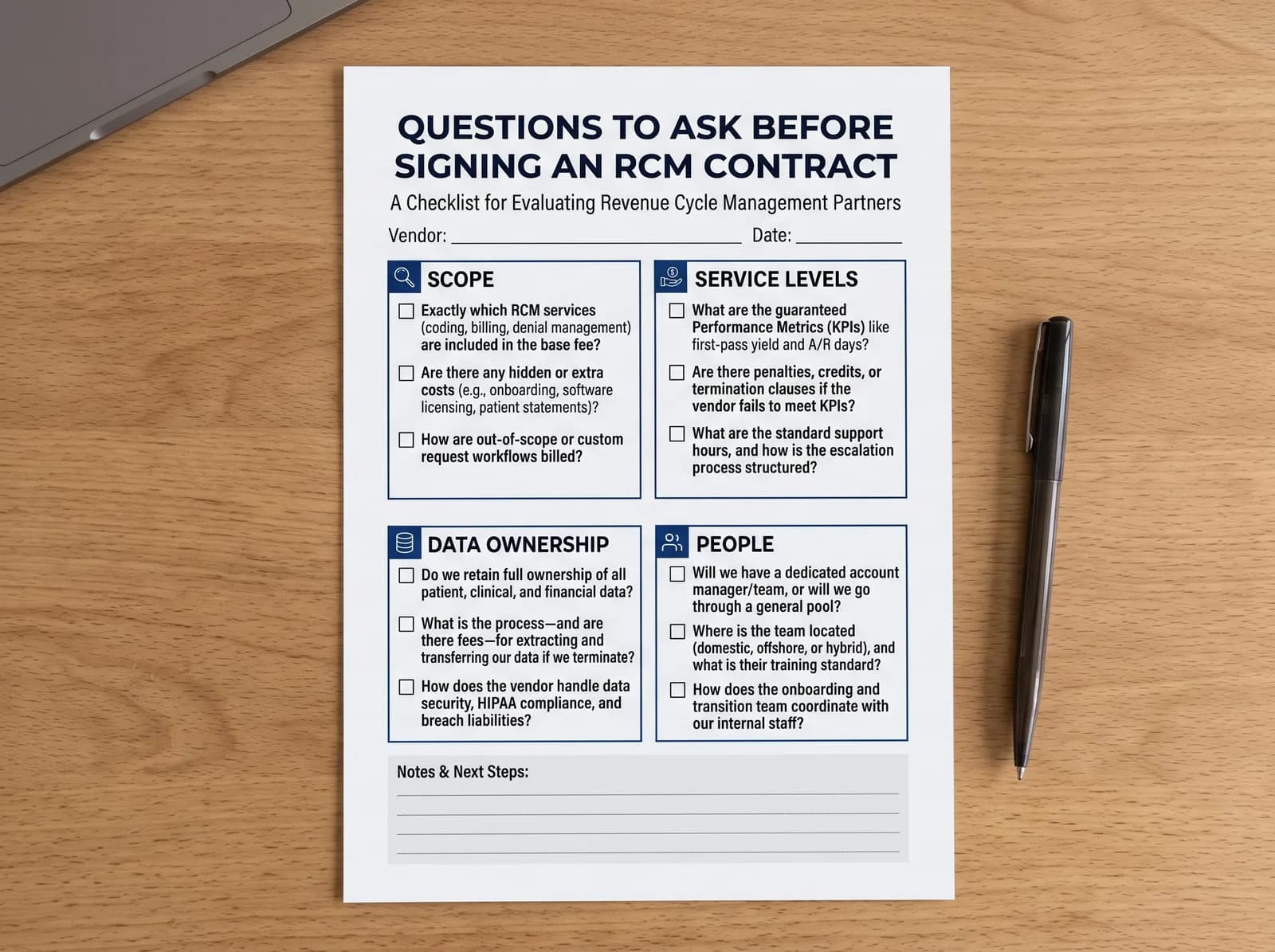 Medical Billing Vendor Selection
How to Compare Revenue Cycle Management Companies for Independent Practices
A neutral framework for comparing revenue cycle management companies side by side, from reporting and denial handling to contract questions and red flags.
Read article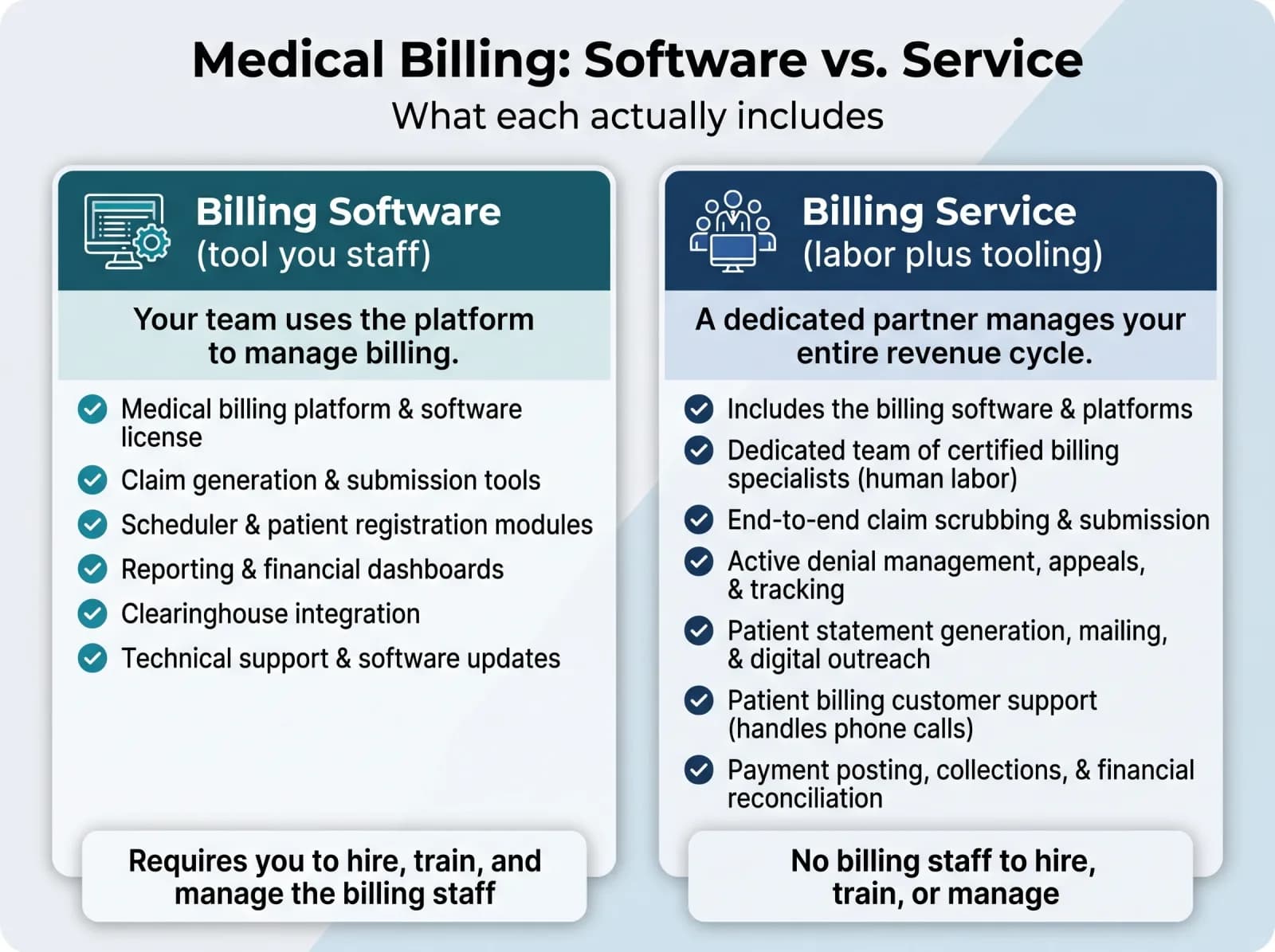 Medical Billing Vendor Selection
Medical Billing Software vs. Billing Service: Which Fits?
A practical comparison of in-house medical billing software and outsourced billing services, covering what each includes, how costs differ, and the staffing questions practices often overlook.
Read article