

Mental Health Billing Authorization Tracking: A Verification Checklist
A practical pre-claim checklist for therapy practices to verify authorizations and time-based documentation before claims go out, plus denial patterns to review monthly.
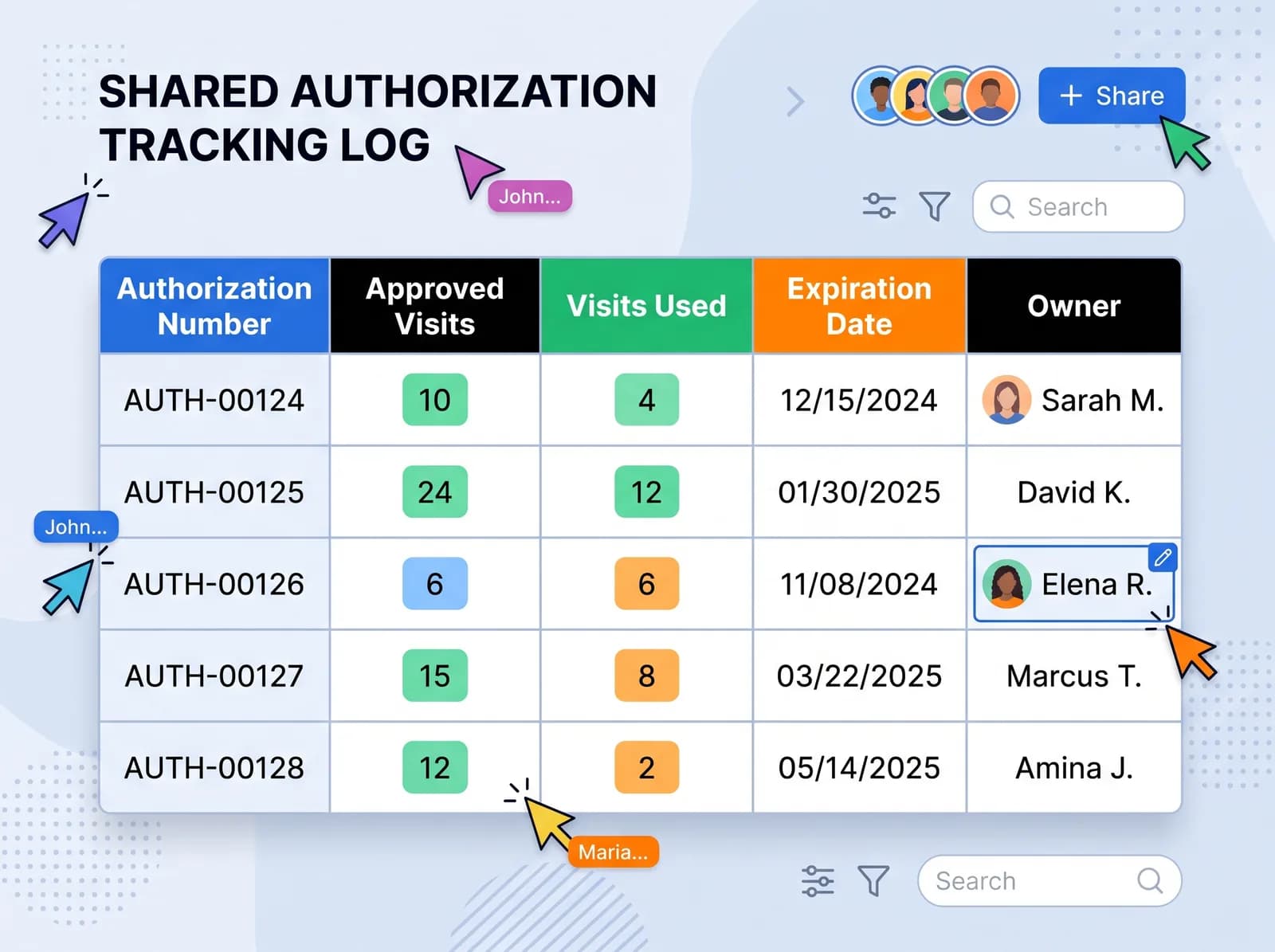
A therapy session that runs 45 minutes, a client who switches from weekly to twice-weekly, a payer that requires a new authorization every six visits — each is a routine event in a mental health practice, and each can quietly turn a clean claim into a denial if nobody checks it before submission. Two common failure points in mental health billing authorization tracking are authorization status and time-based documentation. Neither is a clinical problem. Both are process problems, and both can be caught with a repeatable pre-claim check.
This checklist is written for the owner or office manager of an independent mental health or therapy group practice — the person who owns the workflow between the clinician's note and the claim that leaves the building. It is a process guide, not coding or legal advice. Any payer-specific rule referenced here must be confirmed against that payer's current provider manual and your own contracts.
Why authorization tracking breaks down in therapy practices
Authorization problems in therapy practices can come from small gaps that compound:
- Authorizations live in too many places. A number in the EHR, a PDF in a shared drive, an email from a care manager, a note in the scheduler. When the source of truth is unclear, staff verify against the wrong record.
- Visit counts drift. A payer may authorize a set number of sessions. If nobody tracks units used against units approved, the practice may discover the exhaustion after the sessions are already delivered.
- No one owns the renewal. Renewal is everyone's job in theory and no one's job in practice, so it happens after the authorization lapses rather than before.
- Intake and billing don't share a handoff. The front desk collects benefits at intake; billing staff never see the confirmation, so the claim goes out on assumptions.
- Group practices multiply the problem. With multiple clinicians, each may track authorizations differently, and there is no single view across providers.
A key fix is not more software by itself; it is a defined check with a named owner and a written record of what was confirmed, when, and by whom.
A pre-claim mental health billing authorization verification checklist
Run these checks on every claim before submission, or at minimum on every claim tied to a payer that requires authorization. Document each step so the result is auditable later.
Before the session
Confirm these items before the client is seen, so the authorization is verified against the date of service rather than assumed from scheduling.
- Confirm the client's eligibility and benefits for the date of service, and record the date and reference number of the check.
- Confirm whether the specific service requires prior authorization under the current plan and payer policy.
- Record the authorization number, the approved service, the approved unit or visit count, the effective and expiration dates, and any diagnosis or provider restrictions the payer attaches.
- Confirm the rendering clinician is credentialed and in-network for that plan, and that the authorization names the correct provider or group.
At or after the session
Once the session is complete, reconcile what was delivered against what was authorized before the claim moves forward.
- Match the service delivered to the service authorized. A mismatch — different service type, place of service, or provider — may lead to a denial.
- Update the running count of units or visits used against the authorization.
- Flag any authorization approaching its unit limit or expiration date and route it to the person who owns renewal.
- Confirm the claim carries the authorization number in the field the payer requires, in the format the payer requires.
Before submission
Run a final check on the assembled claim so any remaining authorization gap is caught before it becomes a denial.
- Re-verify that the authorization was active on the date of service, not just at the time of scheduling.
- Confirm the claim and the authorization agree on client, provider, service and dates.
- Hold, rather than submit, any claim where the authorization record is incomplete — and log why it was held.
If your practice handles authorizations at volume, a structured prior and retro authorization tracking workflow with a single tracking log can be the difference between catching a gap and discovering it in a denial letter.
Time-based documentation: what billing staff should confirm
Time-based services depend on the documentation supporting the time billed. Billing staff should not be interpreting clinical content or deciding code levels — that is the clinician's and coder's responsibility under applicable coding guidance. What billing staff can and should confirm is that the record is complete enough to support the claim:
- The note records the total time and the components of the service in the format the applicable coding guidance requires — verified against that guidance, not memory.
- The time documented is consistent with the service billed and with the scheduled session length.
- Start and stop times, or total time, are present and legible.
- Add-on or extended services have their own supporting documentation, not an assumption carried from a prior visit.
- Any documentation gap is routed back to the clinician before the claim is released, with a clear reason — not silently corrected by billing staff.
This is a completeness check, not a coding review. Where a question touches code selection or medical necessity, escalate it to a qualified coder or clinician and confirm the rule against applicable coding guidance.
Denial patterns to review monthly
Authorization and time-based issues can show up in denials in recognizable patterns. Review these categories monthly, by payer and by clinician, so you can see whether the problem is systemic or isolated:
- Denials citing missing or invalid authorization.
- Denials citing services exceeding authorized units or dates.
- Denials tied to documentation insufficient to support the service billed.
- Denials for provider not credentialed or not linked to the authorization.
- Denials for eligibility terminated or changed as of the date of service.
For each category, ask three questions: how many, from which payer, and did the same gap cause it more than once? A single denial may be an isolated incident; the same denial recurring may indicate a workflow defect. Pair this review with a defined denial management and appeals cadence so appeals and corrections are worked on a schedule rather than when someone has time.
Practices that want a single view across payers and clinicians often find it useful to consolidate authorization status, claim status and denial reasons in one revenue performance reporting dashboard. That is a process commitment, not a guarantee of any particular outcome — results depend on payer behavior, documentation quality and contract terms.
What to do next
If you are not sure where your authorization tracking breaks down, start with one week of claims: pull every claim that required an authorization and check whether the authorization record was complete and current on the date of service. The gaps you find will tell you which step in the checklist above needs an owner.
If you would like a second set of eyes on the workflow, Knight Medical Billing works inside the systems a practice already uses — claims, denials, A/R, payment posting and reporting — for practices and facilities of different sizes. You can schedule a conversation or contact us with questions. There is no obligation, and no pressure to change anything before you have seen where the gaps are.
Sources and verification
No external sources were supplied for this article, and no statistics, payer policies or coding rules are cited here. Any payer-specific authorization requirement, unit limit, filing deadline or documentation standard referenced in your own workflow must be verified against the payer's current provider manual, your participation agreements, and current official coding and regulatory guidance. This article is a process guide and does not constitute legal, coding or clinical advice.
Where this work connects
Related articles.
 Mental Health Billing
Medical Billing for Mental Health Practices: A Process Guide
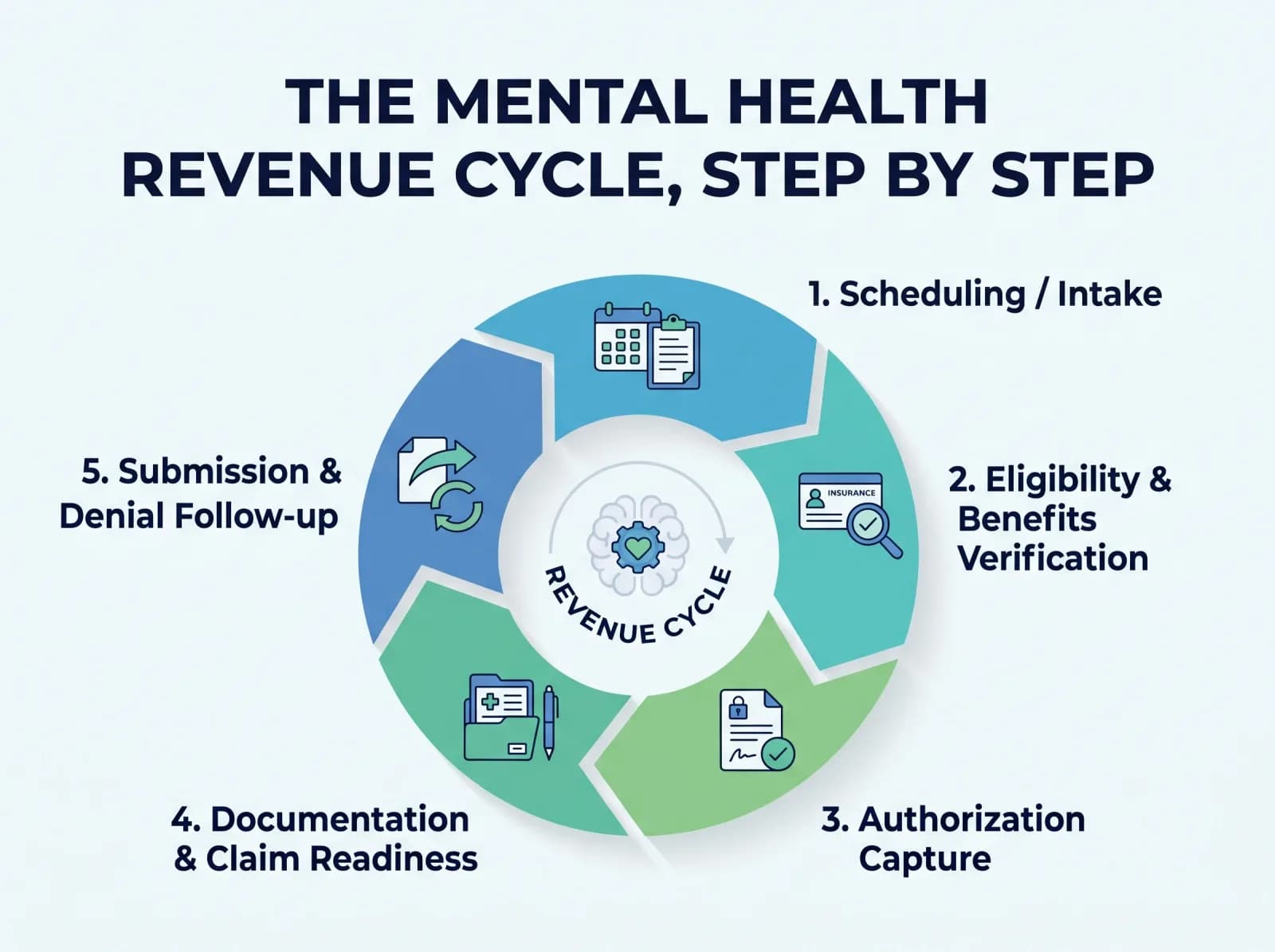
A practical walkthrough of the mental health revenue cycle — eligibility, authorization tracking, documentation timing, denial patterns, and how to evaluate an in-house or outsourced billing process.
Read article Mental Health Billing
 Services: What Independent Practices Should Expect
A practical guide for independent therapy, psychiatry and behavioral health groups on evaluating mental health billing services, covering authorization tracking, payer routing, denial patterns and the division of billing and clinical documentation responsibilities.
Read article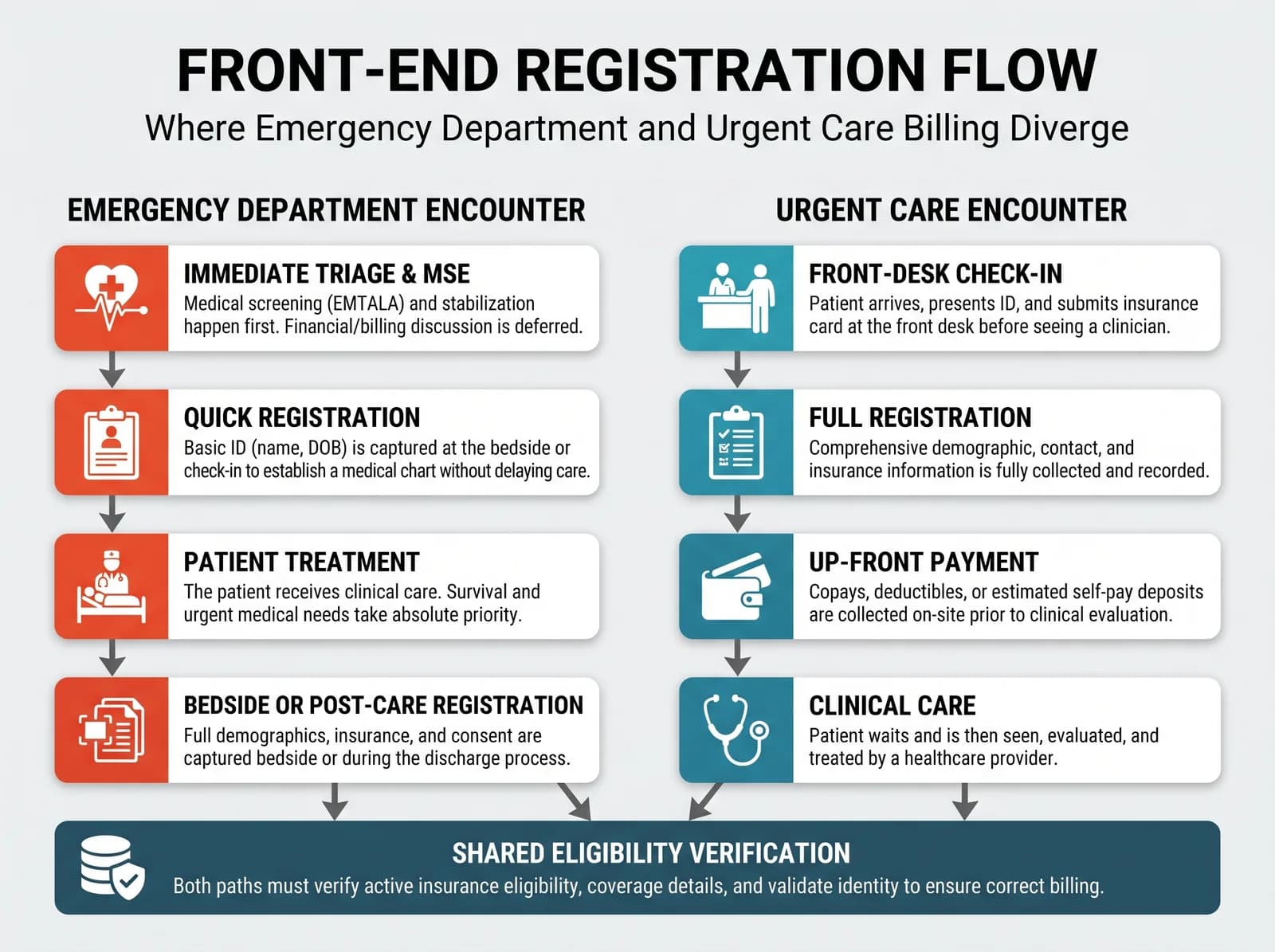 Revenue Cycle Management
Emergency Department and Urgent Care Billing: What Differs When One Organization Runs Both
A practical guide for revenue cycle leads running an emergency department and urgent care sites together: where the workflows diverge, what risks they share, and the questions to answer before consolidating billing.
Read article