

Physical Therapy Billing Services: What Independent PT Practices Should Verify
A practical guide for independent PT clinic owners on what to verify in claims, timed units, authorizations and A/R when evaluating physical therapy billing services.
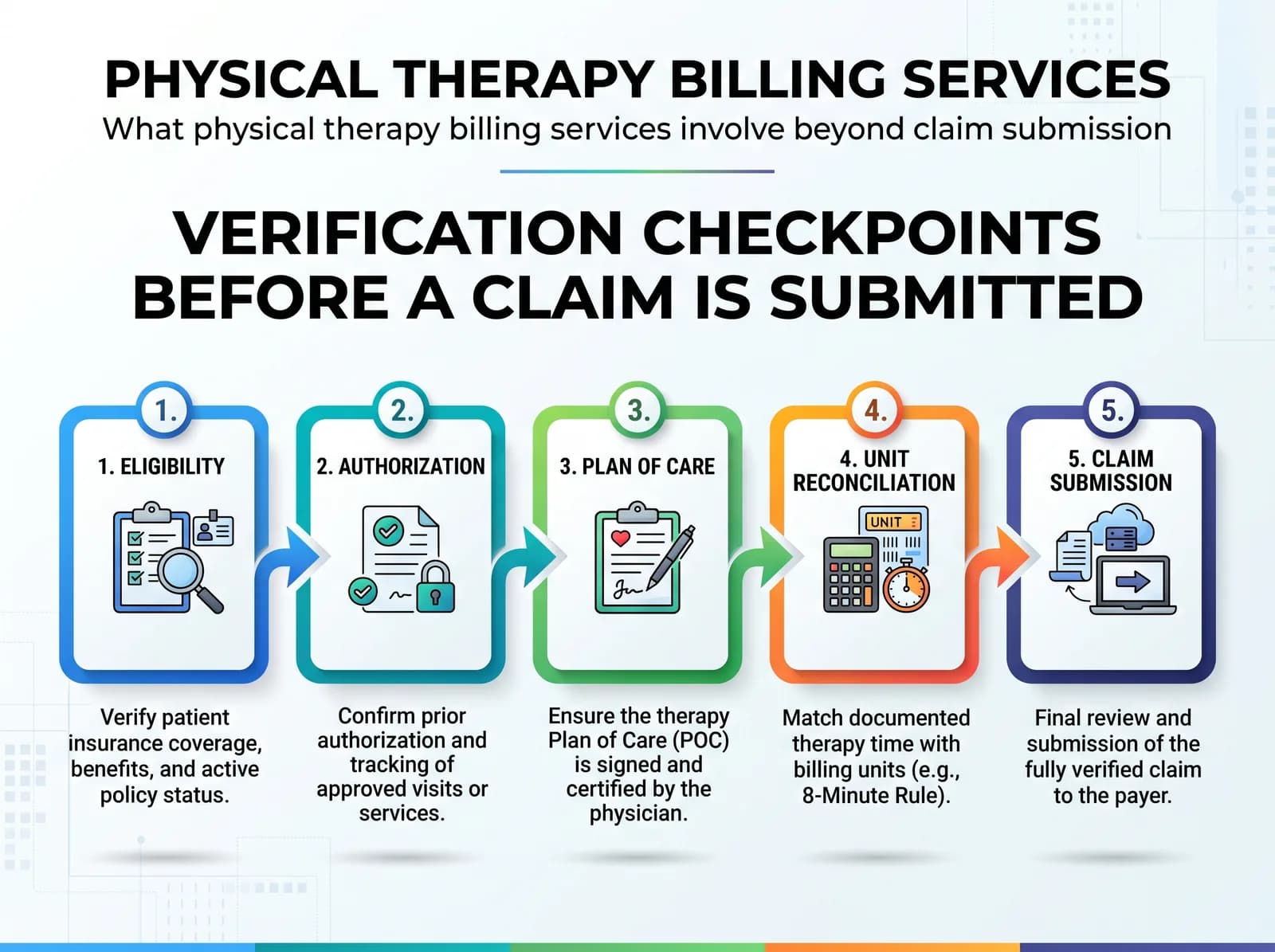
Physical therapy billing looks simple from the front desk: a patient comes in, a therapist treats them, a claim goes out. The complexity sits underneath: timed units, plan-of-care requirements, visit limits, authorization rules that differ by payer, and A/R that ages differently when a payer is reviewing documentation rather than just processing a claim. If you own or manage an independent PT clinic evaluating physical therapy billing services, the question isn't whether a billing partner can submit claims. It's whether they understand what has to be verified before a therapy claim is worth sending, and what happens to the ones that come back.
This guide is written for the owner or practice manager of a single- or multi-therapist clinic who is about to evaluate billing partners and wants to know what to ask. It is not coding advice, and it does not replace your payer contracts or official guidance, which are the authority on any specific rule.
What physical therapy billing services involve beyond claim submission
A therapy claim carries more front-end dependencies than a typical office visit. Before a claim is clean, someone has to confirm that the service is covered, that the plan of care and certification requirements are satisfied, that authorization (if required) is in place and still valid, and that the units billed match the timed services documented. Each of those is a verification step, not a data-entry step, and each one can stop a claim before it ever reaches a payer.
Charges and timed units
Therapy billing is unit-based, and units are derived from documented time and the code definitions that apply. A billing partner should be able to explain how they reconcile documented treatment time against billed units, how they handle untimed versus timed codes, and how they catch mismatches before submission rather than after a denial. Ask specifically what their process is: not whether they "handle units," but where in the workflow the check happens and who owns it.
Authorizations and visit limits
Authorization requirements and visit limits vary by payer and plan, and they change. A partner should have a defined process for verifying authorization before the visit, tracking remaining visits, and flagging when a re-authorization or updated plan of care is needed. If your clinic treats patients across several payers, ask how they keep those rules current and who is responsible when a rule changes mid-episode.
Plan of care and documentation dependencies
Therapy claims often depend on documentation that lives outside the claim: the plan of care, certification and recertification, progress notes. A billing partner doesn't write clinical documentation, but they should tell you what they need from your EMR and when, and how they flag a claim that can't be supported yet. That handoff is where a lot of therapy A/R quietly accumulates.
Where therapy claims commonly break down
These are patterns worth verifying in your own data, not guaranteed causes of denial. Pull a sample of recent denials and aging A/R and see which of these show up.
- Authorization gaps and expired visits. Services rendered after an authorization lapsed, or beyond a visit limit, can surface as denials that require retroactive work — or write-offs.
- Unit and documentation mismatches. When billed units don't line up with documented time, payers can deny or downcode. The fix is typically a pre-submission check, not a post-denial appeal.
- Missing or stale plan-of-care support. Claims held for documentation can sit in A/R while the clinic and the billing team wait on each other.
- Eligibility and benefit changes. A patient's coverage or therapy benefit can change mid-episode. Eligibility verified once at intake may not be enough for a multi-week course of care.
- Denials that need clinical context to appeal. Therapy appeals often require documentation the billing team doesn't hold. A partner should have a clear process for requesting it and following up.
The A/R side matters as much as the denial side. Ask how a partner segments therapy A/R — by payer, by age, by denial reason — and how often they work it. A partner who reports total A/R without breaking out what is stuck and why may not be giving you much to act on. Our accounts receivable management and denial management pages describe how that work is structured; use them as a comparison point, not a promise of outcomes.
Questions to ask a physical therapy billing services partner
Use these as a neutral checklist. The answers tell you more than any "top billing company" list will. For a broader vendor comparison framework, see our guide to choosing a medical billing company.
- How do you verify authorization and visit limits before the claim goes out? Look for a named process and an owner, not a general assurance.
- Where in your workflow are units reconciled against documentation? Ask for the specific checkpoint.
- What do you need from our EMR, and how do you request it? A partner who can describe the handoff clearly will be easier to work with.
- How do you report therapy A/R — by payer, age and denial reason? Ask to see a sample report structure.
- Who works denials and appeals, and how do you get clinical documentation from us? Confirm the loop closes.
- How do you handle eligibility re-checks during a course of care? Once at intake may not be enough.
- What does onboarding look like, and what stays in our system versus yours? If you use a platform like Kareo or Tebra, ask how they work inside it.
- How is pricing structured, and what's included? Compare structures, not just headline percentages; see our guide to how medical billing pricing works.
Two more questions worth asking: what happens when a payer rule changes, and how do they tell you? And can they show you how they'd handle a claim that's already denied — walk through one, step by step.
What to confirm with payers and official guidance
Nothing in this article should be read as a statement of what any payer requires. Coverage, authorization rules, visit limits, timely filing windows and documentation requirements are set by your payer contracts and current official guidance, and they change. Before you build a process around any specific rule, confirm it directly with the payer or the applicable official source, and build a habit of re-checking when contracts renew or policies update.
The same applies to coding. Unit definitions and code selection are coding questions. Your billing partner can flag mismatches, but the clinical and coding determinations belong with qualified coding resources and your own documentation standards. If a vendor tells you a rule without pointing you to where it comes from, ask them to show you.
What to do next
If you're evaluating billing partners, start with your own data: pull a month of denials and aging A/R, sort by reason, and see which of the patterns above appear. That gives you specific questions to ask any vendor, and a baseline to compare against later. If it would help to talk through what a therapy-focused revenue cycle process looks like inside your current systems, you can schedule a conversation or contact us. There is no obligation, and we can tell you if we are not the right fit. For a deeper look at therapy-specific billing considerations, see our physical therapy billing page.
Sources and verification
This article was planned from the supplied site context and general process knowledge. The following sources were supplied for reference; they were not used to support any statistic or specific claim in this piece:
- Medical Billing Company | Medical Healthcare Solutions: https://medicalhealthcaresolutions.com/
- 10 Best Medical Billing Services Reviewed for 2026: https://themedicalpractice.com/services/best-medical-billing-services/
No payer policy, coding rule, filing deadline or performance statistic is asserted here. Verify any specific requirement against current official payer or regulatory guidance before relying on it.
Where this work connects
Related articles.
 Medical Billing Vendor Selection
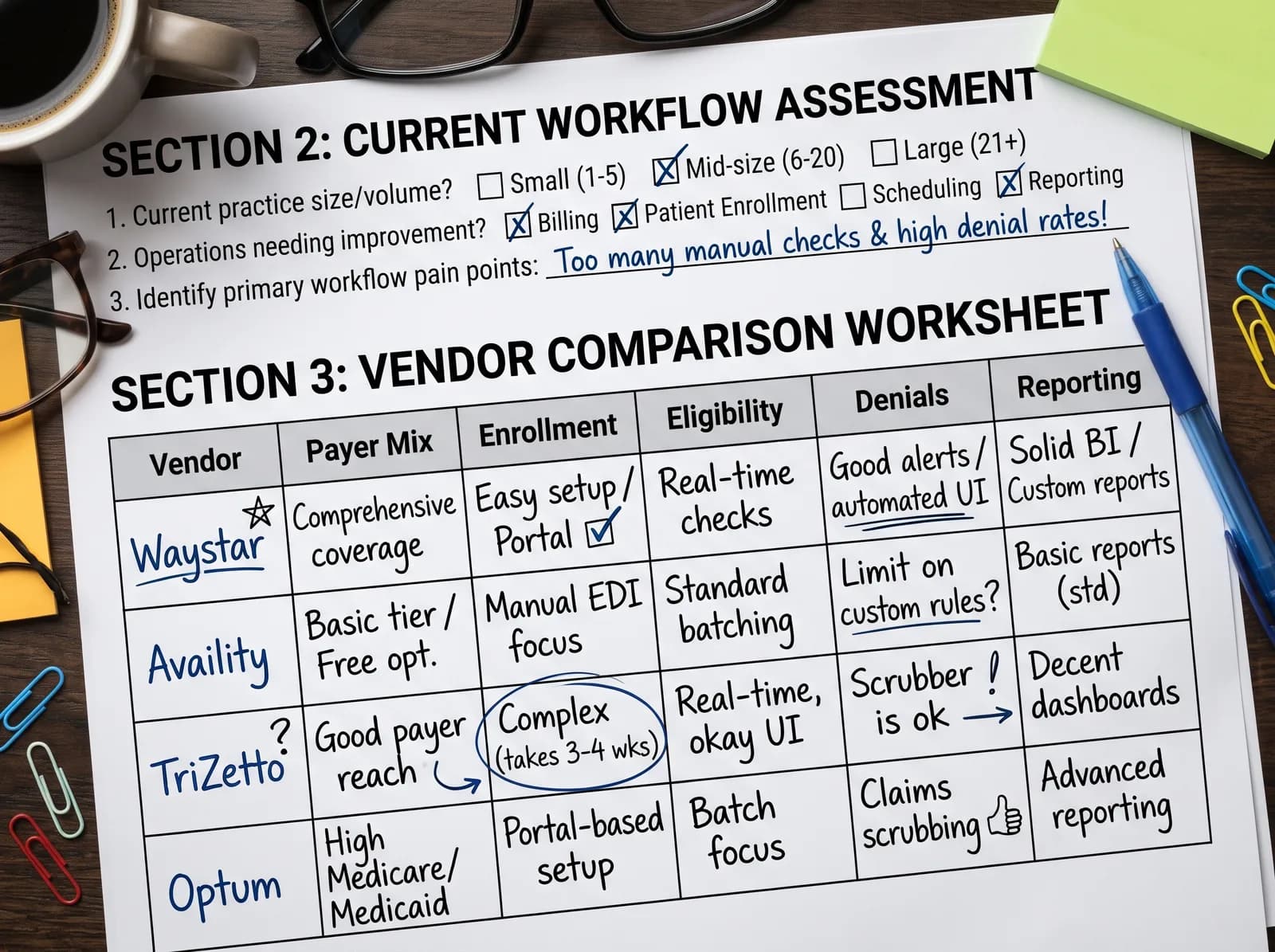
How to Evaluate a Medical Billing Company for a Massachusetts Independent Practice
A neutral checklist for Massachusetts independent practices comparing outsourced billing: confirm your payer mix, ask every vendor the same enrollment, eligibility, denial and reporting questions, and verify state and payer claims instead of accepting them.
Read article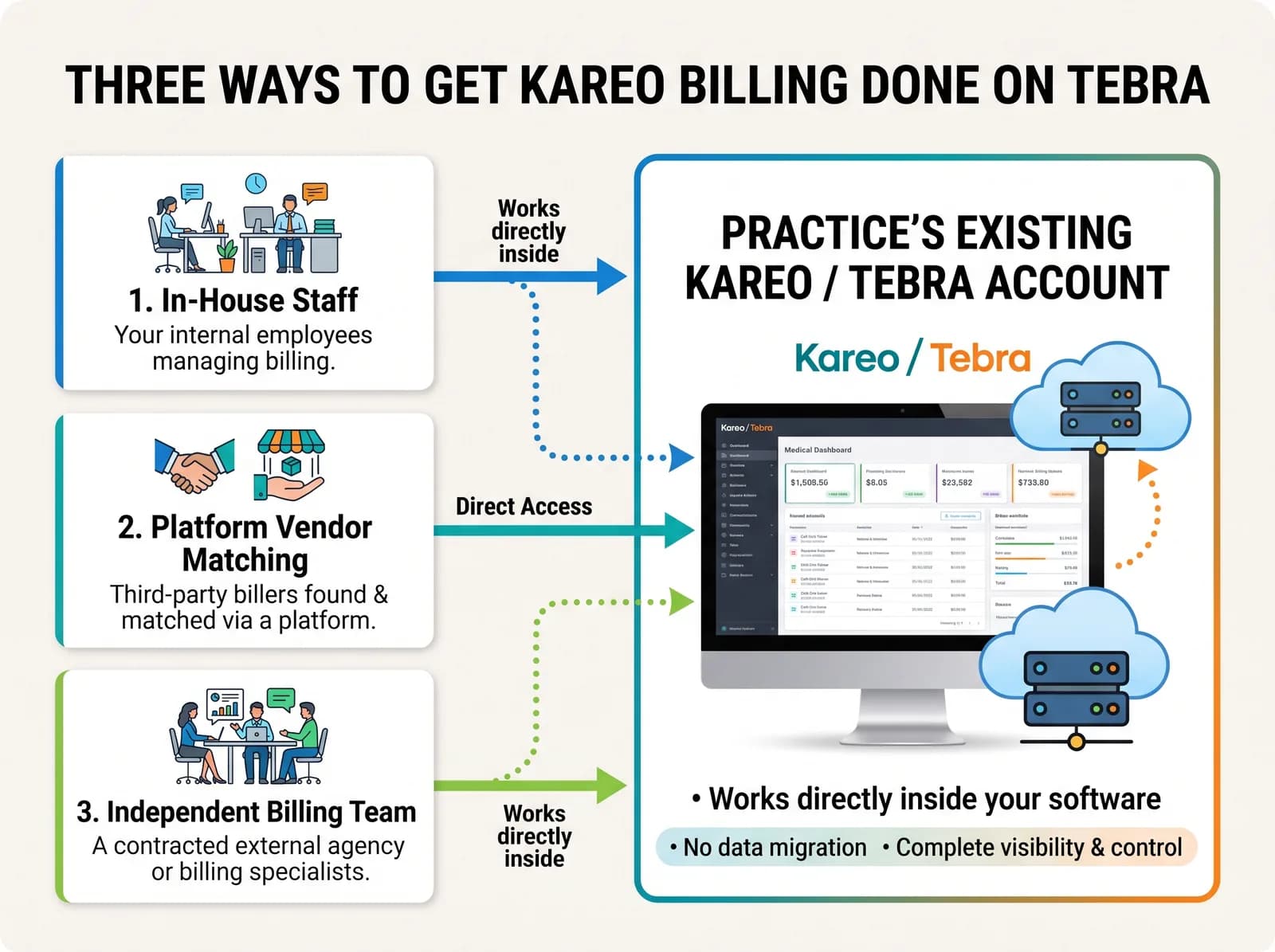 Medical Billing Vendor Selection
Kareo Billing Service: How Outsourced Billing Works Inside Your Account
Kareo is now Tebra, but practices still search the old name. Here is how an independent billing team works inside your existing Kareo/Tebra account, what stays with your practice, and what to verify before signing.
Read article Medical Billing Vendor Selection
Urgent Care Billing Services: A Buyer's Guide for High-Volume Clinics
A practical buyer's guide to urgent care billing services for high-volume clinics, covering eligibility, charge capture, denial follow-up and the questions to ask before you sign.
Read article