

Urgent Care Billing Services: A Buyer's Guide for High-Volume Clinics
A practical buyer's guide to urgent care billing services for high-volume clinics, covering eligibility, charge capture, denial follow-up and the questions to ask before you sign.

Urgent care billing looks like ordinary medical billing until you count the visits. A clinic open twelve hours a day, seven days a week, can generate a high volume of encounters, and each one arrives with a different payer, a different copay, and often a different reason for denial. If you own or run an independent urgent care clinic or a small group of them, the question isn't whether you need billing help; it's whether a billing partner can keep up with your volume without letting cash sit in A/R. This guide covers what high-volume urgent care billing services actually require, where the traps tend to be, and what to ask before you sign.
What high-volume urgent care billing services actually require
Urgent care revenue cycle management differs from office billing in three structural ways: the patient is usually new to you, the visit is often unscheduled, and errors are less likely to be caught through a follow-up visit. A billing partner for this setting should be built around those realities, which is why complete RCM services may be a better fit here than in a slower-paced practice.
Eligibility and benefits verification that runs ahead of the visit
Most urgent care patients walk in without a scheduled appointment, so eligibility checks have to happen at or near registration rather than days in advance. That means real-time or same-day verification, a clear process for self-pay and cash-pay patients, and a documented handoff when a patient's coverage can't be confirmed before the visit. Ask a prospective partner how they handle a walk-in whose eligibility check fails at 7 p.m. on a Saturday. The answer can be more informative than any brochure.
Charge capture that survives a fast encounter
In a high-volume clinic, the provider documents quickly and moves on. Charges that depend on a separate paper trail, such as point-of-care tests, procedures, supplies and occupational medicine panels, are the ones most likely to be missed or under-coded. A billing partner should be able to describe how charges flow from your EHR or practice management system into the claim, who reconciles encounters against charges, and how often that reconciliation happens. This is a process commitment, not a guarantee of clean claims, but a partner who can't explain the reconciliation step may be at higher risk of letting charges leak.
Rapid denial follow-up
Denials in urgent care compound quickly because volume is high. A denial that sits for thirty days in a low-volume practice is a nuisance; in an urgent care clinic, thirty days of denials can quickly become a large number of claims. Look for a partner with a defined denial workflow: sorting by denial reason, working the highest-value and most time-sensitive first, and tracking appeal deadlines. Knight's denial management and A/R management services are designed to support that kind of triage, but your contract should spell out turnaround expectations in writing.
Occupational medicine, point-of-care testing and payer-specific rules to verify
These are the areas where urgent care billing most often goes sideways, and where you should insist on verification against current official guidance rather than accepting a vendor's summary.
Occupational medicine and employer billing
Occupational medicine visits, such as pre-employment physicals, workers' compensation injuries, drug screens and DOT exams, often bill to an employer or a workers' compensation carrier rather than a health plan. The rules governing what can be billed, to whom, and with what documentation vary by state and by payer. A billing partner should be able to explain how they separate occupational medicine encounters from insurance encounters in your workflow, and should tell you plainly that the specific rules must be confirmed against the relevant state workers' compensation guidance and each employer's contract. Do not accept a vendor's assurance that "we handle workers' comp" without asking how.
Point-of-care testing
Rapid strep, flu, COVID-19, urinalysis and similar tests are a frequent source of coding and bundling questions. Whether a test is separately billable, how it should be coded, and what documentation supports it are matters of current CPT and payer policy. A responsible billing partner will flag these as areas to verify against current official coding guidance and payer policies rather than asserting a rule from memory. Ask how they keep their coding references current and who reviews them.
Payer-specific rules
Urgent care sits at an awkward intersection: some payers treat it as primary care, some as an emergency alternative, and some apply different cost-sharing. Those rules change. Any statement about a specific payer's policy, including filing deadlines and prior authorization requirements, should be verified against that payer's current provider manual before you rely on it. A good partner will say so unprompted.
Questions to ask an urgent care billing partner
Use these as a working checklist during vendor conversations. They're designed to surface process detail rather than marketing language, and they pair well with our broader guide to choosing a medical billing company.
- Volume: How many urgent care encounters per month do you currently support, and what happens to turnaround when volume spikes during flu season?
- Eligibility: What is your process for same-day and walk-in eligibility checks, including after-hours?
- Charge reconciliation: How do you confirm every encounter produced a charge, and how often?
- Denials: What is your denial triage process, and how do you track appeal deadlines?
- Occupational medicine: How do you separate employer and workers' comp billing from insurance billing?
- Point-of-care testing: Who reviews coding for lab and point-of-care charges, and against what guidance?
- Reporting: What does your monthly reporting show, and can you break it out by location if we operate more than one clinic?
- Systems: Do you work inside our existing EHR and practice management system, or require a migration?
- Pricing: Is pricing a percentage of collections, a flat fee, or something else, and what's included?
- Transition: What does onboarding look like, and who owns the work during the switch?
On pricing specifically, our overview of how medical billing pricing works explains the common structures so you can compare proposals on equal footing. And if you operate more than one location, ask how the partner handles multi-site reporting and whether the same team supports every clinic.
What to do next
If you're comparing urgent care billing partners, the most useful first step is a short conversation about your actual volume, your current denial patterns, and where you suspect cash is leaking. Knight Medical Billing works inside the systems providers already use, handling claims, denials, A/R, payment posting and reporting for practices and facilities of different sizes, including independent urgent care clinics and small groups. Contact us to set up a conversation, or schedule a time that fits your clinic's hours. If you'd rather start by reading, our complete RCM services page describes how the work is organized.
Sources and verification
This guide reflects experience-based guidance rather than sourced reporting on urgent care-specific rules. The following sources were used for general context on the medical billing services market:
- Medical Billing Company | Medical Healthcare Solutions: https://medicalhealthcaresolutions.com/
- 10 Best Medical Billing Services Reviewed for 2026: https://themedicalpractice.com/services/best-medical-billing-services/
Any payer-specific, coding or workers' compensation rule mentioned here must be verified against current official payer manuals, state guidance and coding references before you rely on it. This article is not legal, coding or clinical advice.
Where this work connects
Related articles.
 Medical Billing Vendor Selection
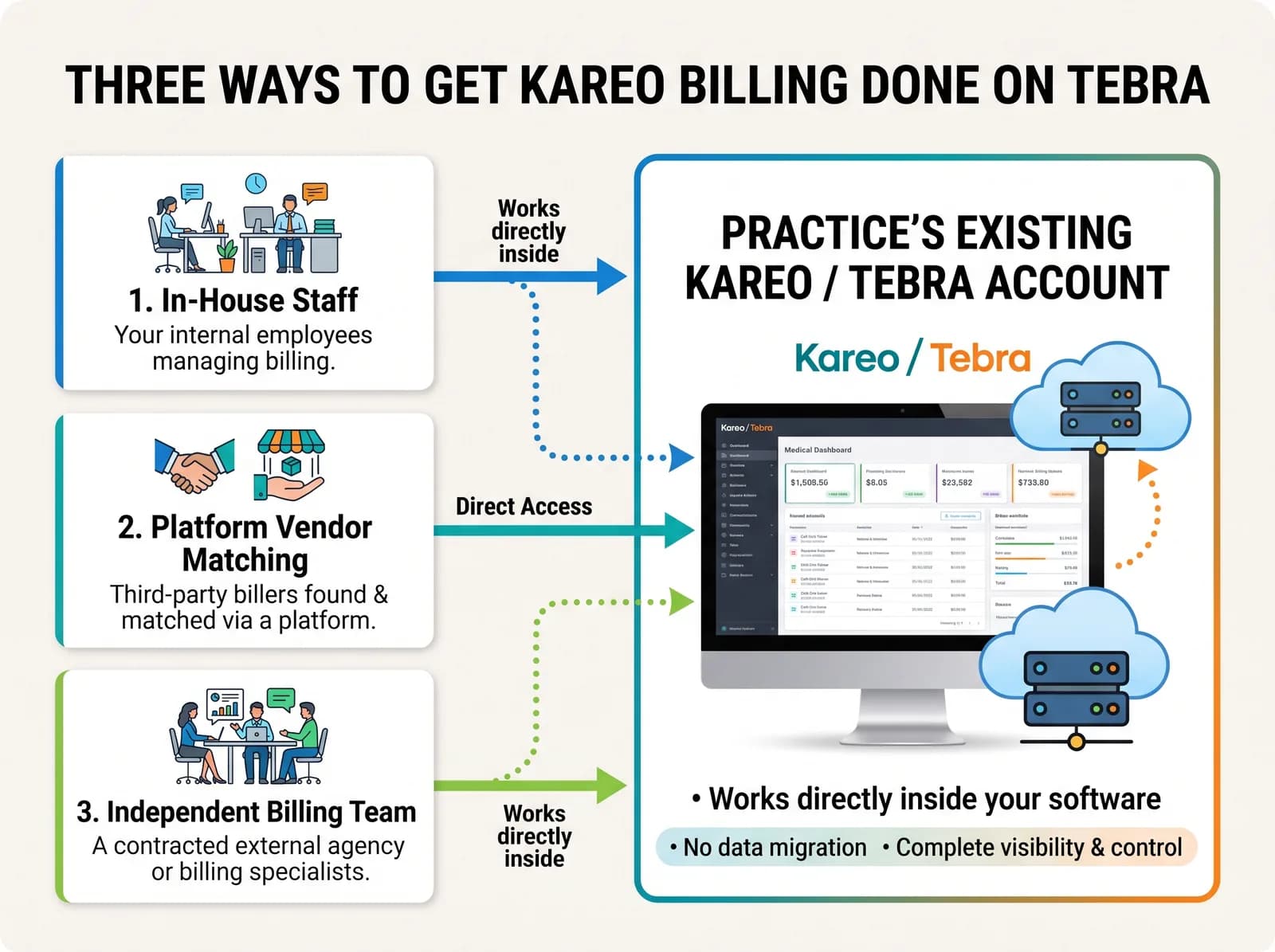
Kareo Billing Service: How Outsourced Billing Works Inside Your Account
Kareo is now Tebra, but practices still search the old name. Here is how an independent billing team works inside your existing Kareo/Tebra account, what stays with your practice, and what to verify before signing.
Read article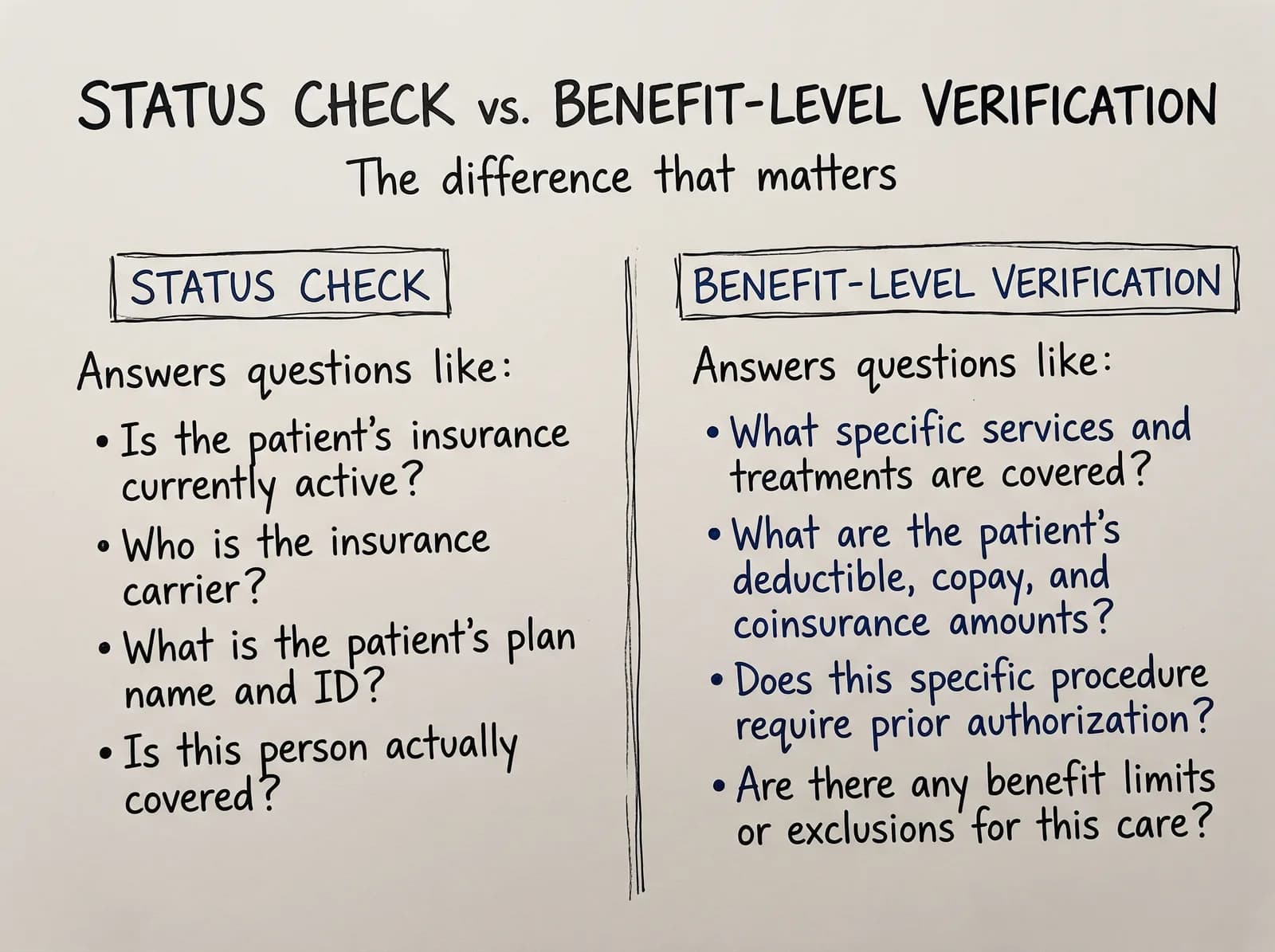 Medical Billing Vendor Selection
Outsource Insurance Eligibility Verification Services: A Practice Manager's Guide
A practical guide to outsourcing insurance eligibility verification: what benefits checks cover, status vs. benefit-level verification, vendor questions, and what to keep in-house.
Read article Medical Billing Vendor Selection
How to Evaluate Specialty Medical Billing Services: A Neutral Checklist
A neutral checklist for comparing specialty medical billing vendors on process, coverage, reporting and marketing claims, built for practices and groups that have outgrown one-biller oversight.
Read article