

Reading "Top Billing Company" Lists: A Neutral Guide for Independent Practices
A practical guide to what ranked medical billing company lists measure, what they omit, and how independent practices can build a shortlist that reflects their own payer mix, specialty, and workflow.

If you own an independent practice and you are shortlisting billing vendors, you have probably already found a "Top 10 Medical Billing Companies" page — or three of them. They rank well, they are easy to skim, and they all look roughly the same: a logo, a paragraph of praise, a link. This guide is about reading those lists honestly, so you can use them as one input among several rather than as a decision.
To be clear about our position: Knight Medical Billing is a billing company, so we appear in the same market these lists describe. We are not going to tell you lists are worthless, and we are not going to pretend we can audit how any particular list was assembled. What we can do is explain what ranked lists typically measure, what they structurally cannot measure, and how to build a shortlist that reflects your practice rather than a publisher's page.
What ranked lists usually measure — and what they omit
Most "top billing company" articles are assembled from information that is publicly visible: a company website, a service description, sometimes a directory profile or a submitted questionnaire. That is a legitimate starting point. It tells you a company exists, what it says it does, and roughly which market it addresses.
What that method generally cannot capture is anything that requires verification. A list published by a directory or marketing site is rarely in a position to confirm:
- Whether the company actually performs the work it describes. "Full RCM" can mean a complete back-office team or a software subscription with a support line. The label does not distinguish them.
- How the company is staffed and measured. Who touches a claim, what the escalation path looks like, and how performance is reported to the practice are usually absent.
- Whether the company's client base resembles yours. A firm built around hospital departments and one built around three-provider practices can appear side by side with no indication of fit.
- How placement was determined. Some lists disclose methodology; many do not. Where methodology is thin or unstated, treat position as a signal of visibility, not of quality.
None of this implies misconduct. It means the list is answering a narrower question than the one you are asking. A ranking tells you who is prominent. You need to know who is competent for your payer mix, your specialty and your workflow.
A note on the two lists in front of you
Two of the pages a practice owner typically encounters on this search are a Massachusetts-focused "Top 10" article and a general business-services directory (both listed in the sources section below). Both are useful for gathering names. Neither, as published, gives you enough to rank vendors against your own requirements. We have not audited their inclusion criteria, and we would not claim to.
Questions a list cannot answer for your practice
The gap between a list entry and a good vendor decision is almost entirely practice-specific. Before you weigh any ranking, write down the answers to these, because no publisher can answer them for you:
Payer mix and contract reality
Which payers represent most of your revenue, and how much of it is government versus commercial? A billing team that is strong in one payer environment is not automatically strong in another. Contract terms, fee schedules and appeal paths differ, and they change — always verify current requirements against the payer's own published guidance and any applicable regulatory sources rather than relying on a vendor's summary.
Specialty and coding workflow
Does the vendor routinely work claims in your specialty, with its particular documentation and authorization patterns? Ask for the process, not the logo wall. If a company cannot describe how a claim in your specialty moves from encounter to payment, the ranking is irrelevant.
Systems and handoffs
Will the vendor work inside the practice management system you already use, or require a migration? Who owns the data? What happens at month-end, and who reconciles payments? These are operational questions with real switching costs, and they are the ones most likely to determine whether an engagement succeeds.
Reporting and accountability
What will you actually see each month — denial rates by payer, A/R aging, days in A/R, clean claim performance? A vendor that cannot show you the numbers it manages is hard to hold accountable, regardless of where it ranks.
Building your own shortlist
A ranked list is a name-generation tool. Use it that way. Pull five to eight candidates from the lists and directories you trust, then apply your own filter:
- Screen on fit first. Specialty experience, payer familiarity, system compatibility and size of client the firm typically serves.
- Ask the same questions of everyone. A written set of questions — staffing, escalation, reporting, pricing structure, transition plan — makes responses comparable. Our practical buyer's guide walks through the questions worth asking.
- Understand the pricing model before comparing price. Percentage of collections, per-claim and flat-fee structures are not interchangeable; our guide to how medical billing pricing works explains the trade-offs.
- Check references and, where possible, talk to current clients about the parts of the relationship a list never covers: responsiveness, transparency and what happens when something goes wrong.
- Confirm the scope in writing. What is included, what is extra, and how either side can exit.
If you want a structured version of this exercise, our in-house versus outsourced comparison helps you decide whether outsourcing is the right move at all before you evaluate vendors. And if you are weighing a change mid-year, the switching guide covers the transition mechanics.
What to do next
There is no obligation to talk to us, and a ranked list is a reasonable place to start regardless of who you ultimately choose. If it would help to pressure-test your shortlist against your own payer mix and workflow, we are glad to walk through it. You can schedule a conversation or contact us with the questions you have already written down. We will be straightforward about whether we are a fit.
Sources and verification
This article was planned using two publicly available pages supplied by the editor as examples of ranked billing-company content. They are included to illustrate the type of list this guide discusses, not as endorsements or verified rankings:
- Medical Billing Company | Medical Healthcare Solutions: https://medicalhealthcaresolutions.com/
- Top 10 Medical Billing Companies in Massachusetts: https://transcure.net/medical-billing/companies/massachusetts/
No statistics, rankings, search volumes or client outcomes are cited in this article, and none should be inferred. Statements about payer requirements, coding rules or regulatory obligations are general and must be verified against current official payer and regulatory guidance before you act on them. This article is not legal, coding or clinical advice.
Related articles.
 Medical Billing Vendor Selection
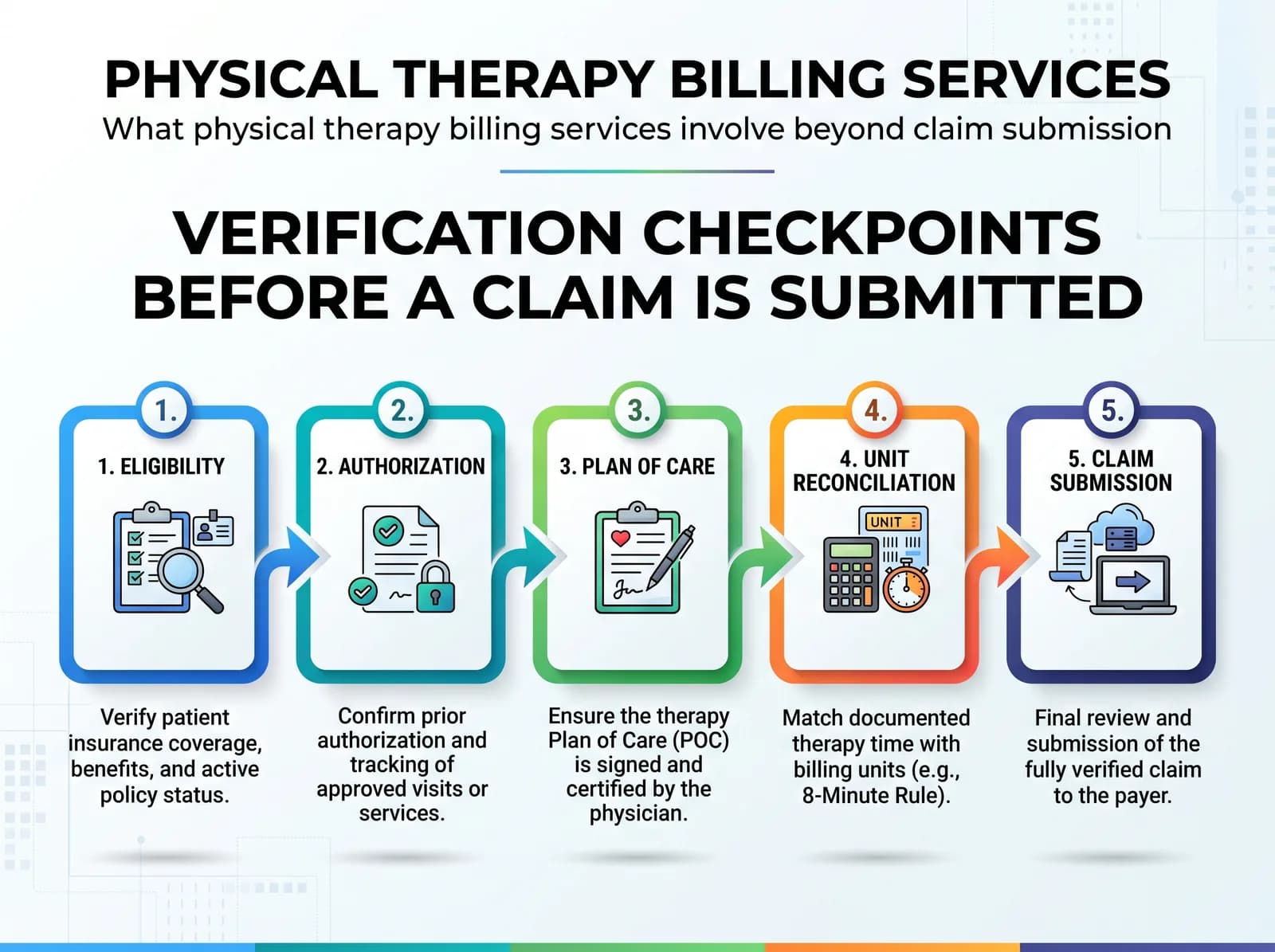
Physical Therapy Billing Services: What Independent PT Practices Should Verify
A practical guide for independent PT clinic owners on what to verify in claims, timed units, authorizations and A/R when evaluating physical therapy billing services.
Read article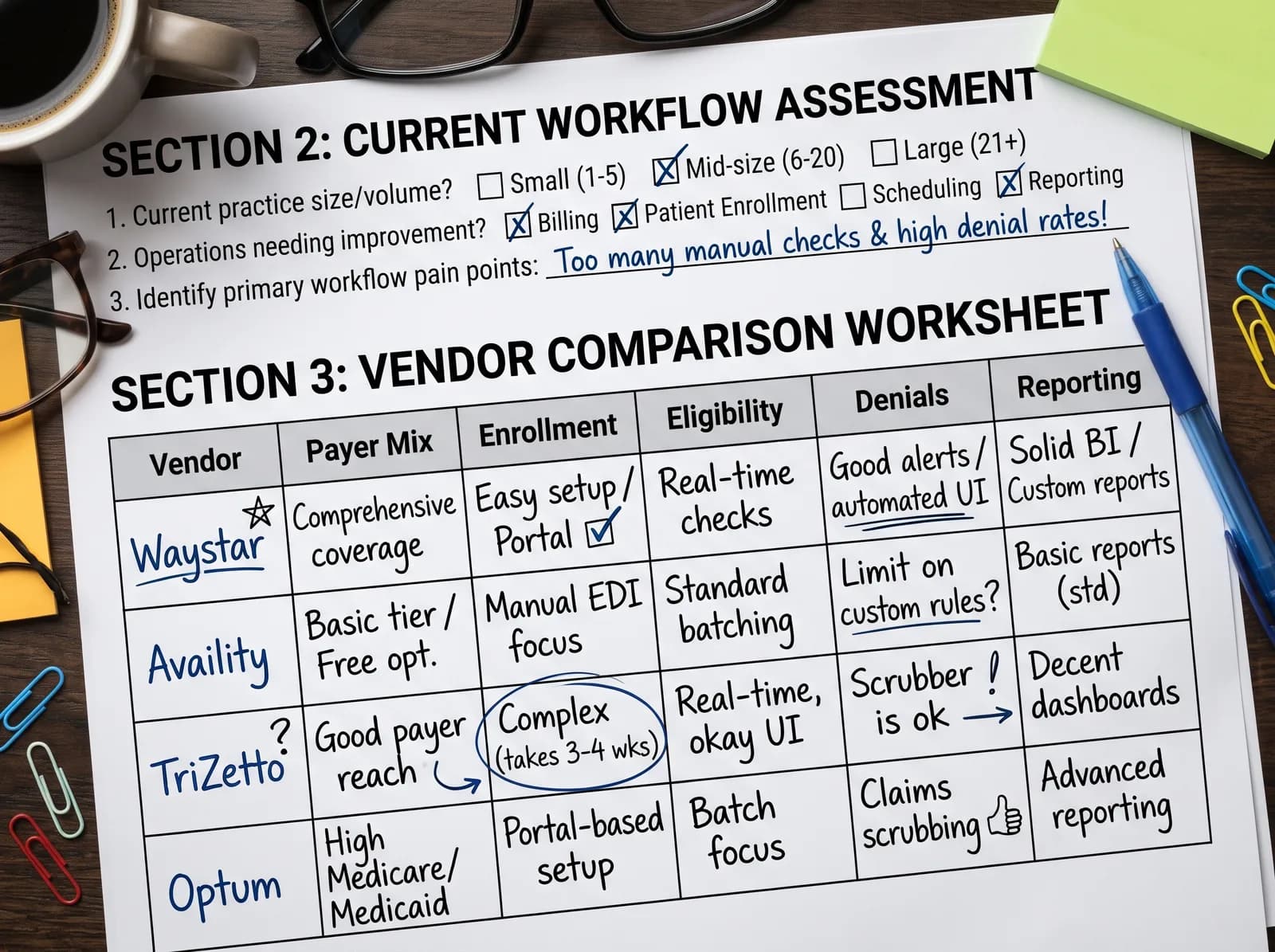 Medical Billing Vendor Selection
How to Evaluate a Medical Billing Company for a Massachusetts Independent Practice
A neutral checklist for Massachusetts independent practices comparing outsourced billing: confirm your payer mix, ask every vendor the same enrollment, eligibility, denial and reporting questions, and verify state and payer claims instead of accepting them.
Read article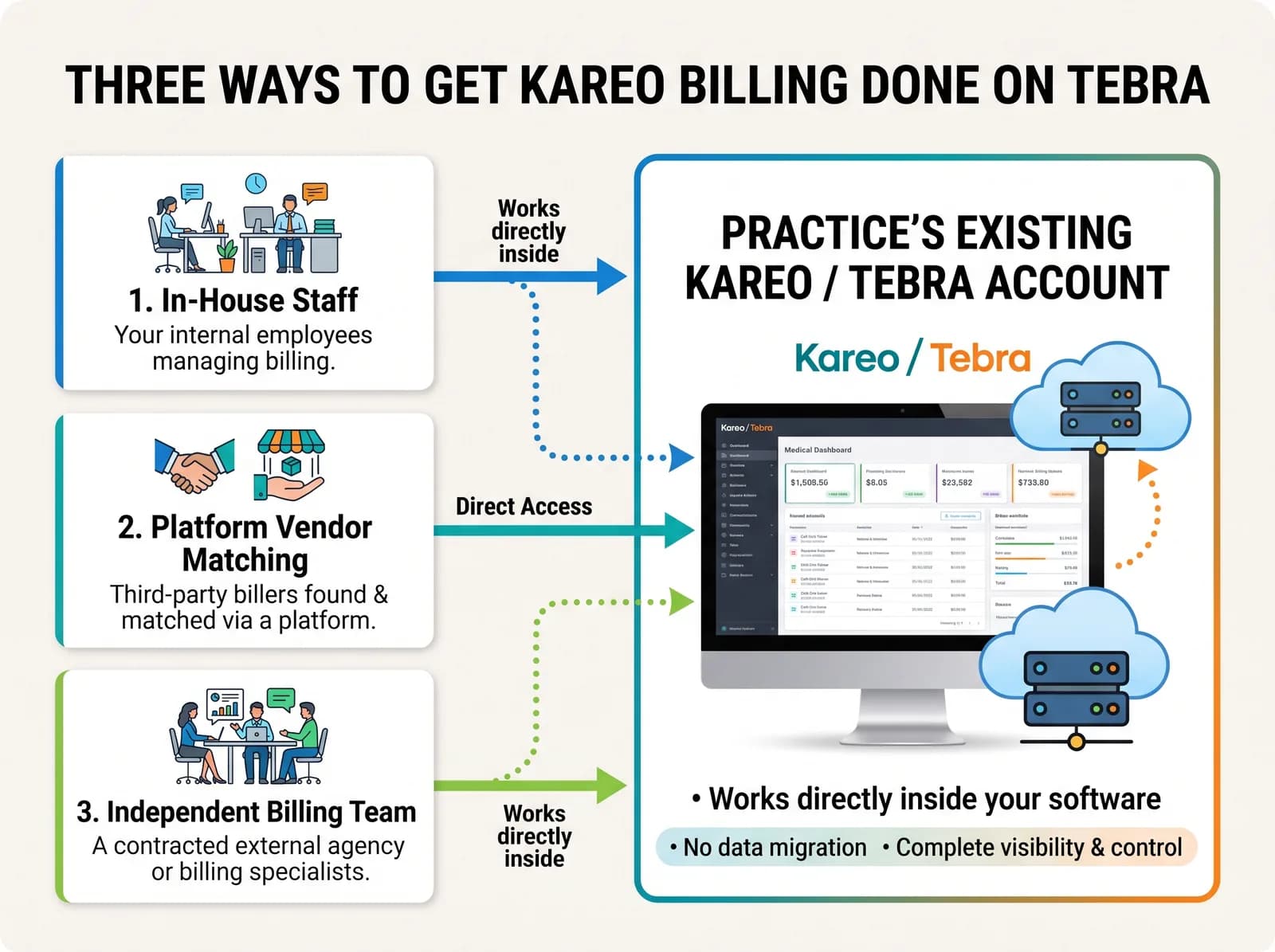 Medical Billing Vendor Selection
Kareo Billing Service: How Outsourced Billing Works Inside Your Account
Kareo is now Tebra, but practices still search the old name. Here is how an independent billing team works inside your existing Kareo/Tebra account, what stays with your practice, and what to verify before signing.
Read article