

What Is a Clean Claim in Medical Billing? A Practical Guide
A clean claim is one a payer can process without requesting missing or corrected information. This guide explains what has to be right, where small practices break cleanliness, and how to run a daily pre-submission checklist.
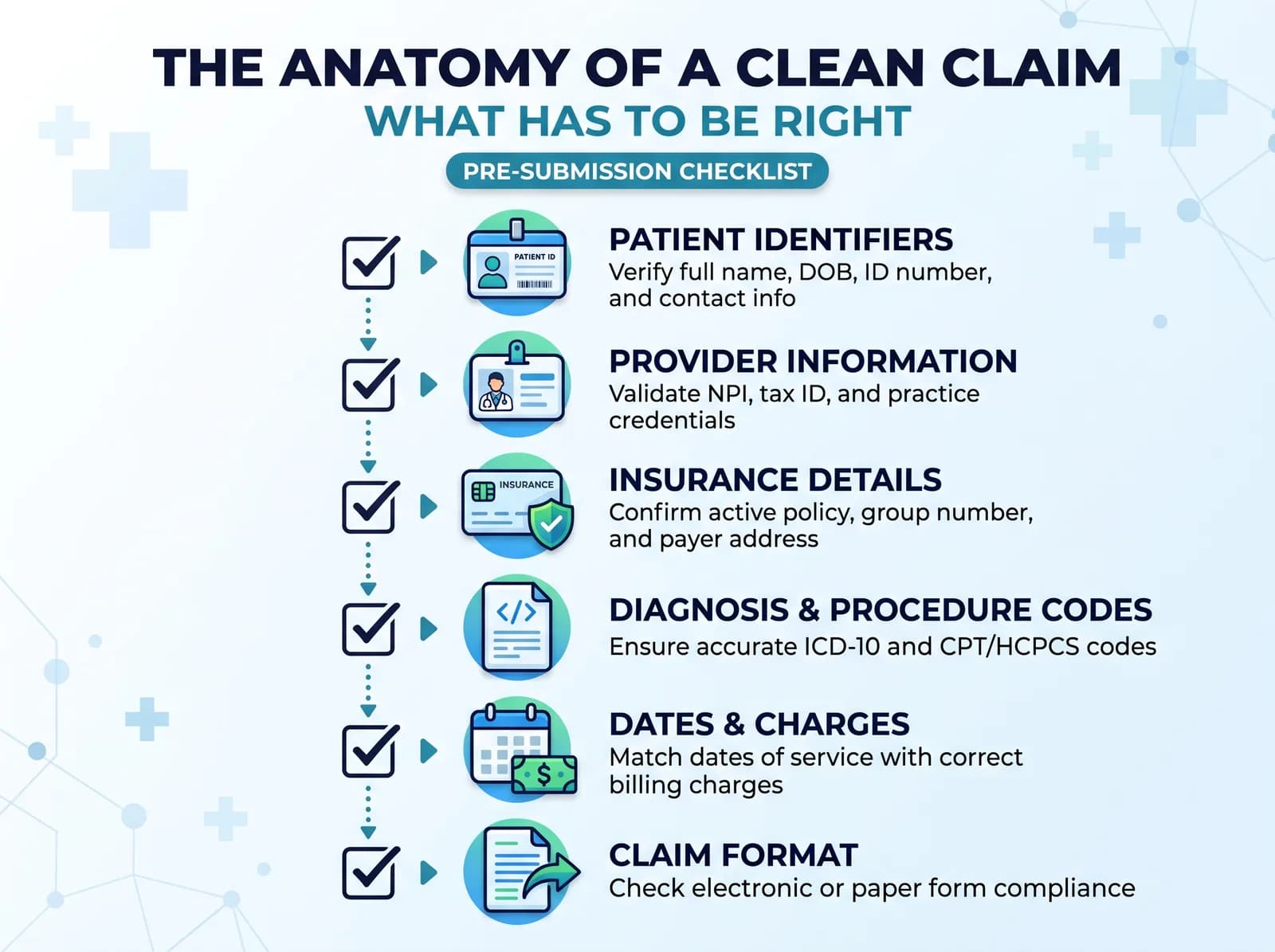
A clean claim in medical billing is one a payer can process from start to finish without coming back to your office for missing or corrected information. That is the whole idea. Everything else — the edits, the checklists, the clearinghouse rules — exists to get a claim to that point before it leaves your system. For a small practice where one or two people handle eligibility, coding, submission and follow-up, cleanliness is less about working harder and more about running the same checks in the same order every time.
One caution up front: payers and contracts define "clean" differently, and those definitions change. Treat the checklist below as a process framework, then confirm the specifics against each payer's current companion guide and your own contract language.
What a Clean Claim in Medical Billing Actually Means
Operationally, a clean claim carries complete, accurate and correctly formatted information so the payer can adjudicate it without requesting more data. That means the patient is correctly identified, the right payer and plan are attached, coverage was verified, any required authorization is on file, the rendering and billing providers are enrolled and identified correctly, the codes reflect the documented service, and the claim is submitted in the format the payer accepts.
Notice what is not in that definition: whether the payer pays. A clean claim can still be denied on medical necessity or benefit grounds. Cleanliness is about whether the claim can enter adjudication at all — not about the outcome.
Clean, Rejected, and Denied: Three Different Problems
These terms are often used interchangeably in small offices, which blurs where the fix belongs.
Rejected
The claim never entered adjudication. A clearinghouse edit or payer front-end rule stopped it — a missing identifier, a format problem, a mismatched payer. Rejections are frequently within the practice's control, and they are typically the cheapest problem to fix because no one has reviewed the claim yet.
Denied
The claim was adjudicated and refused. Denials can stem from front-end gaps (no authorization, coverage termed) or from clinical and benefit review. They cost staff time to appeal or correct, and some are unavoidable.
Clean
The input that prevents the rejections and the controllable denials. A clean claim is not a guarantee — it is the version of the claim where your office has done everything it can before submission.
The Anatomy of a Clean Claim: What Has to Be Right
Walk through these components in order. Each one is a place a claim can lose its cleanliness.
- Patient demographics and identifiers. Legal name as it appears with the payer, date of birth, member ID, and any secondary identifiers. A transposed digit here produces a rejection or a denial that looks like something else.
- Payer and plan selection. The right payer, the right plan, the right address for the service type. Stale plan information is a common source of misrouted claims.
- Eligibility and benefits. Coverage active on the date of service, and the benefit details that affect the claim — copay, deductible, whether the service is covered under that plan.
- Authorization. Where the payer requires it, the authorization must exist, match the service and date, and be referenced correctly on the claim. Requirements vary by payer and plan; verify them rather than assuming.
- Provider identifiers and enrollment. Rendering, billing and, where applicable, supervising provider identifiers must be correct, and the provider must be enrolled with that payer. Credentialing gaps surface as denials that look like coding problems.
- Coding accuracy. Codes must reflect the documented service, with modifiers used correctly. Coding rules are payer- and code-set-specific — confirm against current official guidance and your payer's policy rather than relying on memory.
- Documentation support. The note must support what was billed. A claim released before the note is final is a claim you cannot defend on appeal.
- Claim format. Submitted through the correct channel in the format the payer accepts, with the fields the payer requires completed.
Where Independent Practices Usually Break Cleanliness
In small offices, the same handful of failure points recur:
- Front-desk registration errors. Rushed intake, handwritten cards, and no second check before the claim is built.
- Stale insurance cards. The card on file is from last year; the plan changed in January.
- Missed authorizations. The service was scheduled before anyone confirmed whether the payer required prior authorization.
- Modifier and coding slips. Small errors that pass the scrubber but fail payer review.
- Claims released before documentation is final. The charge is entered to hit a deadline, and the note arrives later — or never matches.
None of these are unusual; they are what happens when eligibility, coding and submission sit with one or two people and no written sequence.
A Pre-Submission Checklist You Can Run Every Day
Adopt this as a standing sequence and assign an owner to each step:
- Registration verification. Confirm demographics and member ID against the card and, where possible, the payer portal at the visit — not after.
- Eligibility check. Verify active coverage on the date of service and capture benefit details. See eligibility and benefits verification for how this step is structured.
- Authorization confirmation. Confirm whether one is required, that it exists, and that it matches the service and date.
- Coding review. A second set of eyes on codes and modifiers before release.
- Documentation match. The note supports the claim, and the note is final.
- Clearinghouse edits. Clear every edit — do not override without a documented reason.
- Final hold-and-review. A short daily batch review before submission, so patterns surface while they are still fixable.
Using Clearinghouse Edits and Payer Rules Without Guessing
Clearinghouse scrub rules and payer companion guides define much of what counts as clean in practice. The trap is assuming a rule that applied to one payer applies to all of them, or that last year's requirement still holds. Confirm requirements with each payer directly, and treat companion guides as living documents that must be re-verified as they change. When a rule is unclear, ask the payer rather than guessing — a five-minute call beats a corrected claim.
Measuring Whether Your Claims Are Getting Cleaner
Track process measures, not promises. Two are enough to start: the share of claims accepted on first submission and a running log of why claims are returned, sorted into rejection reasons and denial reasons. Review the log monthly. If the same reason appears three times, it is a process problem, not a person problem. These are internal monitoring measures; they are not a forecast of financial results.
When to Fix the Process In-House vs. Bring In Help
A small practice can reasonably own registration, eligibility checks and a coding review if staffing is stable and the volume is manageable. The signals that the work has outgrown the office are familiar: the same denials recurring, eligibility checks skipped on busy days, A/R aging without follow-up, and one person's absence stalling the whole cycle.
At that point the choice is between redesigning the workflow in-house and bringing in outside support for specific functions — eligibility, denial management or the full cycle. Our claims management and denial management pages describe how those functions are handled, and in-house vs. outsourced medical billing walks through the trade-offs neutrally.
What to Do Next
If you want an outside review of where your claims are losing cleanliness, start with the return-reason log for the last 60 days. If you would rather talk it through, contact us or schedule a conversation — no pressure, and no obligation to change anything.
Where this work connects
Related articles.
 Revenue Cycle Management
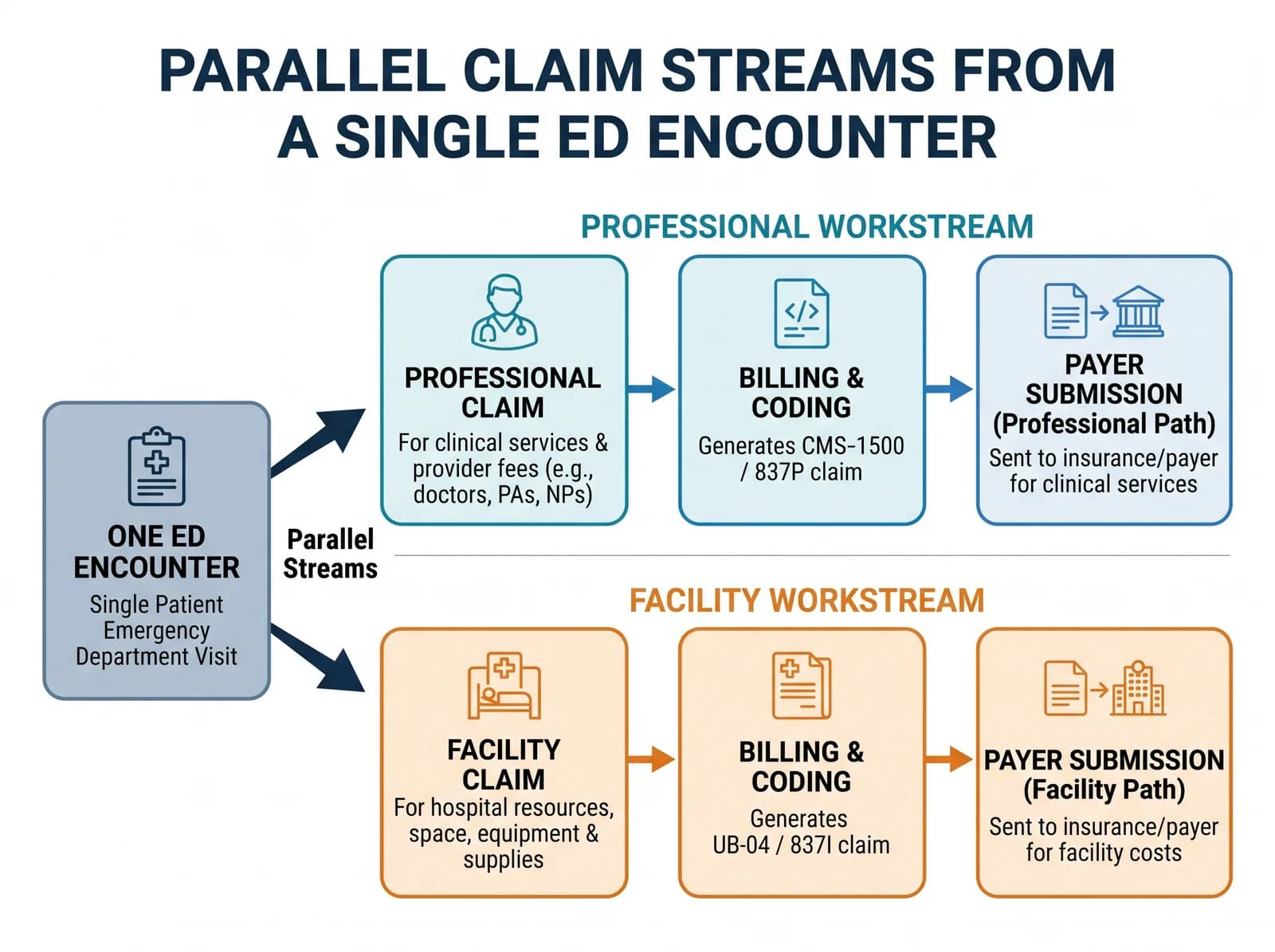
Emergency Department Billing: How ED Revenue Cycle Differs from Office Billing
A practical guide to emergency department billing for independent ED groups and freestanding EDs, covering structural differences from office billing, where ED claims stall, and what to ask a billing partner before signing.
Read article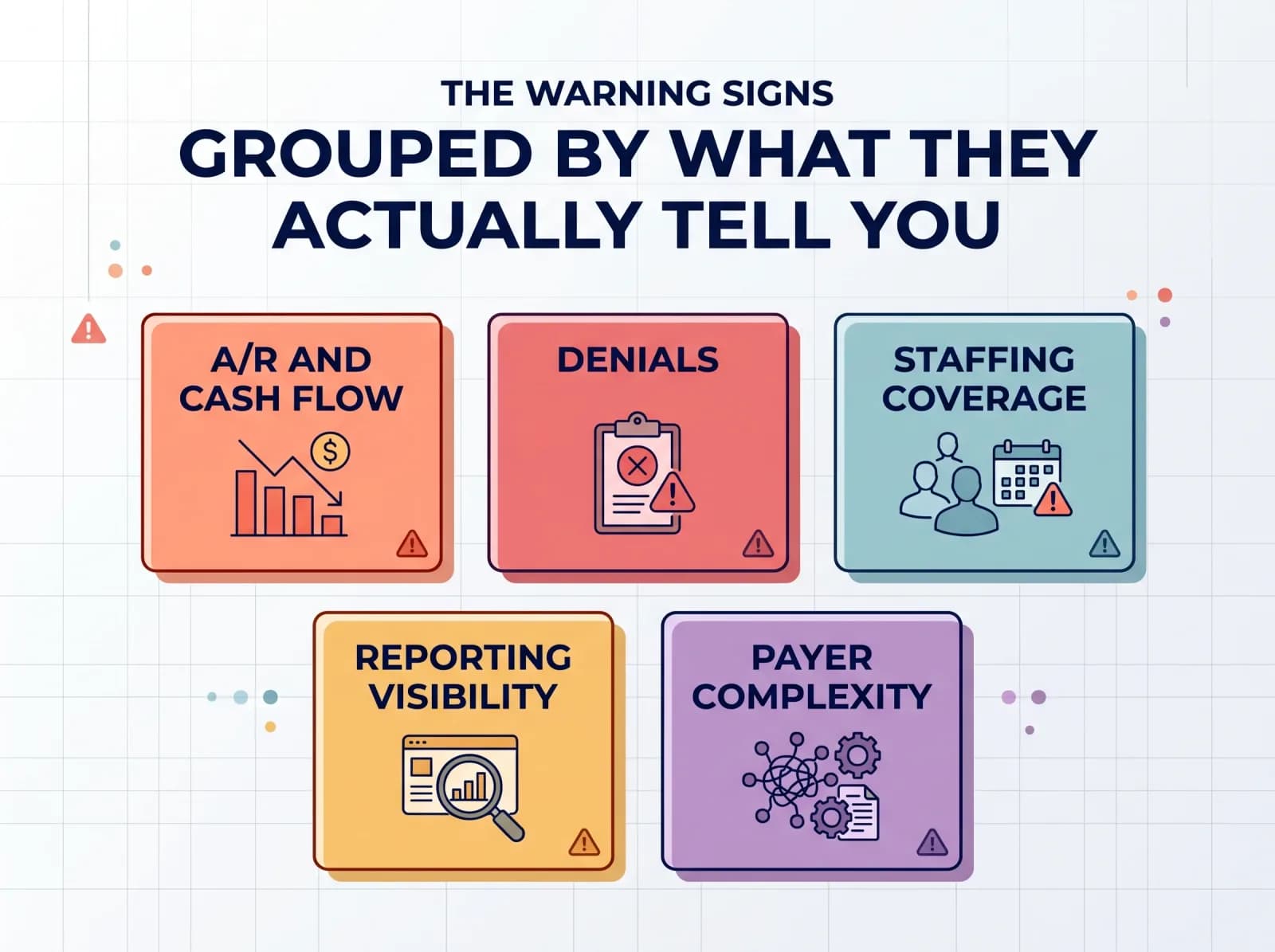 Revenue Cycle Management
Signs Your Practice Has Outgrown In-House Billing
A practical self-diagnostic for independent practices: spot the structural warning signs that in-house billing has outgrown its capacity, and decide whether to invest internally or change model.
Read article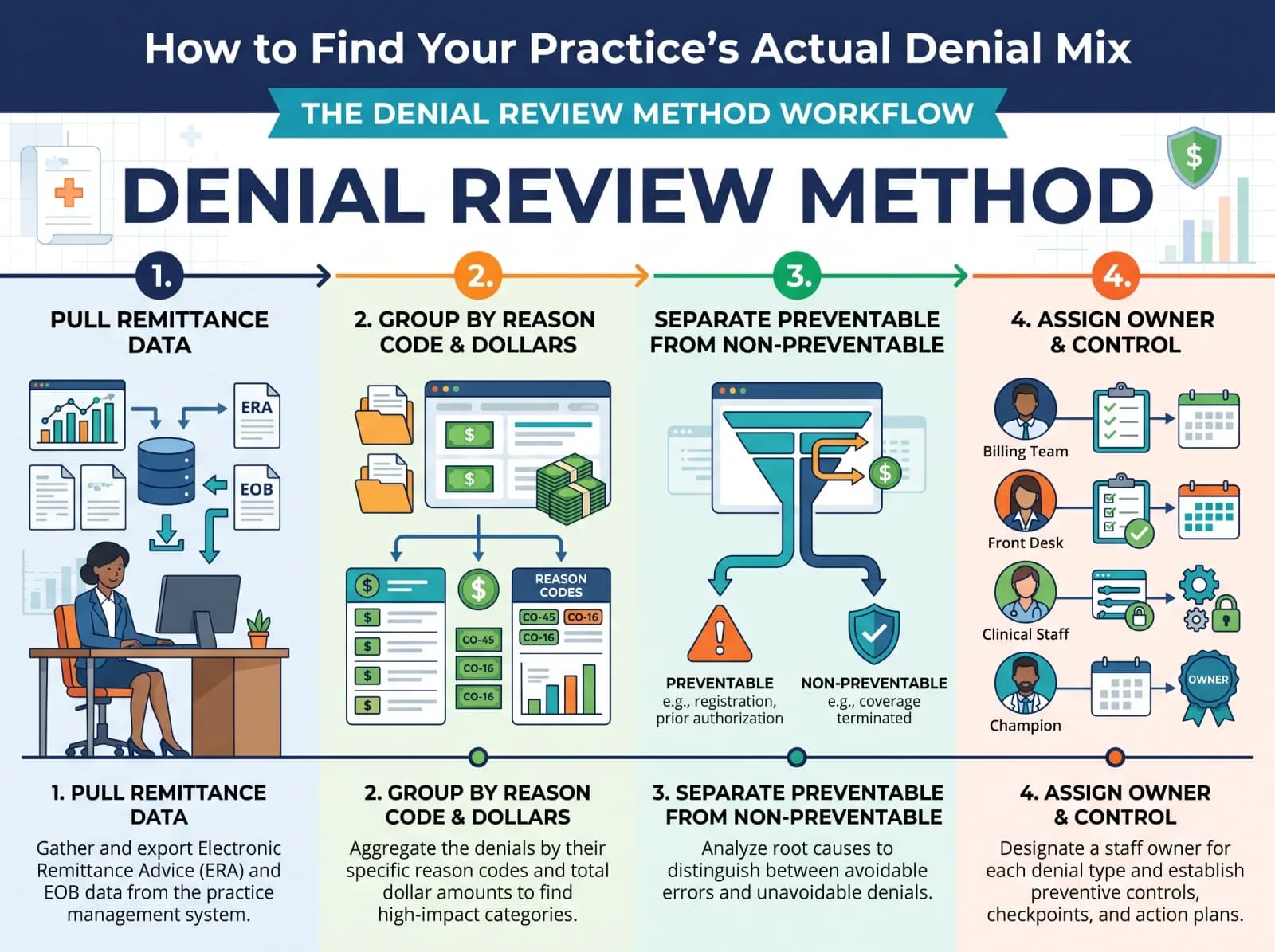 Revenue Cycle Management
What Causes Medical Billing Denials? A Revenue Cycle Guide
A practical guide to the front-end, mid-cycle, and payer-side causes of medical billing denials, plus a method for finding your practice's own denial mix and assigning owners, controls, and metrics.
Read article