

What Causes Medical Billing Denials? A Revenue Cycle Guide
A practical guide to the front-end, mid-cycle, and payer-side causes of medical billing denials, plus a method for finding your practice's own denial mix and assigning owners, controls, and metrics.
Denials vs. rejections: why the distinction changes your response
A rejection (sometimes called a front-end rejection or clearinghouse edit) typically fails before the claim reaches payer adjudication—often because of a formatting, data, or edit issue. Definitions vary by clearinghouse and payer, so confirm how your trading partners classify rejections versus denials. A denial generally comes after the payer has adjudicated and decided not to pay, and it arrives with a reason code on the remittance advice. The distinction matters because the fix and the owner differ: rejections are usually corrected and resubmitted quickly by whoever submits claims, while denials may require appeal, additional documentation, or a patient-responsibility decision.
Front-end causes: registration, eligibility, and patient data
Many denials are decided before a claim is ever built. Common front-end culprits include:
Coverage and eligibility problems
Lapsed coverage, a plan that changed mid-year, or a wrong member ID will sink a claim. The control is a real-time eligibility check at (or before) the visit and again before high-cost services. Owner: front desk or eligibility team. See eligibility and benefits verification.
Demographic and registration errors
Misspelled names, transposed dates of birth, and wrong subscriber relationships cause mismatches. The control is a scripted registration checklist and a second-set-of-eyes check on new patients.
Missing referrals
When a plan requires a referral, a missing one can produce a denial that's preventable at scheduling—referral requirements are payer-specific, so verify them against current payer guidance. The control is a referral-required flag in the schedule template. Owner: scheduling/front desk.
Mid-cycle causes: coding, modifiers, and authorization
These failures happen between the encounter and submission.
Coding errors and modifier problems
Undercoding, upcoding, and modifier mismatches (especially around bundling and multiple procedures) are frequent denial sources. The control is coder review against the documentation and the payer's current policy—verify rules against official coding guidance and payer publications rather than memorizing them. Owner: coding/billing lead.
Missing or invalid prior authorization
Services that require authorization but lack a valid one are commonly denied. The control is an authorization tracker tied to the schedule, with the auth number attached to the claim. Owner: authorization team. See prior and retro authorization.
Invalid claim data
Missing NPI, wrong place of service, or a mismatched rendering provider will trigger edits. The control is a pre-submission scrub and a clean-claim checklist.
Back-end and payer-side causes: medical necessity, timely filing, duplicates, and exclusions
Some denials are harder to prevent at the front desk:
- Medical necessity — the payer determines the service wasn't supported by documentation. Prevention lives in documentation quality and, where appropriate, a coverage determination before the service.
- Timely filing — deadlines vary by payer and contract and must be verified against current payer guidance and your agreements. The control is a submission and follow-up calendar.
- Duplicate claims — often from resubmission without voiding the original. The control is a submission log.
- Bundling and coverage exclusions — the payer's edit logic or benefit design excludes the service. Verify against the payer's current policy and the patient's benefit document.
Patient-responsibility denials: when the issue is not the payer
Some denials aren't really payer denials—they're patient responsibility: deductible, coinsurance, coordination of benefits, or a non-covered service. These are best managed with a front-end financial conversation and clear estimates, so the balance is expected rather than disputed. Owner: front desk with billing support.
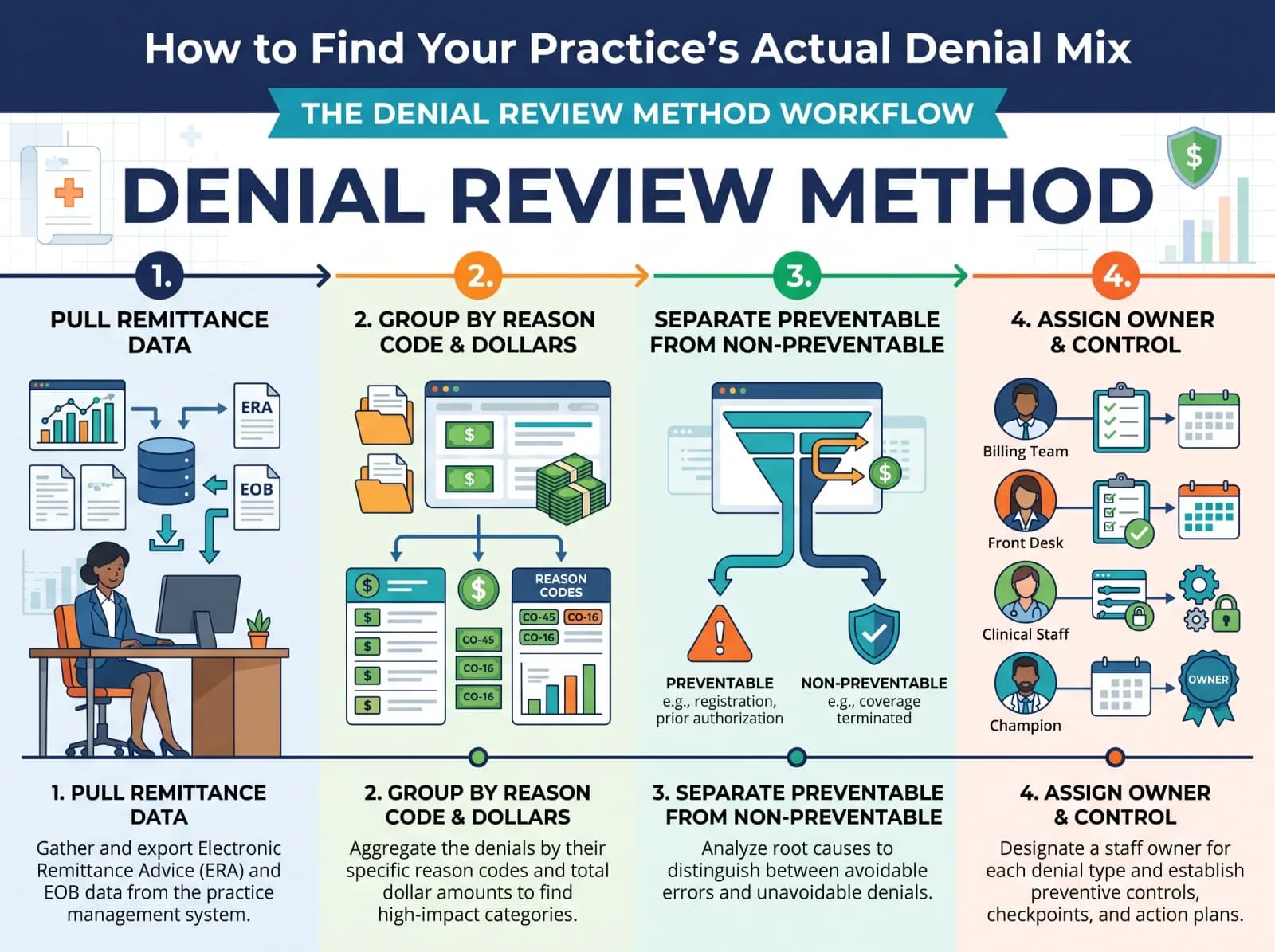
How to find your practice's actual denial mix
Generic lists don't reduce rework; your own data does. A practical method:
- Pull remittance data for a defined period (e.g., the last 90 days).
- Group denials by reason code and by dollar amount.
- Separate preventable denials (eligibility, registration, auth, coding) from non-preventable ones (medical necessity disputes, exclusions).
- Rank by both volume and dollars—a low-volume, high-dollar cause may deserve attention first.
- Assign an owner to each top cause and set one metric.
This is the step that turns a generic article into an operating plan. If you want a structured starting point, our revenue leak calculator and revenue performance reporting can help frame the analysis.
A fix map: matching each cause to an owner, a control, and a metric
| Cause | Fix (front/back) | Owner | Metric |
|---|---|---|---|
| Lapsed/wrong coverage | Front-end eligibility check | Front desk / eligibility | Eligibility-related denial rate (share of denials with an eligibility reason code) |
| Registration errors | Registration checklist | Front desk | Data-error denials (count or rate of denials for demographic/registration mismatches) |
| Missing referral | Schedule flag | Scheduling | Referral denials (count or rate of denials for missing/invalid referral) |
| Coding/modifier errors | Coder review | Coding lead | Coding denial rate (share of denials with a coding/modifier reason code) |
| Missing authorization | Auth tracker | Auth team | Auth denials (count or rate of denials for missing/invalid authorization) |
| Timely filing | Submission calendar | Billing lead | Days to submit (average days from encounter to claim submission) |
| Duplicates | Submission log | Billing | Duplicate denials (count or rate of denials for duplicate claims) |
| Medical necessity | Documentation review | Clinician/coder | Appeal overturn rate (share of appealed denials paid on appeal) |
Track clean claim rate, overall denial rate, and days to appeal as your headline numbers. We deliberately don't publish benchmarks here—set your own baseline and improve against it.
What to do when a denial is not preventable
Some denials require appeal. Build a workflow: log the denial, gather documentation, submit within the payer's appeal window (verify current requirements with the payer), and track the outcome. If the service is genuinely patient responsibility, shift the balance appropriately and communicate with the patient.
When to bring in outside help
If denial rework is consuming staff time, appeals are aging, or you can't tell which causes dominate, dedicated support may help. Knight's denial management and medical billing and coding teams can help you diagnose the mix and build controls. We focus on process commitments and measurable controls.
What to do next
Start with the denial-mix exercise above. If you'd like a second set of eyes, you can schedule a consultation.
Related articles.
 Revenue Cycle Management
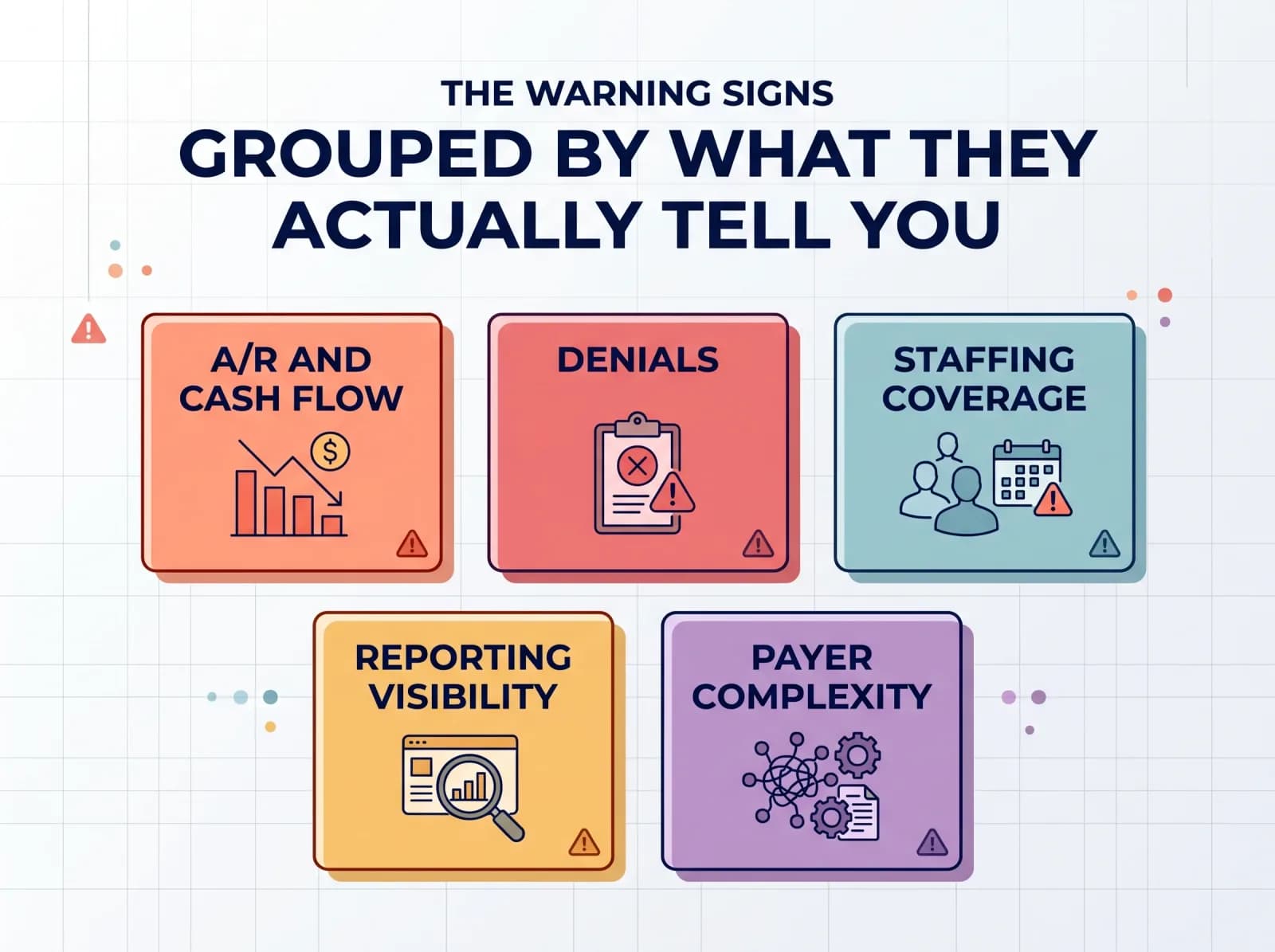
Signs Your Practice Has Outgrown In-House Billing
A practical self-diagnostic for independent practices: spot the structural warning signs that in-house billing has outgrown its capacity, and decide whether to invest internally or change model.
Read article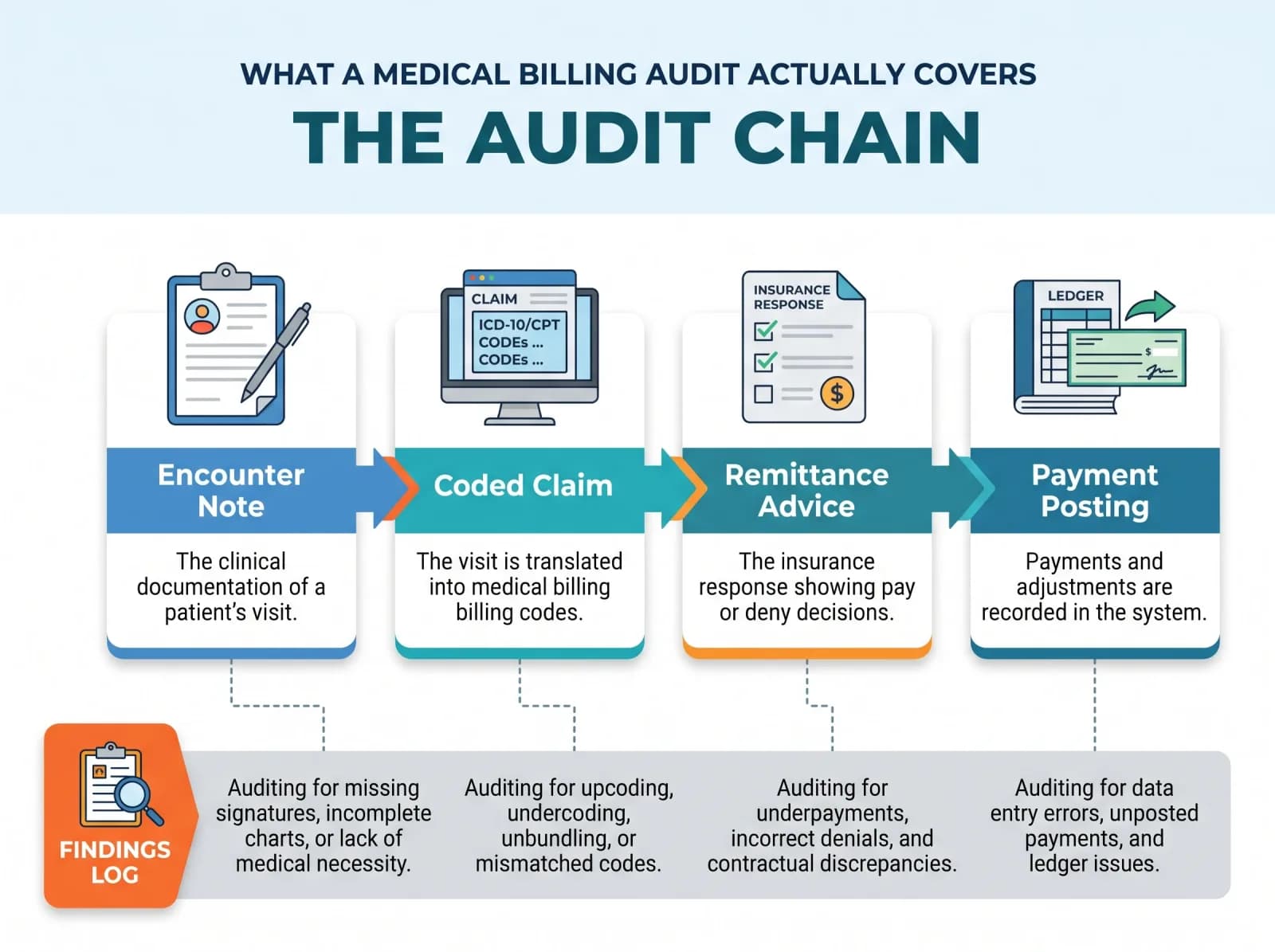 Revenue Cycle Management
Medical Billing Audit: A Practical Guide for Independent Practices
A practical guide to medical billing audits for independent practices: what an audit covers, how to build a repeatable internal process, and how to respond to payer requests.
Read article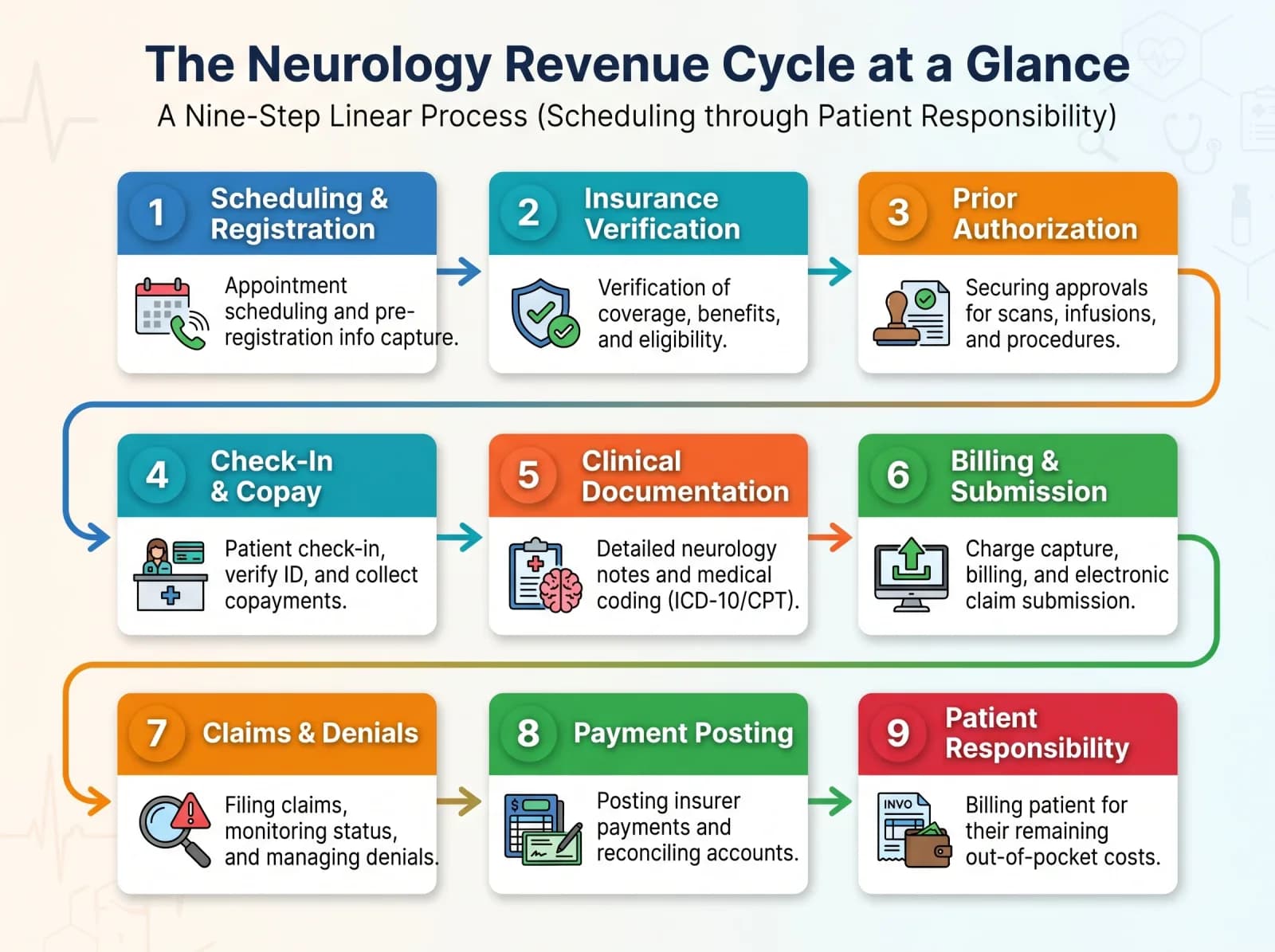 Revenue Cycle Management
Neurology Medical Billing: A Practical Process Guide
A practical map of the neurology revenue cycle, from eligibility and authorization through charge capture, denial review, and patient collections, with process checks a practice manager can own.
Read article