

Medical Billing Audit: A Practical Guide for Independent Practices
A practical guide to medical billing audits for independent practices: what an audit covers, how to build a repeatable internal process, and how to respond to payer requests.
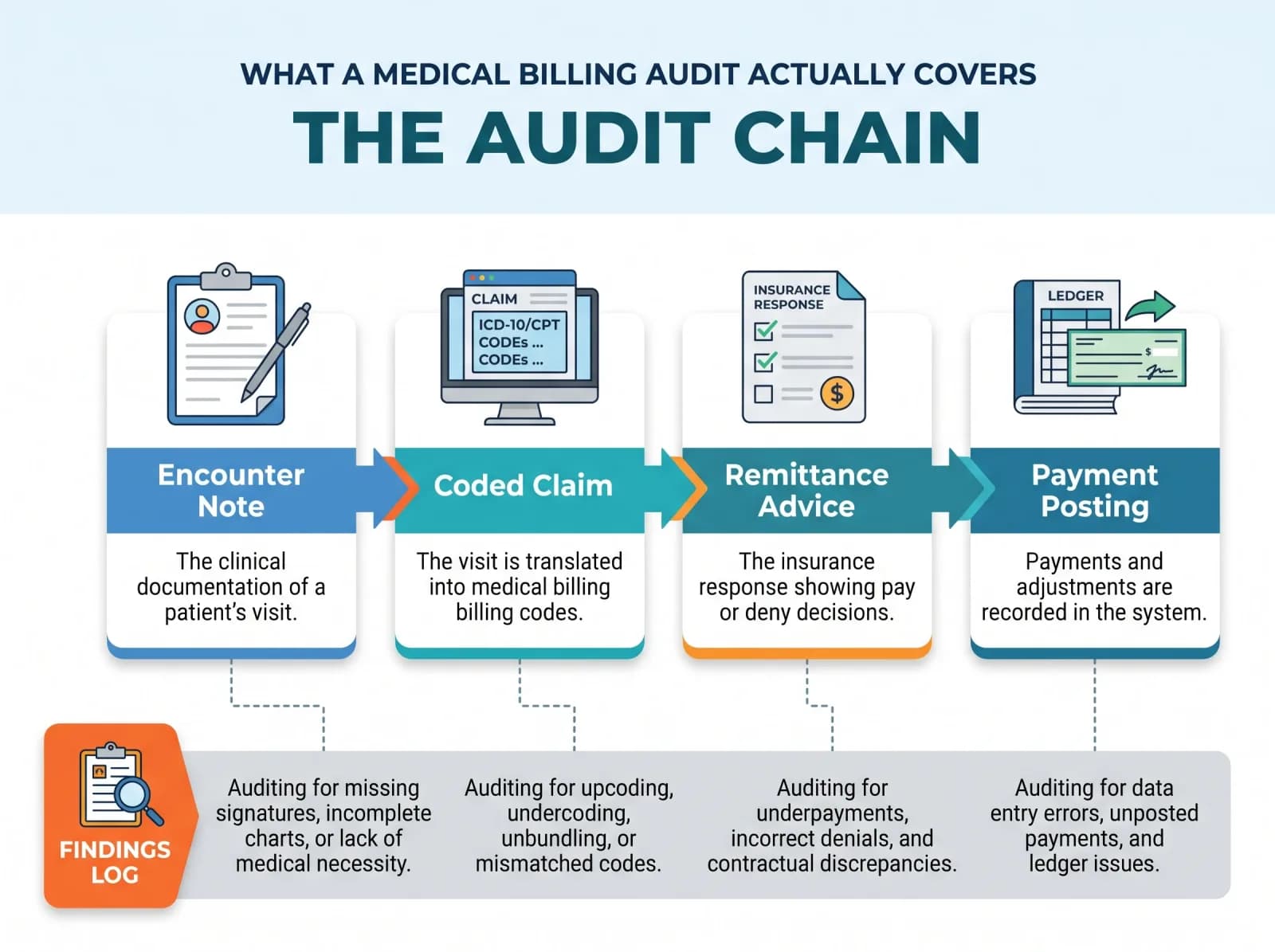
A medical billing audit is not a surprise inspection. It is a structured comparison of what was documented, what was coded, what was billed, and what was paid. Practices that run that comparison on their own schedule can be better prepared for payer audits, may reduce repeat denials, and can gain a clearer picture of where revenue leaks. Practices that wait for an outside request often discover the same problems later, with less time to fix them.
This guide walks through what a billing audit covers, how to build a repeatable internal process, and how to respond when a payer or external reviewer asks for records. It stays at the process level. Coding, legal, and clinical decisions should be verified against the guidance that applies to you and, where appropriate, qualified professionals.
What a Medical Billing Audit Actually Covers
A billing audit examines the chain that connects a patient encounter to a payment. In practice, that means reviewing:
- Whether the service documented in the encounter note matches the code billed.
- Whether charge capture was complete — no missed charges, no duplicate charges.
- Whether eligibility, authorization, and referral requirements were met before the claim went out.
- Whether payment posting, adjustments, and patient responsibility were applied correctly.
- Whether denials were worked and documented, or written off without review.
It is not a clinical review of whether care was appropriate, and it is not a legal opinion. An internal audit is a self-check. A payer audit is the payer verifying claims against records under its own policies. An external compliance review is a broader look at whether your processes and documentation would hold up under scrutiny. Each asks for different things, and each should be verified against the specific payer contract or official guidance that applies to you.
Why Independent Practices Should Audit Before Someone Else Does
Proactive audits surface the small mismatches that compound quietly: a modifier dropped on a procedure, a level of service that drifted upward over time, an authorization that was never obtained, a credit balance that sat unworked. Catching these internally gives you time to correct workflows, retrain staff, and document what you changed.
That record matters. When a payer asks questions, a practice that can show a dated internal audit, a findings log, and a corrective action plan is in a stronger position than one assembling records from scratch. We do not promise specific recovery amounts — results depend on your mix, payers, and documentation — but early detection may help reduce repeat denials and support a cleaner claim stream. If you want a structured starting point, our chart auditing and DRG review service is built around this kind of pre-emptive check.
The Main Types of Billing Audits and What Each One Asks For
Internal audits
You define the scope, sample, and timing. Typical requests are encounter notes, claim forms, remittance advice, and the fee schedule or contract in effect. Internal audits are the most controllable and should be the most frequent.
Payer pre-payment and post-payment audits
Payers may review claims before paying or after payment has been made. Requests commonly include medical records, itemized bills, proof of authorization, and documentation supporting the code billed. Payer-specific rules, lookback periods, and response windows vary — confirm them in writing with the payer and against the guidance that applies to you rather than relying on general assumptions.
External compliance reviews
These are broader and may examine policies, training records, and audit trails alongside claims. Treat them as a readiness exercise: the same organized records that support an internal audit support an external one.
Building a Repeatable Internal Audit Process
The value of an internal audit comes from repetition, not from a single deep dive. A workable cycle looks like this:
- Define scope. Pick a focus — one provider, one payer, one service line, or one denial category — and write down what is in and out of scope.
- Select a sample. Choose a sample size you can actually review thoroughly and document your selection method. There is no universal benchmark; pick a size that gives you a meaningful read on the focus area and note the limitation.
- Pull documentation. Gather encounter notes, claim forms, remittance advice, and authorization records for each sampled claim.
- Compare documentation to coded claims. Flag mismatches, missing elements, and unsupported codes for review by a qualified coder or clinician.
- Review charge capture and payment posting. Check for missed charges, duplicates, incorrect adjustments, and unworked denials.
- Log findings. Record each finding with the claim, the issue, the root cause, and the owner.
- Assign corrective actions. Give each finding a fix, a responsible person, and a due date.
Keep the log in one place. It becomes your evidence of diligence and your to-do list for the next cycle.
What to Have Ready Before an Audit Request Arrives
Readiness is mostly organization. Keep these records retrievable and current:
- Encounter notes and supporting documentation, retained per your policy and applicable requirements.
- Coding references and your internal coding policies.
- Current fee schedules and payer contracts, including amendments.
- Credentialing and enrollment records.
- Prior internal audit logs and corrective action plans.
- Denial and appeal tracking records.
Retention periods and documentation requirements vary by payer and jurisdiction. Confirm yours against the guidance that applies to you rather than assuming a standard.
Responding to a Payer Audit Request
When a request arrives, slow down before you send anything.
- Log the request. Record the date received, the payer contact, the claims in scope, and the stated deadline.
- Confirm scope and deadlines in writing. Ask the payer to clarify exactly which claims and records are requested and what response window applies.
- Assemble documentation against the confirmed scope only — no more, no less.
- Track every submission with dates, method, and confirmation.
- Route disagreements to the payer's stated appeal or review process. Verify your appeal rights and timelines with the payer and the guidance that applies to you.
If the volume is large or the timeline is tight, our denial management and complete RCM services teams can help organize the response without disrupting day-to-day billing.
Turning Audit Findings into Corrective Action
Findings are only useful if they change behavior. Categorize each one — documentation, coding, charge capture, eligibility, posting, or denial handling — then assign an owner and a due date. Update the workflow that allowed the issue, retrain the staff involved, and schedule a follow-up audit on the same focus area to confirm the fix held. Connect the results to your revenue performance reporting so denial trends and audit findings are reviewed together rather than in isolation.
When to Bring in Outside Help
Consider outside support when the audit volume exceeds your capacity, when findings point to a systemic coding or documentation issue, when a payer request arrives with a short deadline, or when you want an independent read before responding. Evaluate any partner on process transparency, documented findings, and clear ownership of corrective actions — not on promised outcomes.
Frequently Asked Questions
How often should we run an internal audit?
There is no universal standard. Many practices audit on a regular cycle and add targeted audits after a denial spike or a payer request. Choose a cadence you can sustain and document.
How long should we keep documentation?
Retention requirements vary by payer, state, and record type. Verify against the guidance that applies to you and your payer contracts.
Who should perform the internal audit?
Someone with coding knowledge and independence from the claims being reviewed. Small practices often use a qualified coder or an outside reviewer.
What if a payer requests records we cannot locate?
Respond promptly, explain what is available, and document your search. Confirm the payer's expectations in writing.
Next Steps for Audit Readiness
If you want a second set of eyes on your audit readiness, we are glad to talk through where your practice stands.
Related articles.
 Revenue Cycle Management
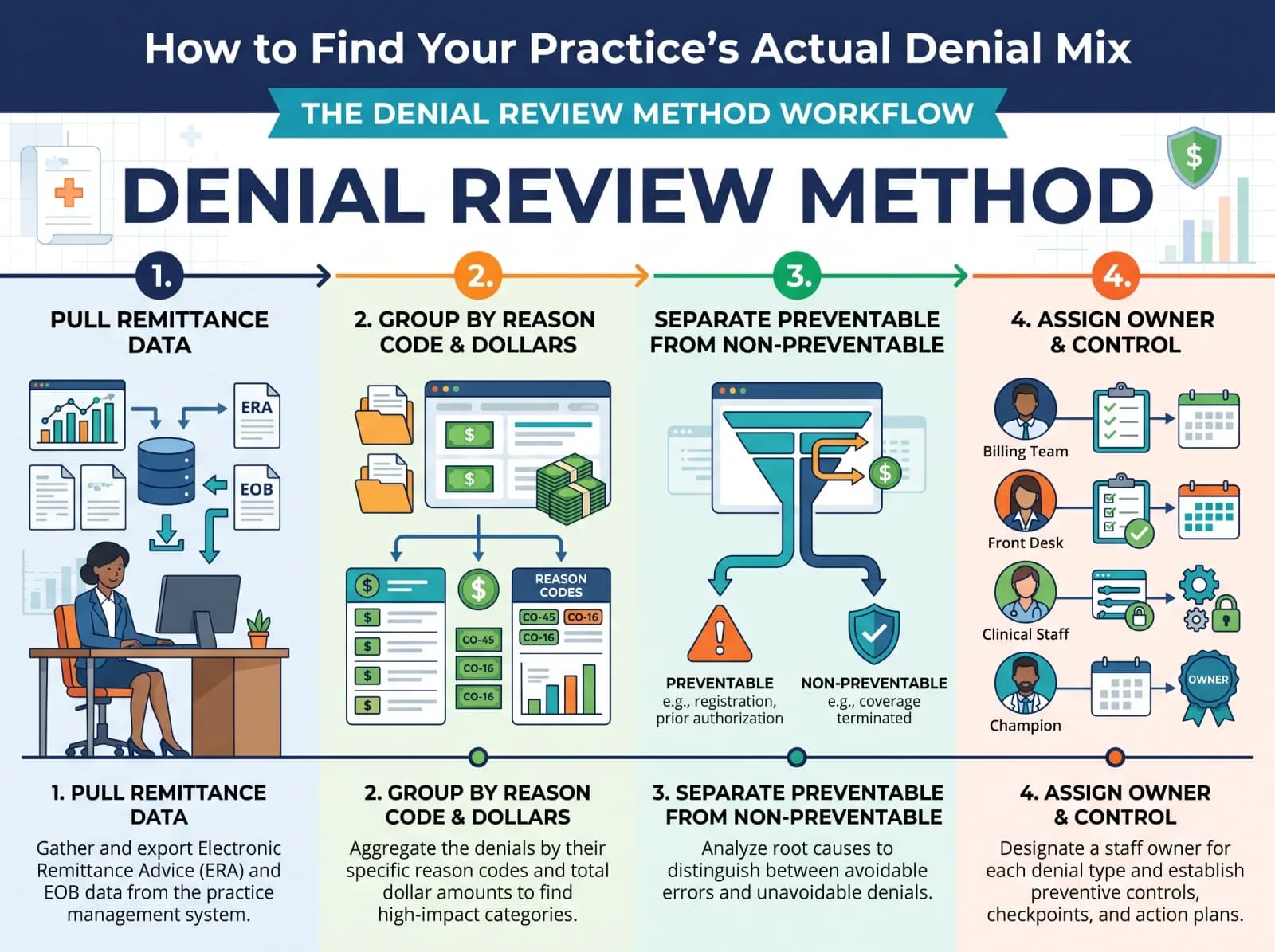
What Causes Medical Billing Denials? A Revenue Cycle Guide
A practical guide to the front-end, mid-cycle, and payer-side causes of medical billing denials, plus a method for finding your practice's own denial mix and assigning owners, controls, and metrics.
Read article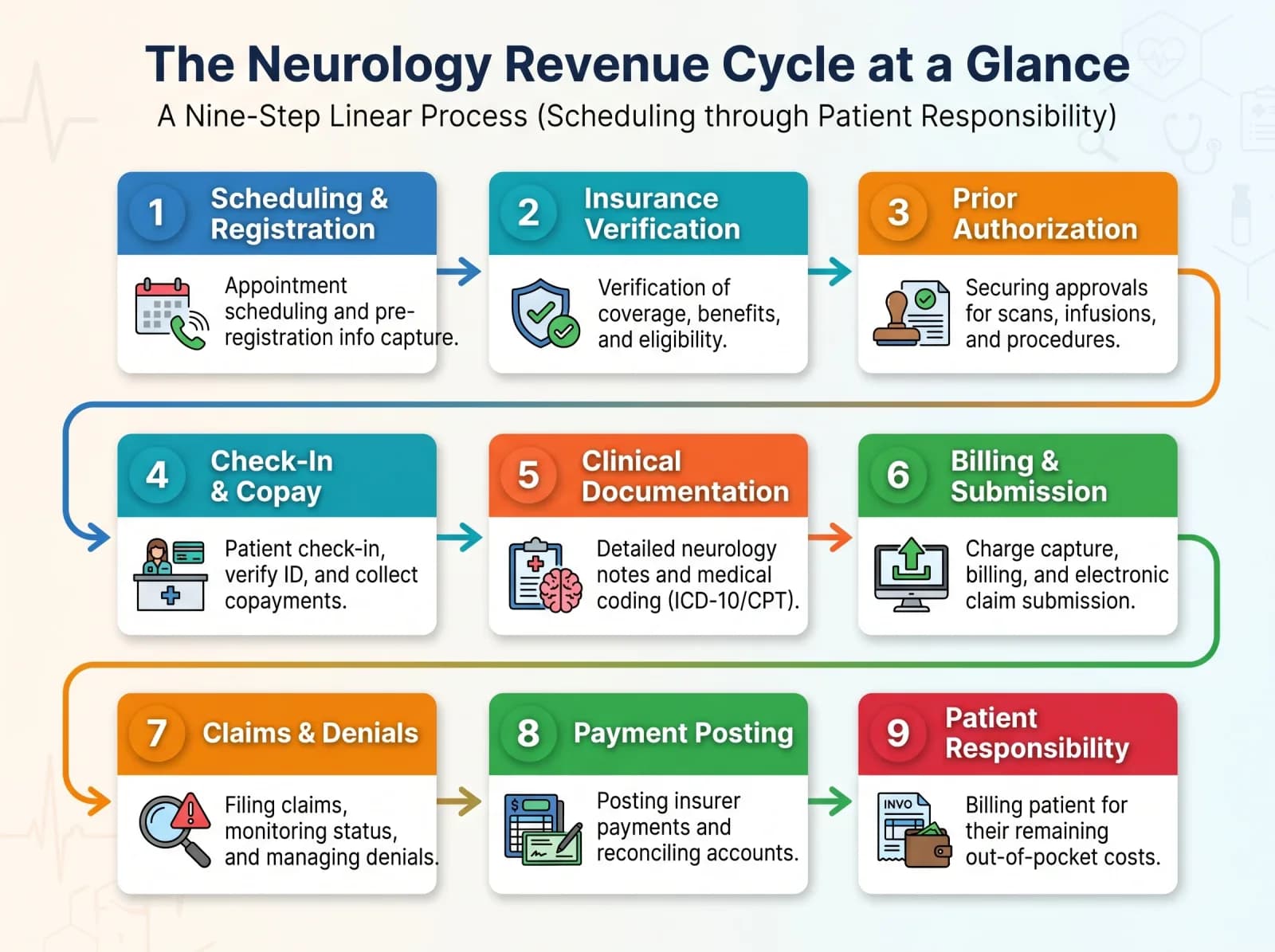 Revenue Cycle Management
Neurology Medical Billing: A Practical Process Guide
A practical map of the neurology revenue cycle, from eligibility and authorization through charge capture, denial review, and patient collections, with process checks a practice manager can own.
Read article Revenue Cycle Management
 for Small Independent Practices in Massachusetts
A practical guide to revenue cycle management for small independent practices in Massachusetts, covering what RCM includes, where revenue leaks, what to verify before outsourcing, and how Knight structures support.
Read article