

Neurology Medical Billing: A Practical Process Guide
A practical map of the neurology revenue cycle, from eligibility and authorization through charge capture, denial review, and patient collections, with process checks a practice manager can own.
Neurology billing is not general practice billing with a different specialty code on the claim. A single clinic day can mix high-volume follow-up visits, time-based cognitive assessments, nerve conduction studies, EEGs, injections, and infusion therapies — each with its own documentation expectations and authorization requirements, which can vary by payer. When the front desk, the clinician, and the billing team are not working from the same process, revenue leaks quietly: a missing authorization here, an incomplete encounter note there, a denial that never gets appealed. This article is a practical map of where those leaks tend to appear and what a practice manager can check, without pretending there is a single fix or a guaranteed outcome.
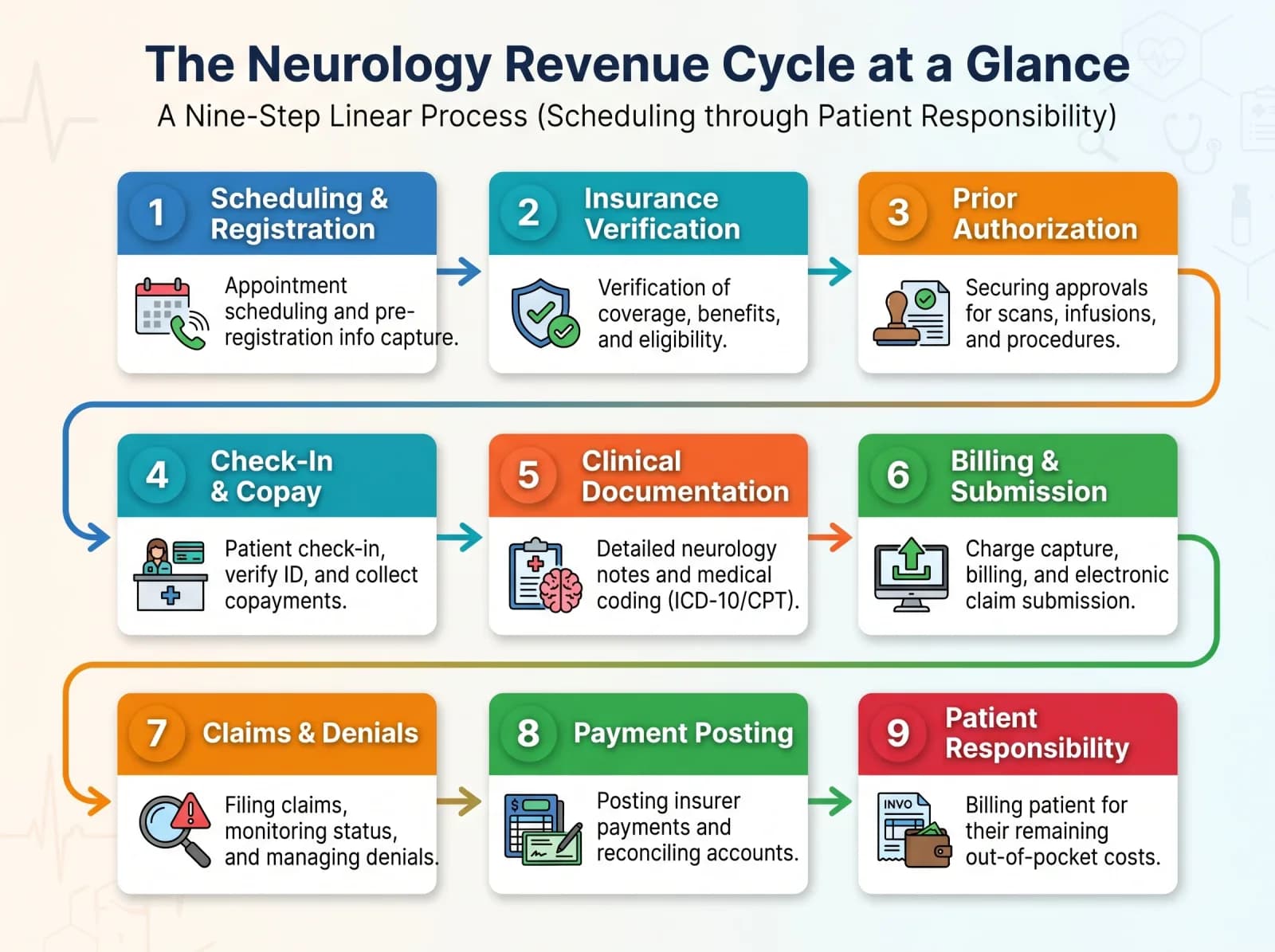
The Neurology Revenue Cycle at a Glance
Think of the neurology revenue cycle as a chain of checkpoints. Each one is a process to verify, not a result to assume:
- 1. Scheduling and intake — Capturing the right referral, diagnosis context, and insurance information up front.
- 2. Eligibility and benefits verification — Confirming coverage before the visit, not after the claim denies.
- 3. Prior authorization — Tracking which diagnostics, procedures, and medications require it and whether it is on file.
- 4. Charge capture — Making sure every service documented in the encounter reaches the claim.
- 5. Coding review — A qualified coder confirming the documentation supports what is billed.
- 6. Claim submission and clearinghouse edits — Catching errors before the payer does.
- 7. Payment posting and reconciliation — Matching remittances to claims and spotting underpayments.
- 8. Denial management and appeals — Working denials on a defined timeline rather than when someone remembers.
- 9. Patient responsibility — Estimating, communicating, and collecting balances consistently.
In neurology, these stages interact more than in many specialties. An authorization missed at the front end becomes a denial at the back end. A thin note becomes an appeal that is difficult to win. The goal is a chain with as few weak links as possible.
Front-End Checks: Eligibility, Benefits and Authorization
Many denials that reach a neurology practice's A/R start before the patient arrives. Eligibility verification should confirm active coverage, plan type, and whether the specific service on the schedule is a covered benefit. For diagnostics and procedures, the practice should know in advance whether prior authorization is required and whether a referral is needed.
Authorization workflows deserve their own tracker. A simple log — patient, service, authorization number, units approved, expiration date — helps catch a common failure where an authorization exists but does not match the date or the number of units billed. Requirements vary by payer and plan and can change over time, so confirm against the payer's current official guidance and provider manual rather than relying on memory or a general article like this one. Knight's eligibility and benefits verification and prior and retro authorization services support this step, which can be a source of revenue loss.
Charge Capture and Documentation Review
Neurology encounters are documentation-heavy. A chart-auditing routine — reviewing a sample of encounters against the charge ticket each month — surfaces patterns: services documented but not billed, templates that omit required elements, or visit levels that do not match the note. This is not about telling clinicians how to code; it is about catching gaps before they become denials.
Coding decisions should be made by qualified coders using current official coding guidance, and any specific code selection question should be verified with that guidance or a qualified coding professional. What a practice manager can own is the process: a consistent charge ticket, a defined window for coding review, and a feedback loop so clinicians learn what documentation the coders need. Knight's chart auditing work supports this kind of routine review.
Denial Patterns to Verify in Your Own Data
Every practice's denial mix is different, and the only reliable source is the practice's own remittance and denial reports. Rather than assuming a cause, pull your denial data and sort it into categories like these:
- Eligibility and coverage — was the patient covered on the date of service?
- Authorization — was one required, obtained, and matched to the service?
- Documentation and medical necessity — does the record support the service billed?
- Coding and modifier issues — are claims edited correctly before submission?
- Timely filing — are claims and appeals going out inside payer deadlines?
- Duplicate or bundling edits — are services being combined or rejected unexpectedly?
Measure the volume and dollar value in each category, then trace the top two or three back to the process stage that caused them. Specific denial rates and causes should come from your own data rather than from a general benchmark. A structured denial management process turns this analysis into appeals and, ideally, into front-end fixes.
Patient Responsibility and Collections in Neurology
Neurology patients often have recurring visits, imaging, and treatment courses, so a clear financial conversation early prevents surprises later. Good practice: estimate patient responsibility before the visit where possible, explain it in plain language, and offer a consistent policy for balances. These are process commitments — a practice can aim for transparency and consistency, but no one can guarantee a specific collection rate. Track patient balances alongside payer A/R so they do not quietly age out.
In-House vs. Outsourced Neurology Billing
Keeping billing in-house gives direct control and proximity to the clinical team; it also requires hiring, training, and retaining staff who understand neurology's authorization and documentation demands. Outsourcing can add specialty depth and continuity, but only if the partner's workflows actually fit neurology. This tradeoff is covered in more depth in our in-house vs. outsourced medical billing comparison, so we will not repeat it here. The right answer depends on your volume, your staff, and how much of the revenue cycle you want to own.
What to Ask a Neurology Billing Partner
Use these questions to compare responses side by side and separate a specialty-aware partner from a generalist:
- How do you handle neurology-specific authorization and documentation workflows?
- Who owns each stage of the revenue cycle, and where does our staff's responsibility end?
- What reports will we receive, and how often?
- How are denials worked, appealed, and reported back to us?
- Do you support credentialing and payer enrollment?
- What does the transition look like, and how is our existing A/R handled?
Our buyer's guide to choosing a billing company expands on these questions.
What to Do Next
Start with verification, not a vendor decision. Pull your last few months of denial and A/R reports, sort denials into the categories above, and identify the two or three process stages causing the most leakage. If you would like a second set of eyes, Knight can review your current workflow and reporting with no obligation — see our contact page or schedule a conversation. You can also use our revenue leak calculator to frame the conversation internally. We will show you what we would check and how we would measure progress.
Related articles.
 Revenue Cycle Management
 for Small Independent Practices in Massachusetts
A practical guide to revenue cycle management for small independent practices in Massachusetts, covering what RCM includes, where revenue leaks, what to verify before outsourcing, and how Knight structures support.
Read article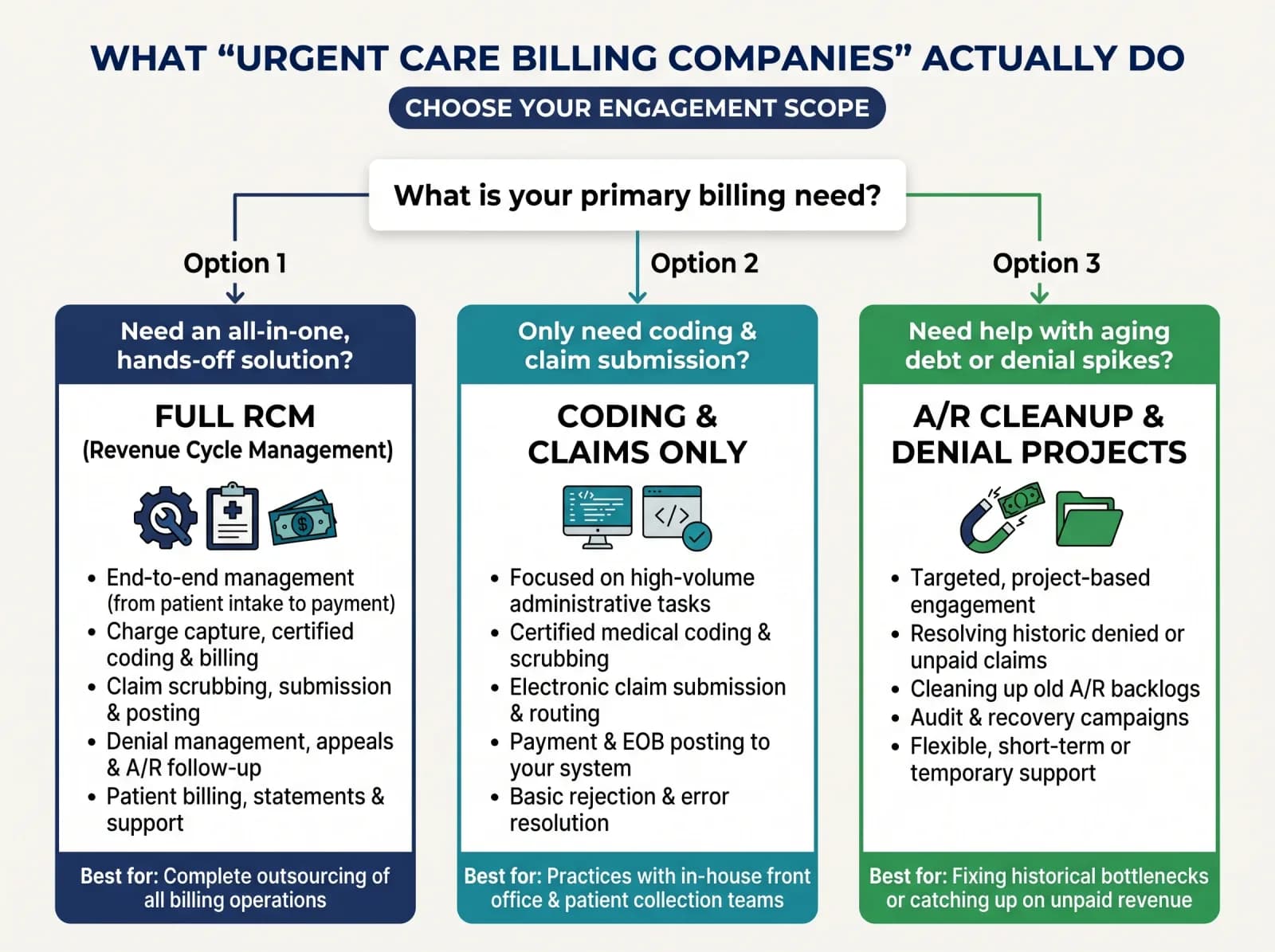 Medical Billing Vendor Selection
Urgent Care Billing Companies: A Buyer's Guide
A practical buyer's guide to urgent care billing companies: what these vendors actually do, which coding and claim questions to ask, how to read 'top 10' lists, and how to evaluate, price and transition a partner.
Read article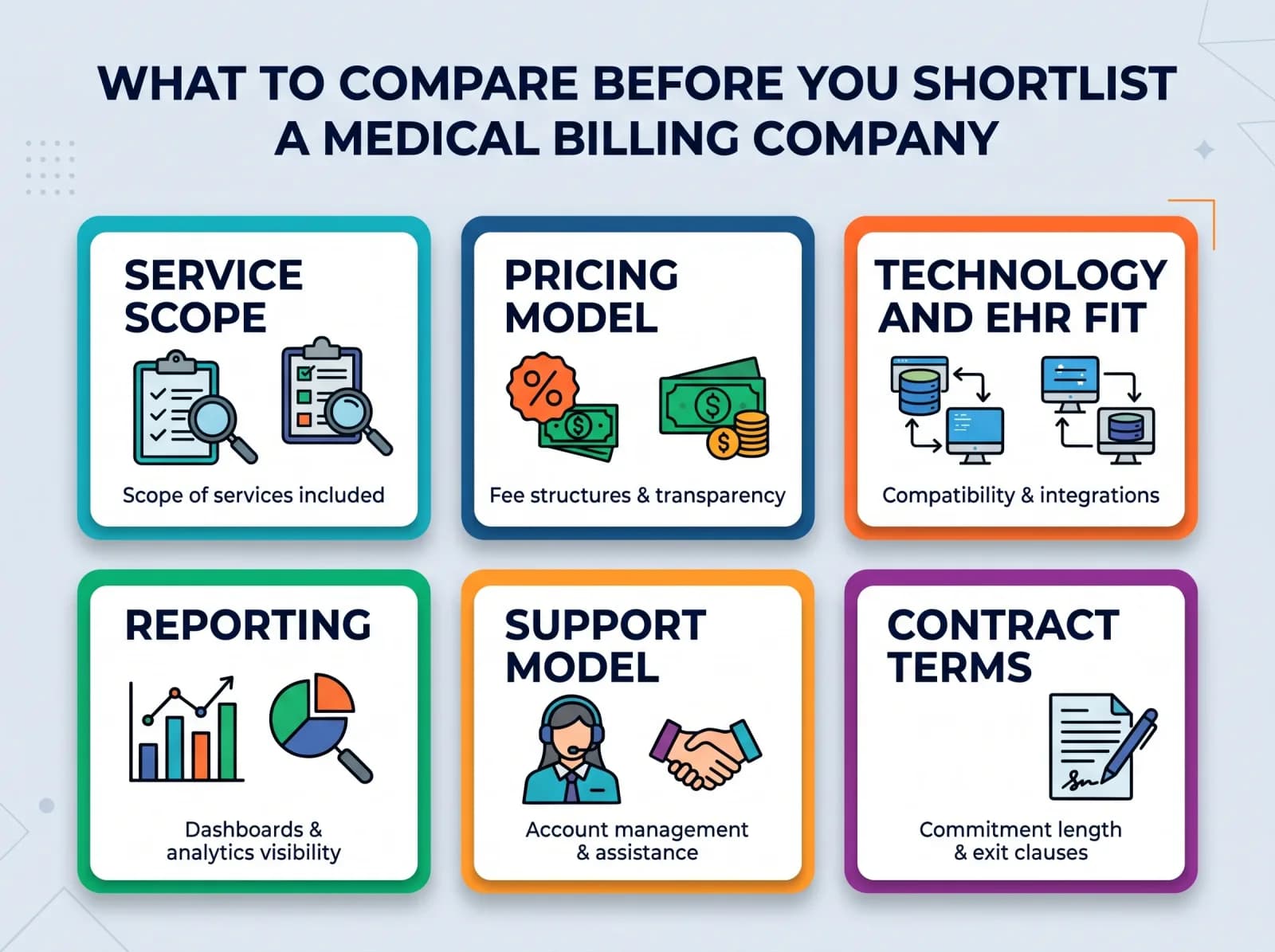 Medical Billing Vendor Selection
Medical Billing Companies for Small Practices: How to Compare
A practical framework for comparing medical billing companies for small practices, covering service scope, pricing, EHR fit, reporting, support, and contract terms.
Read article