

Revenue Cycle Management for Independent Practices: A Plain-Language Map
A plain-language walk through the revenue cycle for independent practices, the handoffs where cash most often leaks, and the few numbers worth reviewing every week.
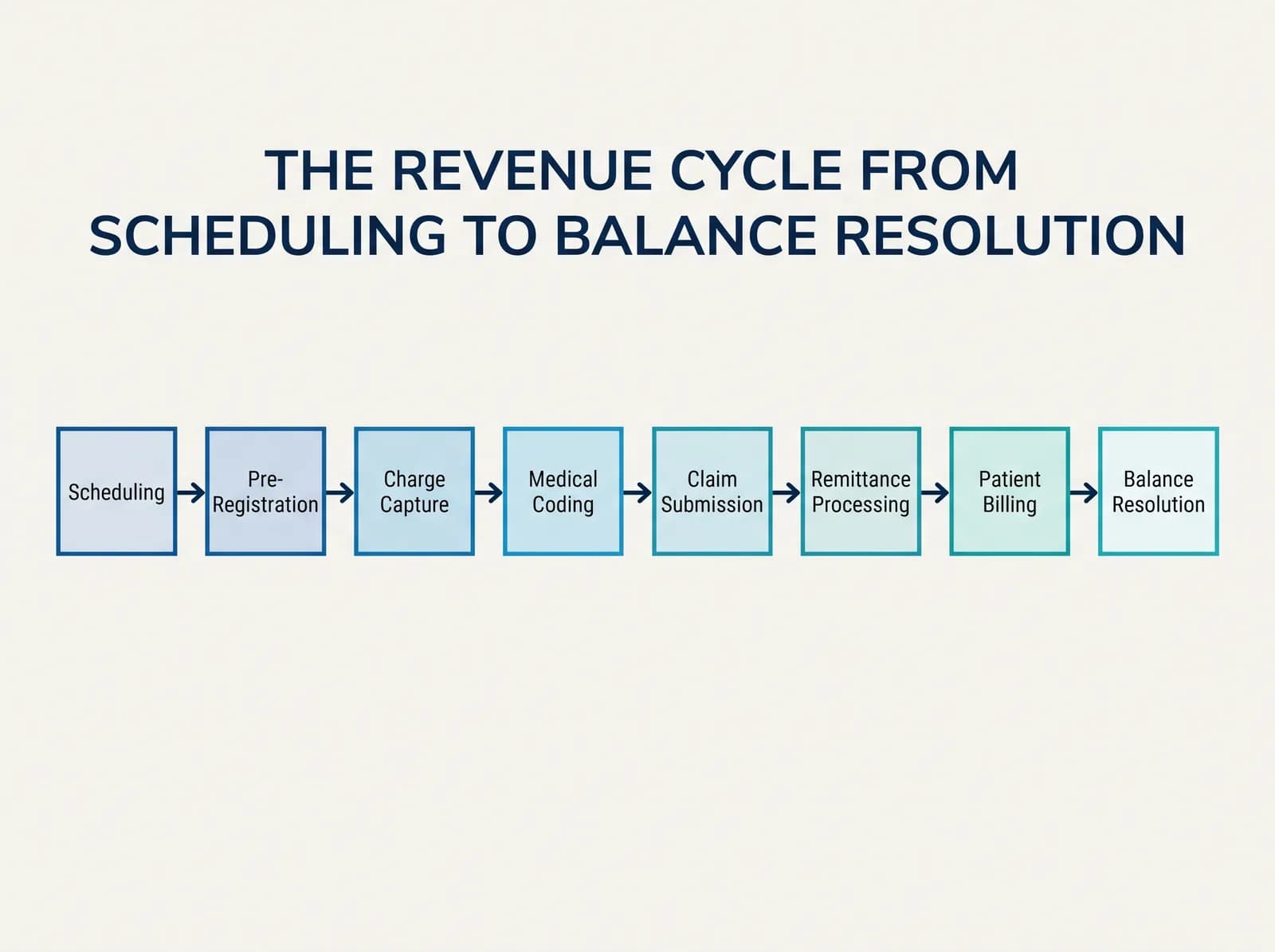
Most independent practices do not lose money in one dramatic place. They lose it in small amounts at several handoffs: a patient who schedules but never has eligibility checked, a charge that misses a modifier, a denial that sits in a work queue for three weeks, a payment posted without the contractual adjustment. Each gap looks minor on its own. Together they explain why a practice can be busy all month and still feel like collections never quite catch up.
This is a plain-language map of the revenue cycle for the owner or practice manager of a small to mid-size independent practice — the person who signs off on the billing process but does not have time to become a certified coder. The goal is to help you see the whole cycle, recognize where cash tends to leak, and know what to review each week before you decide whether to change anything.
The revenue cycle from scheduling to balance resolution
Revenue cycle management is the full path a dollar travels from the moment a patient books an appointment to the moment the account is settled or written off. It is usually described in stages, and each stage depends on the one before it.
Front end: scheduling, registration and eligibility
Before a claim exists, the practice collects the information that will determine whether it gets paid: correct demographics, current insurance, and confirmation that coverage is active on the date of service. In most practices, eligibility and benefits checks work best here, before the visit rather than after. When this step is skipped or rushed, everything downstream inherits the error.
Mid cycle: coding, charge capture and claim submission
After the visit, the encounter becomes a coded claim. Charge capture, coding accuracy, and clean-claim edits all live in this stage. A claim that goes out with a missing modifier or a mismatched diagnosis is likely to be denied, which is why clean-claim edits matter at this stage.
Back end: payer adjudication, posting and A/R
Once the claim is out, the work becomes follow-up: tracking payer responses, posting payments and adjustments accurately, working denials, and pursuing patient balances. This is where accounts receivable either stays healthy or quietly ages past the point of easy recovery.
You can see how these stages map to a full revenue cycle management process on the complete RCM services page.
Where independent practices most often lose cash
The leaks below are process observations, not predictions. Any practice can have them; the point is to check whether yours does.
Leak 1: eligibility treated as a formality
When eligibility is verified days before the visit and never rechecked, coverage changes and plan terminations slip through. The claim is denied for no coverage, and the practice discovers it weeks later. Eligibility is the first step in the cycle for a reason — as a general process observation, it is typically cheaper to confirm coverage than to appeal a denial.
Leak 2: charge capture gaps
Services performed but never billed — a procedure added at the last minute, a supply not captured, a visit documented but not routed to coding. These are invisible on a denial report because no claim was ever created. They usually surface only when someone reconciles the schedule against submitted claims.
Leak 3: denials worked late or not at all
A denial is not necessarily a loss until the appeal window closes, though some denials may not be appealable and timely filing limits typically vary by payer and contract. Practices that work denials in batches, or only when someone has time, let recoverable money expire. A routine review of denial reasons — not just denial counts — shows whether the same error is repeating.
Leak 4: payment posting that hides underpayments
If payments are posted without comparing the allowed amount to the contracted rate, underpayments pass as normal. Accurate posting is what makes an underpayment visible. That comparison is the core of accurate payment posting and reconciliation.
Leak 5: aging A/R with no owner
Accounts receivable that nobody owns tends to age in silence. The fix is not a heroic cleanup once a year; it is a weekly habit of working the oldest and largest balances first.
Leak 6: credentialing and contracting drift
A new provider who is not yet credentialed, or a contract that was never loaded correctly, produces denials that look like billing errors but are really enrollment problems. These should be verified against current payer guidance and your own contract documents.
What to measure and review weekly
You do not need a large dashboard. A short weekly review of a few indicators will tell you more than a monthly report that arrives too late to act on.
- Clean claim rate — the share of claims accepted on first submission. A falling rate points to a front-end or coding issue.
- Days in A/R — how long money sits uncollected. Watch the trend, not a single number, and confirm targets against your own historical data or official guidance.
- Aging buckets — how much sits in 0–30, 31–60, 61–90 and beyond. The 90+ bucket is where recovery gets hard.
- Denial reasons — group denials by cause, not just volume, so you can fix the source.
- Unposted payments and unapplied credits — a small balance that signals a posting backlog.
Review these on a fixed day each week with one person accountable for each number. If you want a structured starting point, the revenue leak calculator can help you frame the questions before a conversation.
What to do next
You do not have to overhaul your billing to find out where the leaks are. Start by pulling one week of claims, denials and A/R aging, and ask three questions: which denials repeat, which claims never went out, and which balances are oldest. If the answers point to a process you would rather not rebuild alone, a no-pressure conversation is a reasonable next step. You can schedule a consultation or contact our team with what you already know. Nothing needs to be decided in that first call.
Sources and verification
This article is a general process overview, not coding, legal or clinical advice. Payer policies, filing deadlines and coding rules vary and must be verified against current official payer and regulatory guidance before you act on them. The sources supplied for context are listed for reference only; they were not used to generate statistics in this article. For authoritative guidance on payer policies and coding rules, consult official payer and regulatory sources.
- Medical Billing Company | Medical Healthcare Solutions (https://medicalhealthcaresolutions.com/)
- 10 Best Medical Billing Services Reviewed for 2026 (https://themedicalpractice.com/services/best-medical-billing-services/)
No search volume, ranking or performance figures are cited here because none were retrieved from a live source. Any specific outcome for your practice depends on your specialty, payers and current process.
Where this work connects
Related articles.
 Revenue Cycle Management
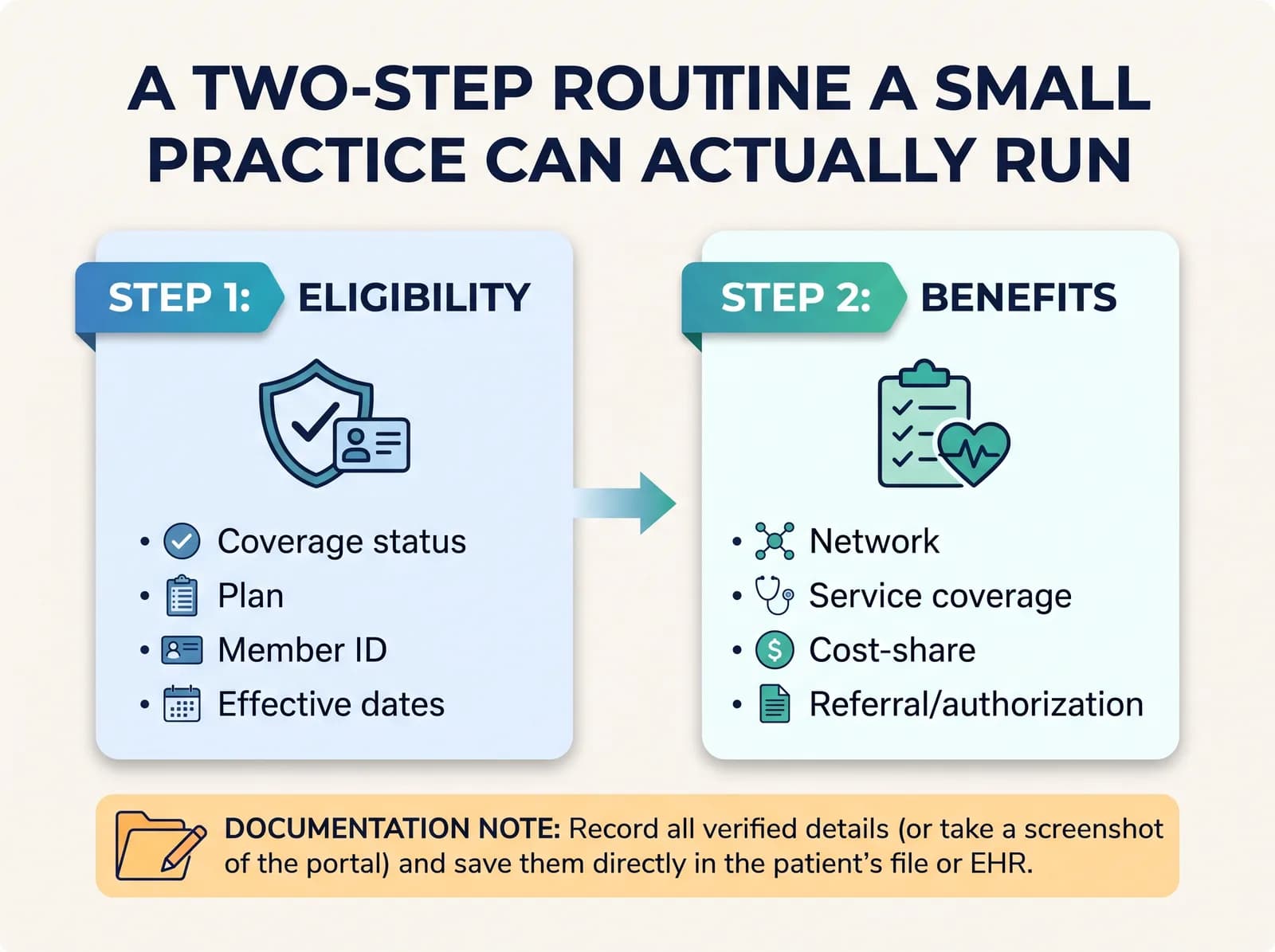
Health Insurance Eligibility vs Benefits: A Front-Desk Guide
Eligibility confirms coverage status; benefits confirm what the plan pays for a specific service. Learn a two-step routine to avoid front-end denials and patient balance surprises.
Read article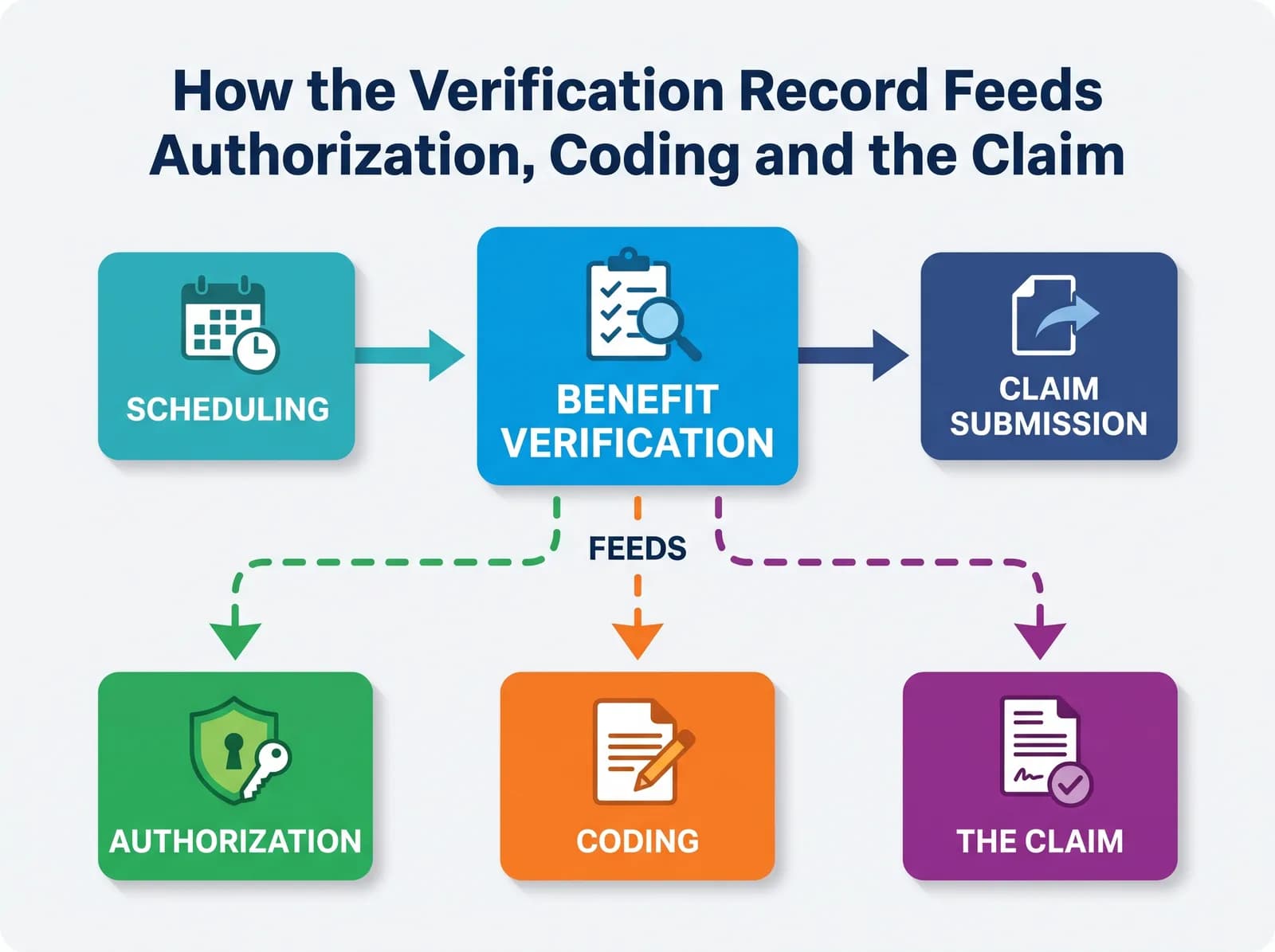 Revenue Cycle Management
Benefit Verification in Medical Billing: Building a Record That Holds Up
A practical guide to benefit verification in medical billing: the data elements a verification record should hold, how it feeds authorization and claims, when to re-verify, and common front-desk failure points.
Read article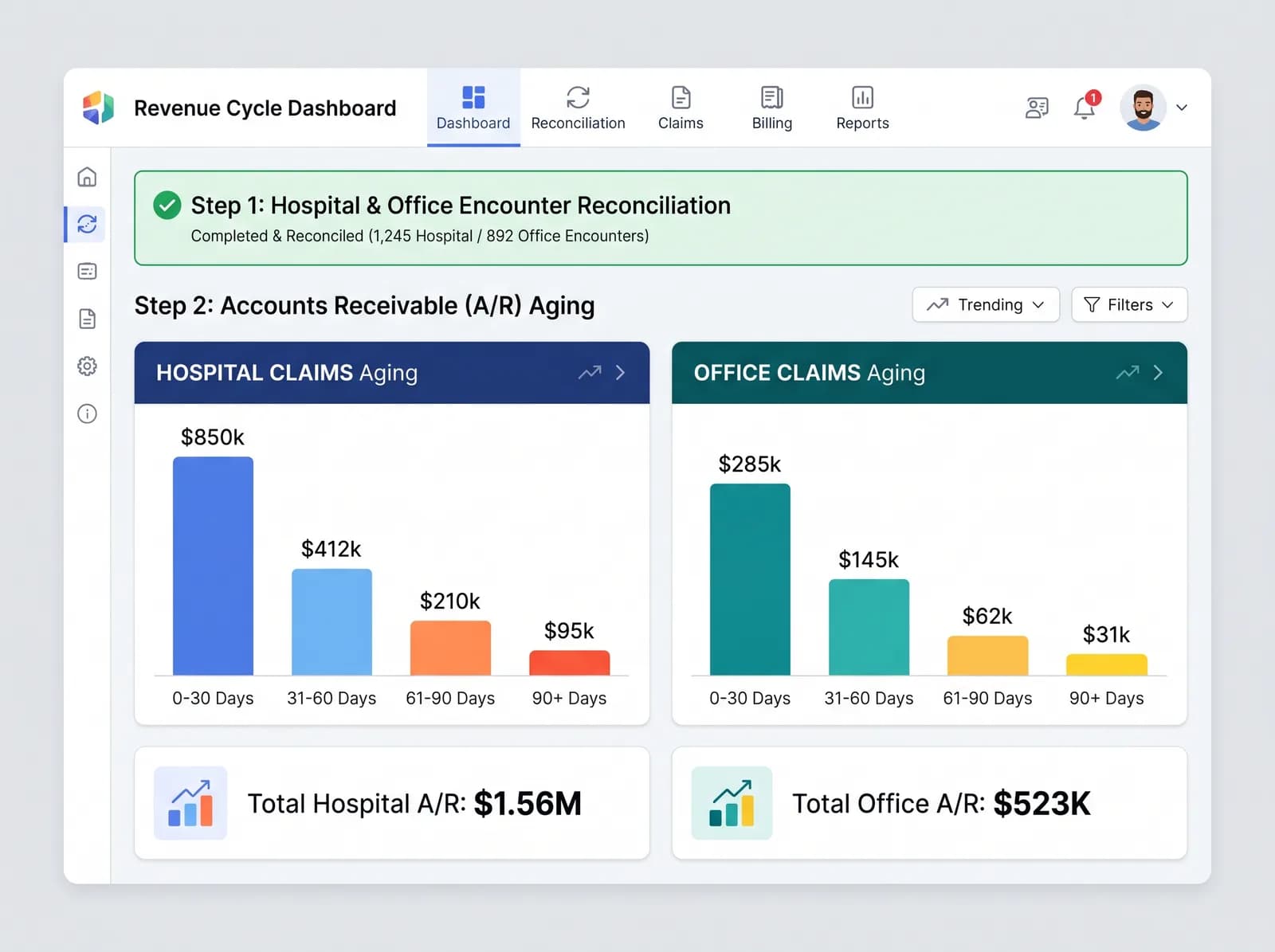 Revenue Cycle Management
Hospitalist Revenue Cycle Management: A Practice Manager's Guide
An orientation for independent practices whose providers round in hospitals: what hospitalist revenue cycle management covers, where charge capture and A/R visibility break down, and what to verify before adding rounding.
Read article