

Benefit Verification in Medical Billing: Building a Record That Holds Up
A practical guide to benefit verification in medical billing: the data elements a verification record should hold, how it feeds authorization and claims, when to re-verify, and common front-desk failure points.
What Benefit Verification Means in the Billing Workflow
Benefit verification is the step where your practice confirms what a patient's plan actually covers for the service being scheduled — not just whether the card is active. Eligibility answers "is this person covered on the date of service?" Benefit verification answers the harder questions: is this provider in network, what does the patient owe, does this service need prior authorization, and are there visit limits or frequency rules that will affect the claim.
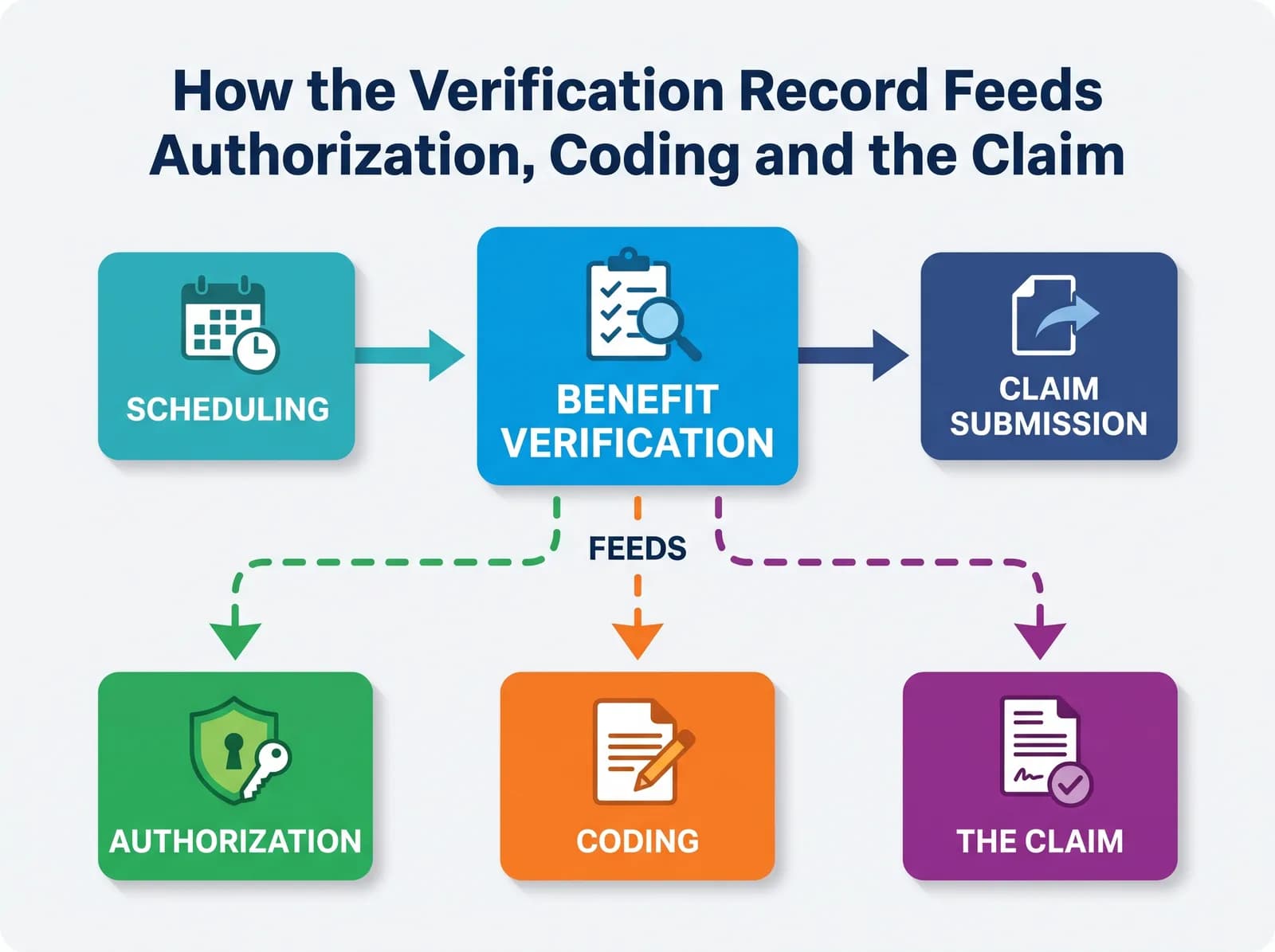
In the revenue cycle, verification sits between scheduling and claim submission. It is the handoff point where front-desk information becomes billing information. When that handoff is clean, coding, authorization and the claim all start from the same set of confirmed facts. When it is loose, the practice discovers the gap weeks later in the form of a denial or a patient balance nobody warned the patient about.
If your team is still sorting out the eligibility-versus-benefits distinction, our eligibility and benefits verification service covers that ground. This article assumes you already know the difference and focuses on building a verification record your billing staff can actually use.
The Data Elements a Benefit Verification Record Should Hold
Treat the verification record as a structured document, not a sticky note. The categories below are the ones most practices need to confirm with the payer or the plan document. None are fixed rules — payer policies vary and change, so each must be verified against current official payer guidance for the specific plan and date of service.
Plan and network status
Confirm the plan name, the product type, and whether the rendering provider is in network. Note the difference between the billing entity and the individual provider where the payer distinguishes them.
Coverage effective dates
Record the coverage start date and any termination date. For new patients, confirm coverage is active on the scheduled date of service, not just today.
Cost-sharing structure
Capture deductible status (met or remaining), copay, and coinsurance. Where the payer provides it, note whether the deductible applies to the specific service category.
Service-specific coverage conditions
Ask whether the planned service is covered, whether it is subject to visit or frequency limits, and whether it requires a referral. For therapy and other visit-limited services, confirm how many visits remain, verifying any limits against current official payer guidance.
Referral and authorization requirements
Confirm whether prior authorization is required for the specific procedure or service, and what the payer's turnaround expectations are, verifying both against current official payer guidance. Record the answer even when it is "no authorization required" — that note matters later.
How the Verification Record Feeds Authorization, Coding and the Claim
The verification record is upstream of almost everything else. If it shows a service needs authorization, the authorization workflow starts before the visit, not after. If it shows a visit limit, the coder and clinician know to check remaining visits before the claim goes out. If it shows a referral requirement, the front desk can chase the referral while there is still time to reschedule.
Coders should be able to rely on the record for coverage context, but they still verify coding and modifier decisions against official coding guidance and payer policy. Verification tells you what the plan covers; it does not tell you how to code. Keeping those two responsibilities separate prevents the common error of treating a benefit note as a coding instruction.
Documenting the Check So It Survives a Dispute
A verification that lives only in someone's memory is not a verification. The record should answer five questions: who checked, when, with whom (payer representative, portal, or plan document), what was confirmed, and any reference or call number the payer provided.
That record does two jobs. First, it supports the patient balance conversation — you can show the patient what the plan told you and when. Second, it supports payer follow-up when a claim is denied on a coverage or authorization basis. Store the record where billing staff can find it, not only in the scheduling system. Avoid assuming any particular retention period; confirm record-retention expectations against your own legal and compliance guidance and current official payer guidance.
When to Re-Verify: Triggers and Timing Rules
A single check at scheduling is not enough, because plans change and time passes between booking and the visit. Build a short trigger list into your workflow:
- New patient: full verification before the first visit.
- Plan change: re-verify whenever the patient reports a new card or plan.
- New calendar year: re-verify deductible and cost-sharing, which may reset for some plans; confirm the reset with the specific plan.
- Procedure or service change: re-check coverage and authorization for the new service.
- Repeated denials: if a payer keeps denying on coverage grounds, re-verify rather than resubmitting blind.
As a timing rule, re-confirm close enough to the visit that the information is still current, and again at check-in if the patient presents a different card. The exact window depends on your payer mix and scheduling lead time — set it deliberately and write it down.
Common Failure Points at the Front Desk
Most verification breakdowns tend to be process problems, not effort problems. The recurring ones are:
- Checks done by phone and never written into the record.
- Verification run weeks before the visit, with no re-check at check-in.
- Eligibility confirmed but benefits never asked about, so cost-sharing and limits go unrecorded.
- The record stays with scheduling and never reaches billing, so the claim is built without it.
Each of these is fixable with a template and a handoff rule. The template forces the right questions; the handoff rule makes sure the answers travel with the patient to the claim.
A Simple Self-Audit for Your Verification Process
Pull a sample of recent visits — enough to see a pattern, not a statistical study — and for each ask three questions: was verification performed, was it documented, and was it acted on (authorization started, patient notified of cost, referral obtained)? Score each visit on those three points. The pattern may point to one weak link: missing documentation, missing action, or no verification at all. Fix the weakest link first, then re-sample in a few weeks to confirm the change held.
Where Outsourced Verification Fits — and What Stays In-House
Benefit verification is one of the more delegable front-end tasks: it is repetitive, template-driven, and benefits from consistent execution. A billing partner can run payer calls and portal checks against your template and return a documented record. What stays with the practice is the judgment layer — scheduling decisions, patient financial conversations, and your financial policy. Those depend on context a vendor does not have. Our eligibility and benefits verification service describes how that division can work, and our guide to choosing a billing company covers what to ask before delegating.
What to Do Next
If your verification process is inconsistent, start with the self-audit above and a written template. If you would rather talk it through, contact us for a no-pressure conversation about where verification fits in your workflow. There is no obligation, and we can discuss whether the work is better kept in-house.
Where this work connects
Related articles.
 Revenue Cycle Management
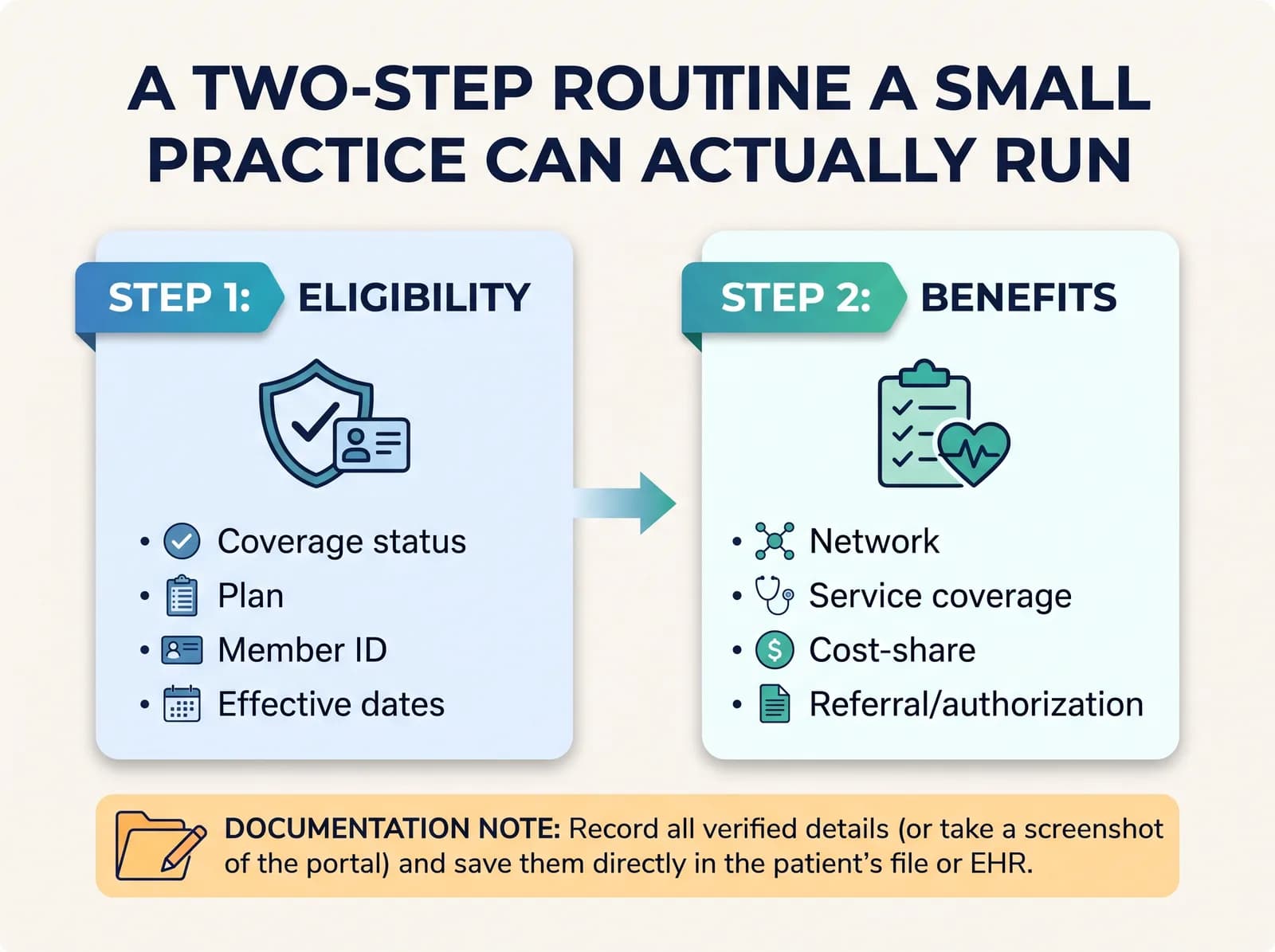
Health Insurance Eligibility vs Benefits: A Front-Desk Guide
Eligibility confirms coverage status; benefits confirm what the plan pays for a specific service. Learn a two-step routine to avoid front-end denials and patient balance surprises.
Read article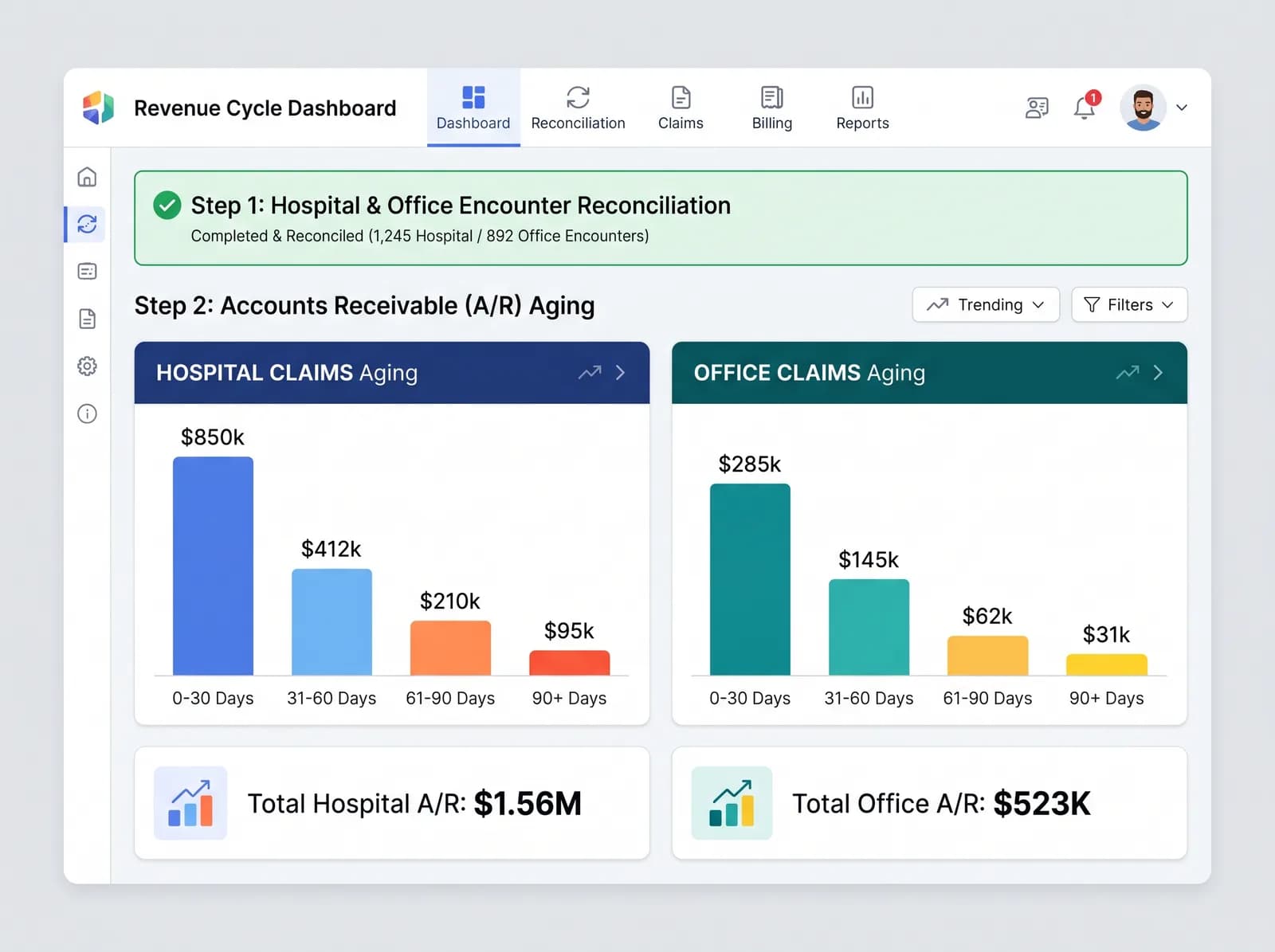 Revenue Cycle Management
Hospitalist Revenue Cycle Management: A Practice Manager's Guide
An orientation for independent practices whose providers round in hospitals: what hospitalist revenue cycle management covers, where charge capture and A/R visibility break down, and what to verify before adding rounding.
Read article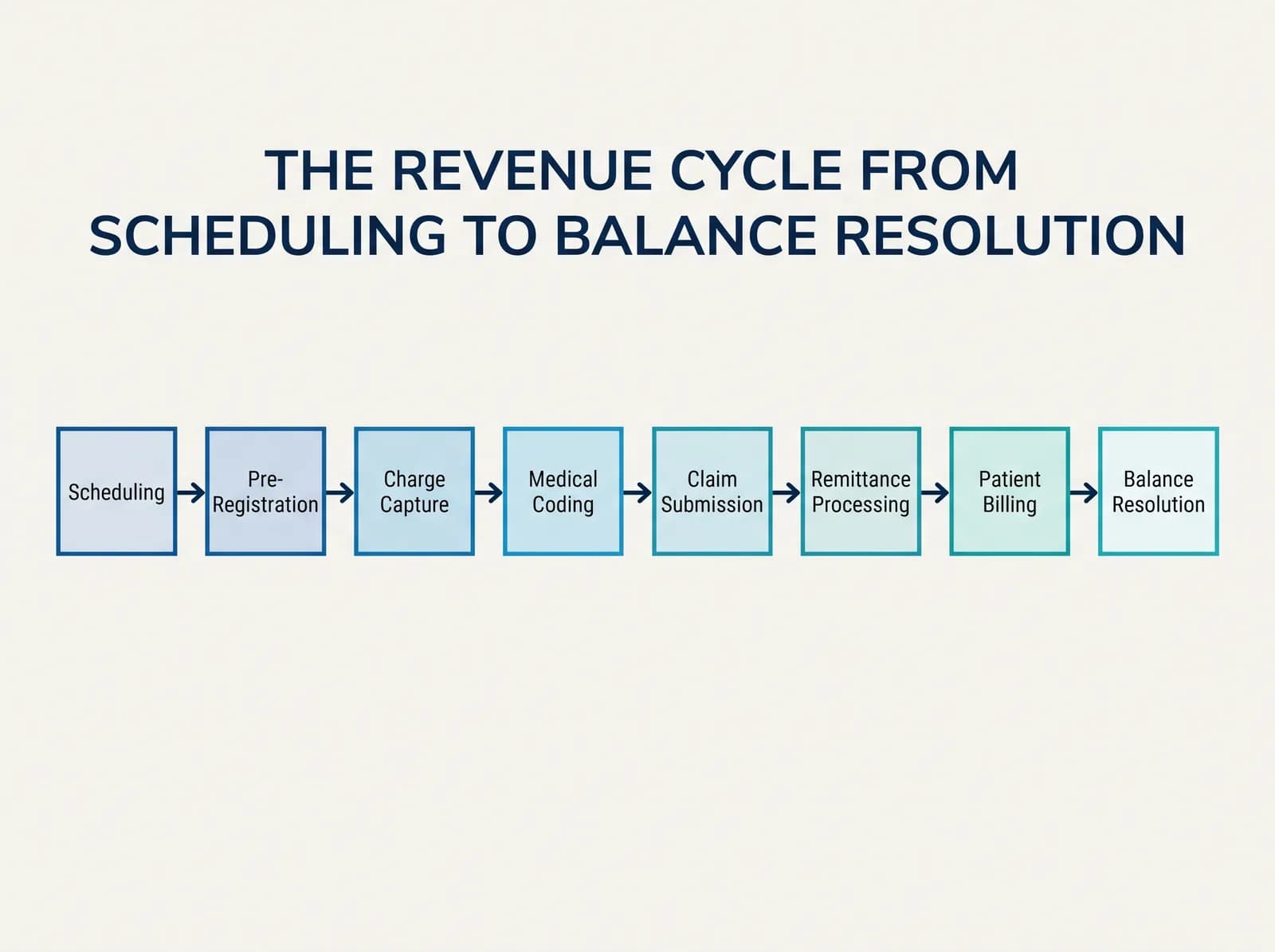 Revenue Cycle Management
 for Independent Practices: A Plain-Language Map
A plain-language walk through the revenue cycle for independent practices, the handoffs where cash most often leaks, and the few numbers worth reviewing every week.
Read article