

Health Insurance Eligibility vs Benefits: A Front-Desk Guide
Eligibility confirms coverage status; benefits confirm what the plan pays for a specific service. Learn a two-step routine to avoid front-end denials and patient balance surprises.
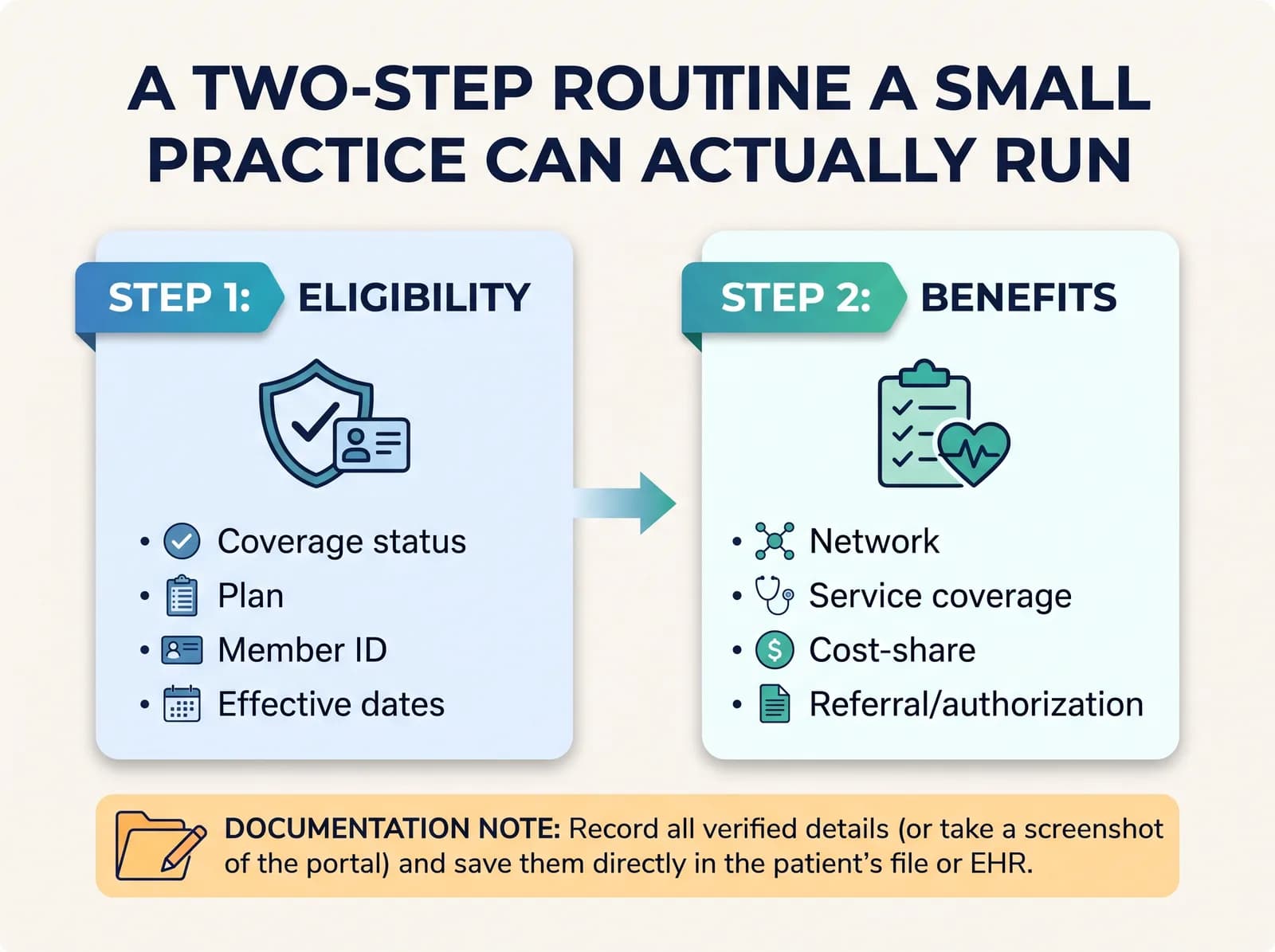
Most front-desk teams use "eligibility" and "benefits" as if they were the same word. They are not, and the gap between them is where patient-balance complaints and front-end denials often begin. Eligibility answers one question: is this patient covered on the date of service, and under which plan? Benefits answers a different one: for the specific service this patient is scheduled to receive, from this specific provider, what will the plan pay and what will the patient owe? A practice that runs only the first check has confirmed the patient has insurance — not that the visit is covered the way everyone assumes.
For a small practice where one or two people handle verification alongside check-in, scheduling and phones, the fix is not more software. It is a two-step routine with a clear boundary between the steps, and a record of what was checked.
Two questions, one front desk
The terms get blurred because both live in the same place — the front end — and both are often handled by the same person in the same phone call or portal session. A staff member pulls up the payer portal, sees "active," writes it in the chart, and moves on. That feels like verification. It is only half of it.
The practical cost of blurring them can show up later, in three familiar forms:
- Patient-balance surprises: The patient was told "you're covered," then receives a bill for a deductible, coinsurance or a non-covered service.
- Front-end denials: The claim goes out and may come back for reasons such as network status, missing referral or authorization, or a service the plan does not cover as billed — common examples that vary by payer and should be verified against current payer guidance.
- Rework: Someone re-checks, re-calls the patient, re-bills or writes off — time that was not budgeted because the first check looked complete.
What an eligibility check actually confirms
An eligibility check is a coverage-status check. Depending on the payer and the response, it typically returns some combination of:
- Whether coverage is active or inactive on the date of service
- The plan name and plan type (for example, commercial, Medicare Advantage, Medicaid managed care)
- Member ID and group number
- Effective dates, and sometimes termination dates
- Payer contact and portal information
What it does not confirm is whether the planned service is covered, whether the rendering provider is in network, what the patient's cost-share will be, or whether a referral or authorization is required. Those are benefits questions. Payer responses vary, so treat any specific field as "verify with the payer" rather than a fixed rule.
What a benefits check adds
A benefits check is scoped to the service and the provider. It asks the plan what it will do for this visit. In practice, that means confirming (specifics vary by payer and should be verified against current official payer guidance):
- Network status: for the specific provider and location — not just the plan's network in general
- Coverage for the planned service: including any frequency or visit limits the plan applies
- Cost-share elements: deductible remaining, copay, coinsurance — as the plan states them
- Referral or authorization considerations: for the scheduled service
Benefits responses are more detailed and more variable than eligibility responses. The right posture is descriptive: capture what the payer tells you, note the date and the source, and confirm anything ambiguous against the payer's current official guidance before you quote a number to a patient.
The failure mode: treating "active" as "covered"
Here is the mechanism, without invented numbers. A patient schedules a procedure. The front desk runs eligibility, sees active coverage, and tells the patient they are covered. On the day of service, the claim goes out. It comes back denied — the provider is out of network for that plan, or the service is subject to a deductible the patient has not met, or the plan requires an authorization nobody obtained. The patient, who was told they were covered, now receives a balance. The practice absorbs the rework and, often, the relationship damage.
None of that is an eligibility failure. Eligibility did its job. The failure was treating a coverage-status answer as a coverage-for-this-service answer.
A two-step routine a small practice can actually run
The routine does not need to be elaborate. It needs to be repeatable and documented. The two verification steps are eligibility and benefits; documentation is a supporting step, not a third verification step.
Step 1 — Eligibility, before the visit
Run eligibility for every scheduled patient against the date of service. Confirm active status, plan and member identifiers, and effective dates. Record the result, the date checked, and the source (portal, phone, clearinghouse response).
Step 2 — Benefits, scoped to the scheduled service
For visits where the service matters — new patients, procedures, high-cost services, anything out of network — run a benefits check against the specific service and provider. Capture network status, coverage, cost-share and any referral or authorization requirement. Record what was checked and when.
Supporting step — Document so the check is auditable
The record is what makes the routine survive staff turnover and audits. A short note in the chart or practice management system — what was verified, when, against which plan, and by whom — turns a phone call into a defensible process step.
If your team is already stretched, this is exactly the kind of front-end work that can be structured as a defined service rather than an ad hoc task. Knight's eligibility and benefits verification service is built around that two-step distinction, and the in-house vs. outsourced comparison is a neutral way to think about which parts belong where. These are practice-policy observations, not payer rules.
When eligibility alone may be enough — and when it isn't
This is a practice policy decision, not a payer rule, and it should be written down so the front desk is not improvising. A reasonable starting frame:
- Eligibility alone may be sufficient: for routine established-patient visits where the service is predictable, the provider is known in-network, and the patient has been seen recently under the same plan.
- Benefits verification is worth the extra step for new patients, procedures and high-cost services, out-of-network situations, plans with which the practice has limited experience, and any visit where a referral or authorization may be required.
Confirm the specifics — network status, coverage, authorization requirements — against current official payer guidance. Do not let a general policy substitute for a payer-specific check.
Recording and reusing what you verified
A verification is only as useful as its shelf life. Capture enough in the chart that the next visit does not start from zero: plan and member ID, what was checked, the date, the source, and any cost-share or authorization notes. Then flag when a prior check is stale. Common triggers:
- A new calendar year, when deductibles reset and plan designs change
- A plan or member ID change reported by the patient
- A new service or procedure that was not part of the original check
- A lapse of more than a defined interval since the last verification
Pick the interval deliberately and write it into the policy. The point is not to re-verify everything constantly; it is to know when a prior answer no longer applies.
Where this fits in the revenue cycle
Eligibility and benefits verification sit at the very front of the revenue cycle, and almost everything downstream inherits their quality. A clean eligibility check can help reduce registration errors. A scoped benefits check can help reduce front-end denials and set realistic patient expectations about cost-share. Both feed the denial management and A/R follow-up work that comes later — and when the front end is solid, that later work gets smaller.
For a plain-language view of how the pieces connect, the complete RCM services page maps the sequence from scheduling through payment posting. If you want to see where your own front end is leaking, the revenue leak calculator is a low-commitment way to start.
What to do next
If your practice is unsure where to draw the line between eligibility and benefits, start by writing the two-step routine into your front-desk policy and recording what was checked. If you want the front-end work structured as a defined service, Knight's eligibility and benefits verification service is built around that distinction.
Where this work connects
Related articles.
 Revenue Cycle Management
Benefit Verification in Medical Billing: Building a Record That Holds Up
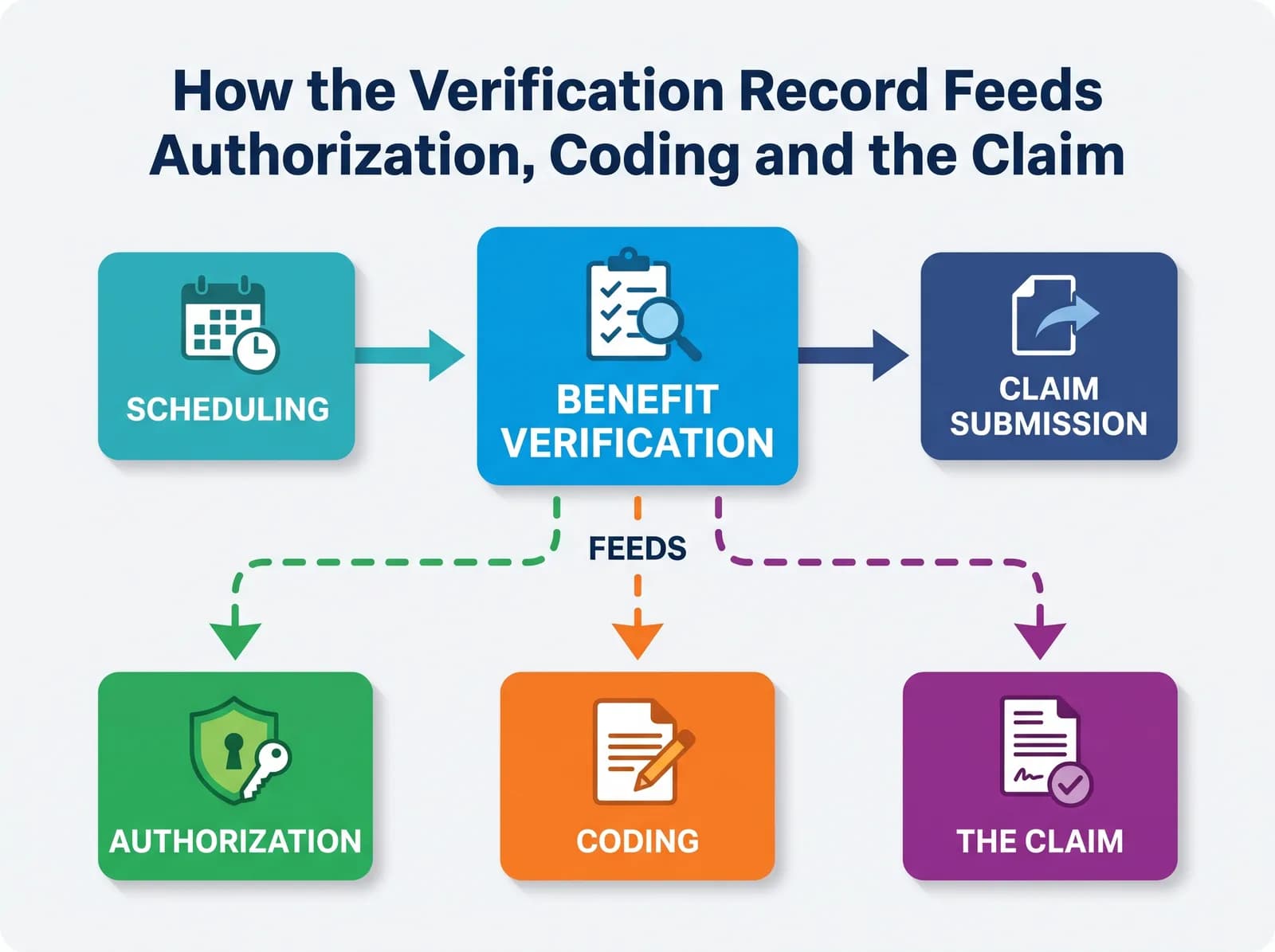
A practical guide to benefit verification in medical billing: the data elements a verification record should hold, how it feeds authorization and claims, when to re-verify, and common front-desk failure points.
Read article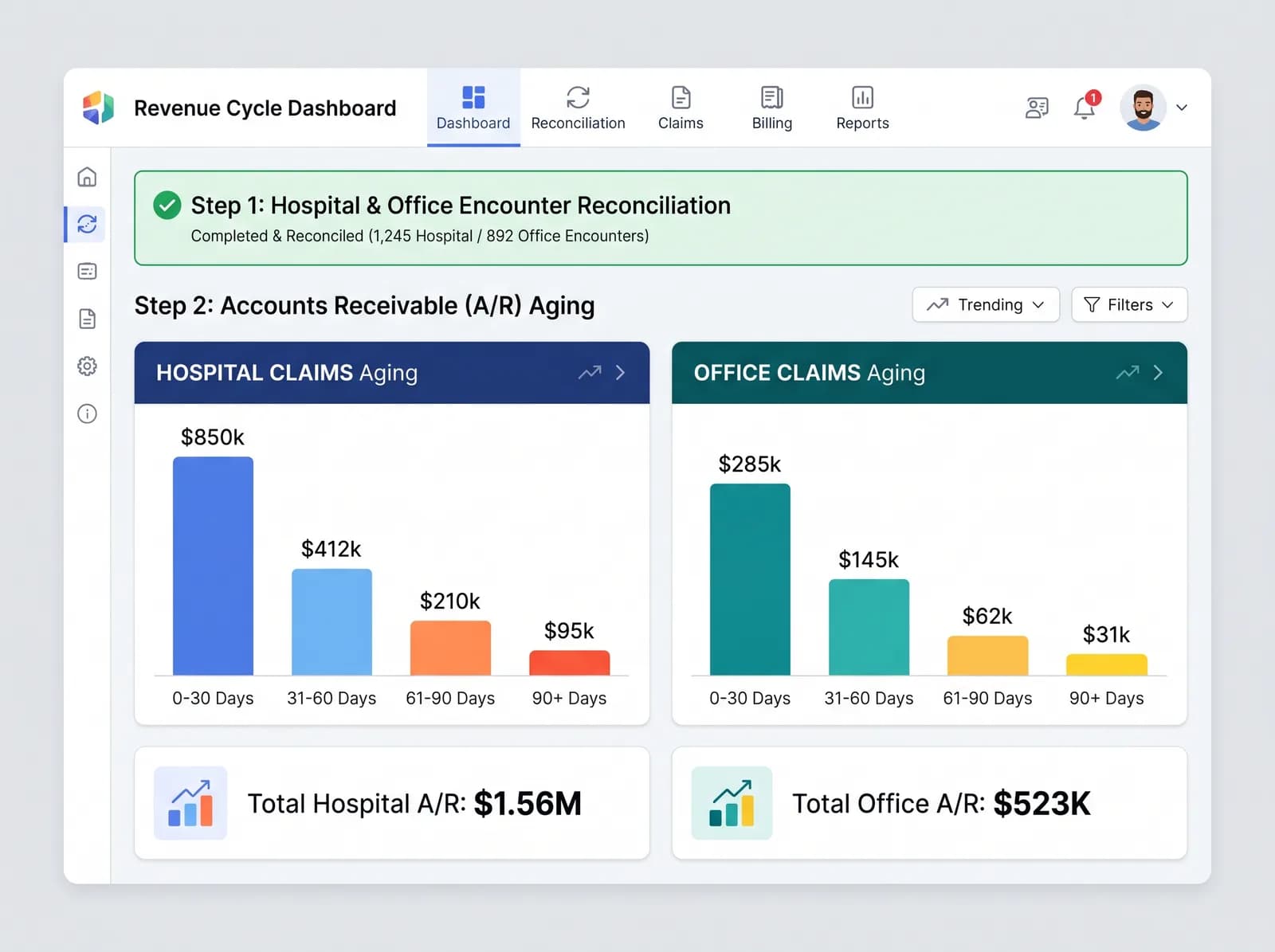 Revenue Cycle Management
Hospitalist Revenue Cycle Management: A Practice Manager's Guide
An orientation for independent practices whose providers round in hospitals: what hospitalist revenue cycle management covers, where charge capture and A/R visibility break down, and what to verify before adding rounding.
Read article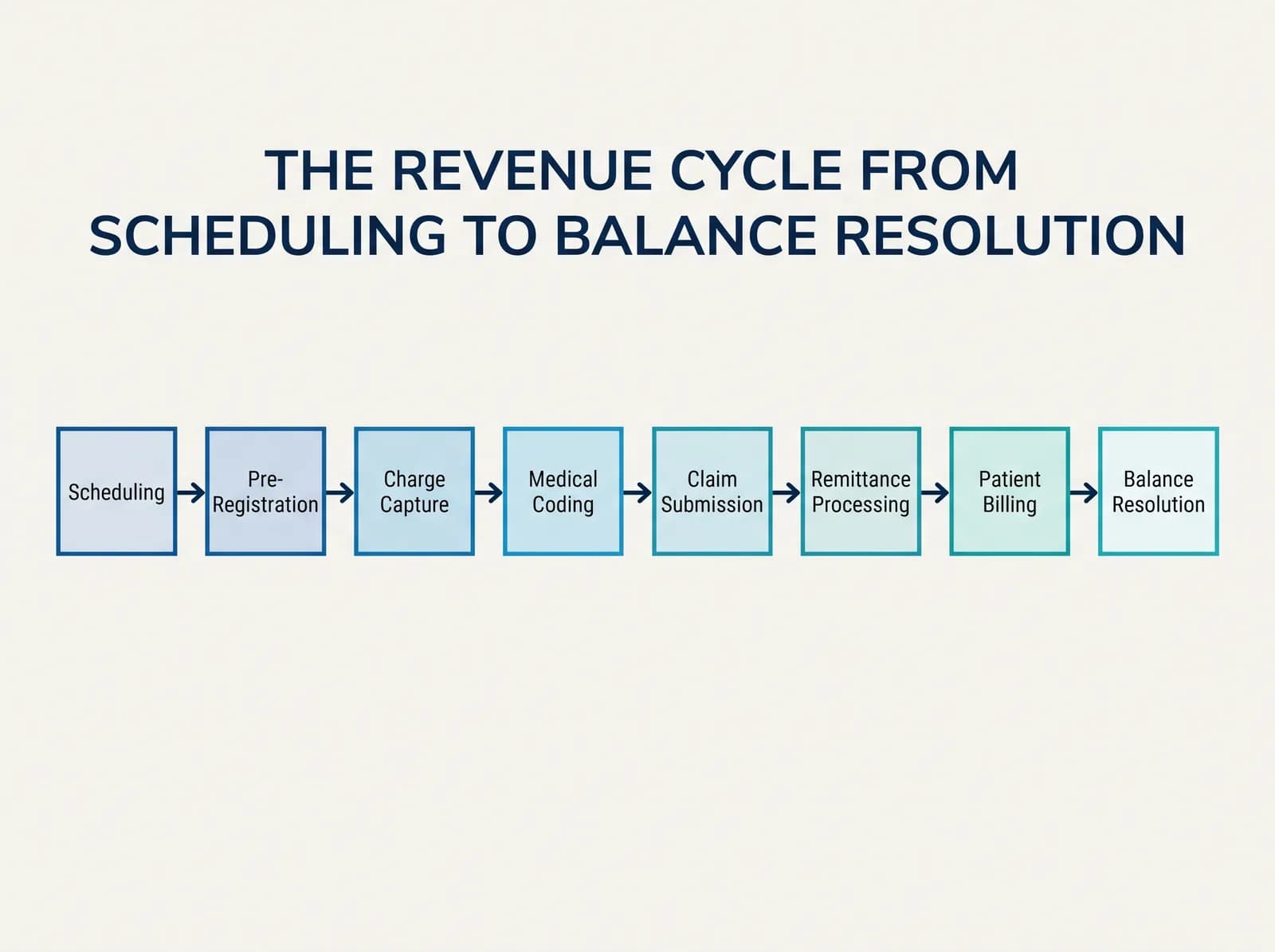 Revenue Cycle Management
 for Independent Practices: A Plain-Language Map
A plain-language walk through the revenue cycle for independent practices, the handoffs where cash most often leaks, and the few numbers worth reviewing every week.
Read article