

Hospitalist Revenue Cycle Management: A Practice Manager's Guide
An orientation for independent practices whose providers round in hospitals: what hospitalist revenue cycle management covers, where charge capture and A/R visibility break down, and what to verify before adding rounding.
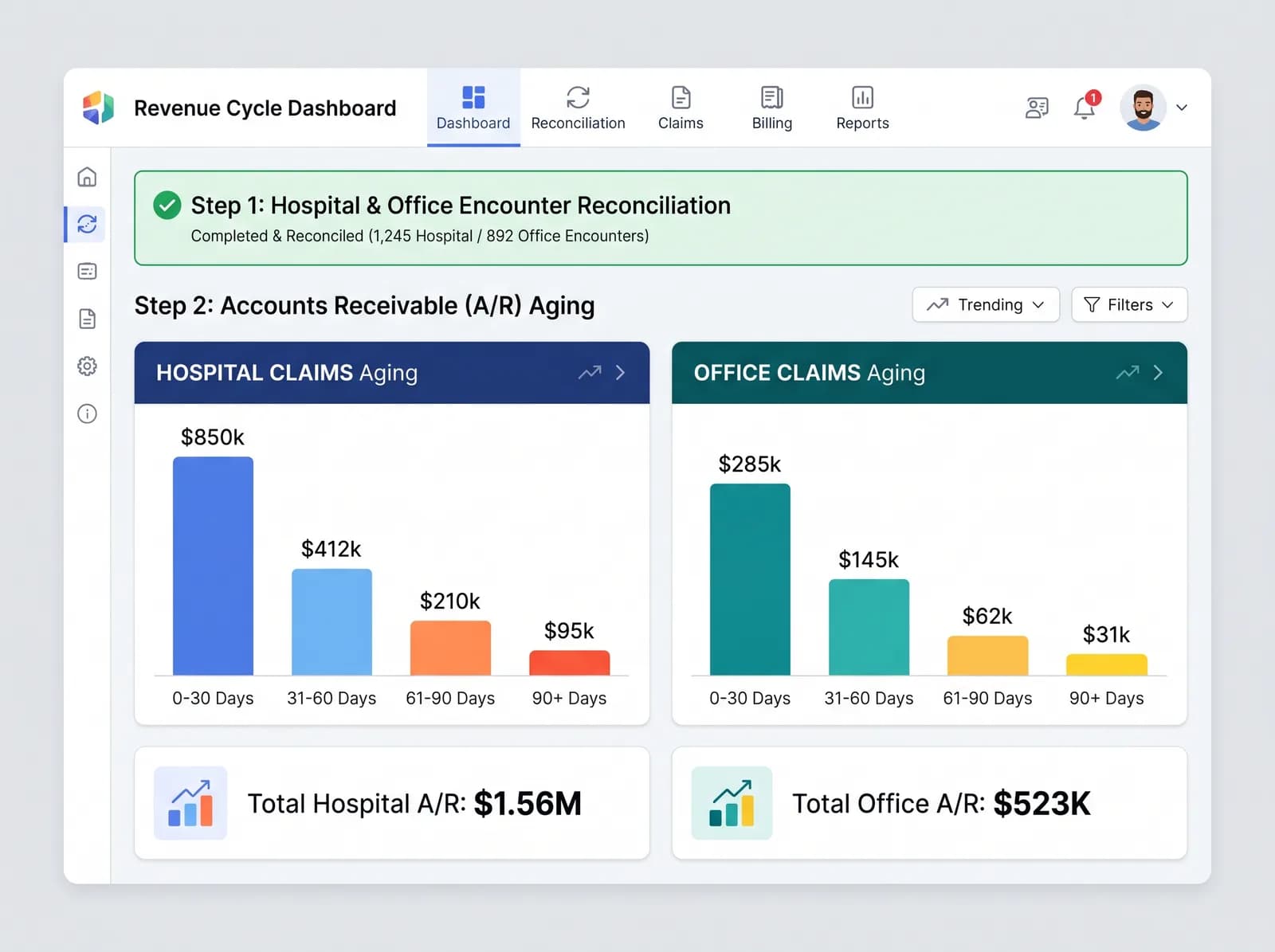
Hospitalist revenue cycle management is the professional-side billing work that follows a provider who sees patients in the hospital rather than in the office. It covers the same core functions as any practice's revenue cycle — eligibility, charge capture, claim submission, payment posting, denial follow-up and reporting — but the encounters behave differently, so the workflow has to be built for them. This article is written for independent practice owners and practice managers whose providers round on inpatients, co-manage hospitalized patients, or are considering adding hospitalist coverage. It is an orientation and a checklist.
What "hospitalist revenue cycle management" actually covers
The term describes the revenue cycle for professional services delivered in a hospital setting. It is not the same as the hospital's facility revenue cycle, which belongs to the hospital and covers the facility's own charges. When your practice's provider rounds at a hospital, your practice is billing the professional component of that care — your provider's work — and the hospital bills its facility side separately. Keeping that split clear from the start prevents a lot of confusion later, because the two streams have different owners, different systems and different reporting.
Why hospitalist billing differs from office billing
Office billing assumes a familiar shape: one patient, one visit, one place of service, one rendering provider, charges captured the same day. Hospitalist work breaks several of those assumptions at once.
Place of service and the facility/professional split
The place of service is the hospital, not the office, and the professional claim reflects only your provider's portion of the care. What the hospital bills and what your practice bills are separate claims with separate rules. Verify the correct place-of-service and claim structure with your coding and compliance resources rather than assuming office conventions carry over.
Shift-based rounding and handoffs
Hospitalist coverage is often organized around shifts. One provider may round in the morning, another may cover the evening, and a third may pick up the next day. That means a single patient's stay can involve multiple rendering providers, and the documentation has to make clear who did what and when. Handoffs are a normal part of the work, but they create charge-capture risk if the record of who saw the patient is incomplete.
Encounters that span days
An inpatient stay can run across several calendar days, and discharge-day and observation-status questions can come up. These are areas where the rules are specific and can change over time. Treat any status or day-count question as something to confirm against current official payer and regulatory guidance, not something to settle from memory.
The documentation and charge-capture questions a practice must answer
Before hospitalist work becomes routine, a practice manager should be able to answer these process questions. Frame each one as something to verify with your own compliance and coding resources.
- Who documents what during a shift, and where does that documentation live?
- How soon after an encounter are charges captured, and who is responsible for that step?
- How are handoffs recorded so that each rendering provider's work is visible?
- Who reviews the record before a claim goes out, and what are they checking?
- How does the practice confirm that a patient's status and dates are consistent with what was billed?
- What happens when documentation is missing or late — who follows up, and how quickly?
These are process questions, not coding advice. The answers belong to your practice's compliance and coding leadership, and any rule you apply should be checked against current official guidance.
Reconciling hospital encounters with office encounters in one A/R
Small practices often end up with hospital work handled by different staff or a different system than office work. That separation is workable, but it hides problems. A practice manager needs one reporting view that shows both streams side by side: charges by place of service, days in A/R by stream, denial rates by category, and aging that separates hospital claims from office claims. If the two streams are only reconciled at month-end, issues in one can mask issues in the other. Ask for reporting that keeps them visible together. Knight's revenue performance reporting is designed to support that kind of visibility.
Denial patterns to watch for in hospitalist billing
Rather than predicting which denials you will see, track denial categories and look for patterns. The usual families are eligibility, authorization, documentation and medical necessity. In hospitalist work, documentation and authorization questions can surface around multi-day stays and handoffs, and eligibility questions may arise when a patient's coverage changes mid-stay; confirm any such situation against current payer guidance. Review denials by category on a regular cadence, and defer to payer guidance on the specifics of any individual denial. For a routine you can adapt, see our existing article on payer-specific denial patterns and Knight's denial management service.
What to verify before your practice takes on hospitalist rounding
- Credentialing and enrollment status for each provider at each hospital and with each payer.
- Payer contracting that covers the hospital setting, not just the office.
- EHR and charge-capture access at the hospital, and how records reach your billing workflow.
- Staffing coverage for the hospital workflow, including who owns charge capture on each shift.
- Reporting expectations: what you will review, how often, and who acts on it.
Knight's credentialing and contracting work addresses the first two items and is a practical place to start.
When to handle hospitalist billing in-house vs. with a partner
There is no universal answer. In-house billing gives you direct control and proximity to the clinical team; a partner can add capacity and specialized process experience. The decision depends on volume, staffing and how much of the hospital workflow you can supervise. Rather than re-argue that tradeoff here, see our existing articles on in-house vs. outsourced billing and how to choose a medical billing company. Knight supports the revenue cycle within the systems a provider already uses — claims, denials, A/R, payment posting and reporting — for practices and facilities of different sizes.
A short starting checklist for practice managers
- Confirm each provider's credentialing and enrollment at each hospital and payer.
- Confirm payer contracts cover the hospital setting.
- Map who documents what on each shift.
- Set a charge-capture deadline and name an owner.
- Define how handoffs are recorded.
- Assign a pre-submission review step.
- Build one reporting view that shows hospital and office streams together.
- Set a weekly denial review by category.
- Document how status and date questions get verified against official guidance.
- Agree on reporting cadence and who acts on it.
What to do next
If hospitalist work is part of your revenue — or you are weighing whether it should be — a short conversation can help you identify which of these checks are already in place and which need attention. There is no obligation. You can schedule a consultation or contact us with questions.
Where this work connects
Related articles.
 Revenue Cycle Management
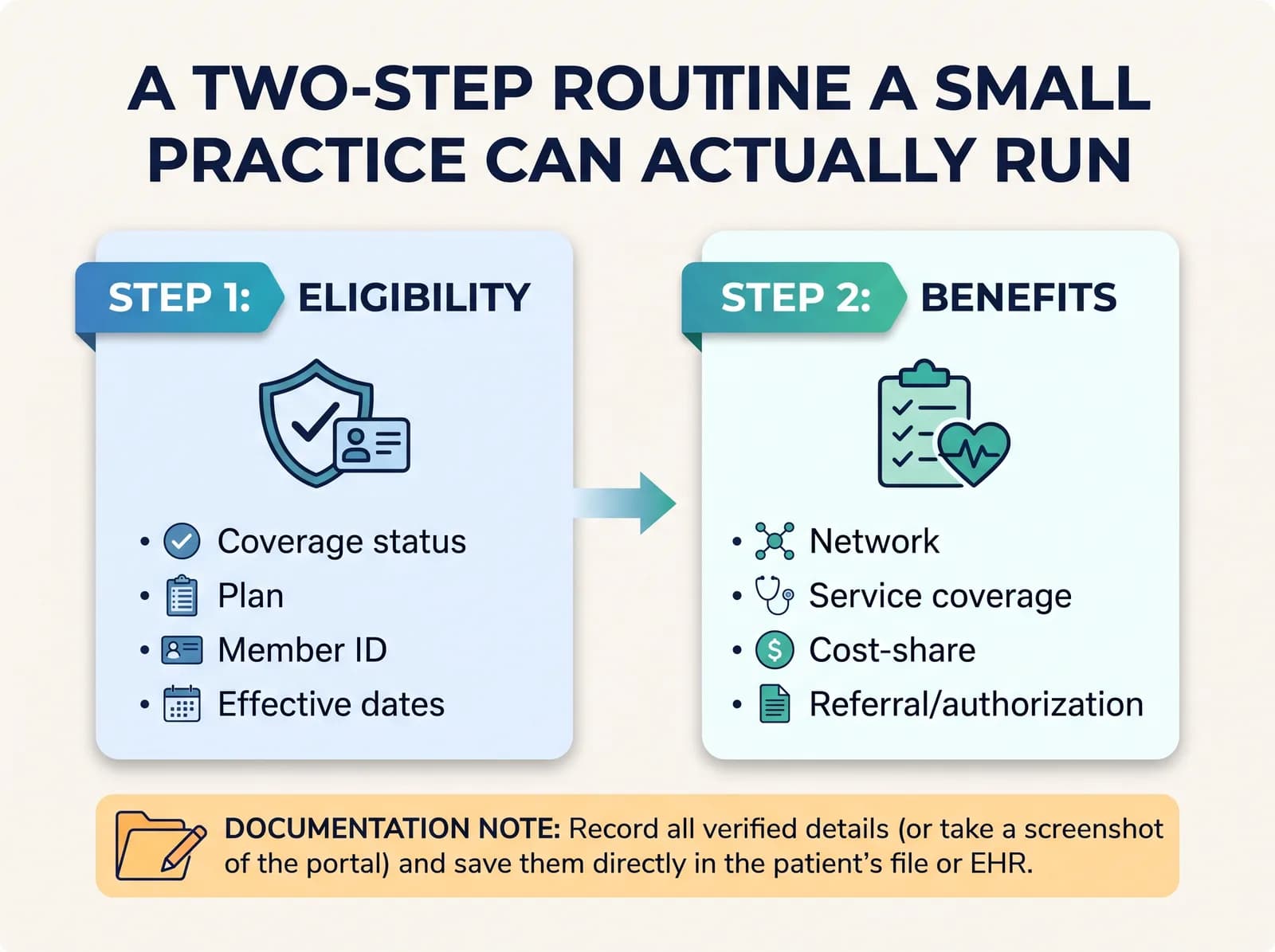
Health Insurance Eligibility vs Benefits: A Front-Desk Guide
Eligibility confirms coverage status; benefits confirm what the plan pays for a specific service. Learn a two-step routine to avoid front-end denials and patient balance surprises.
Read article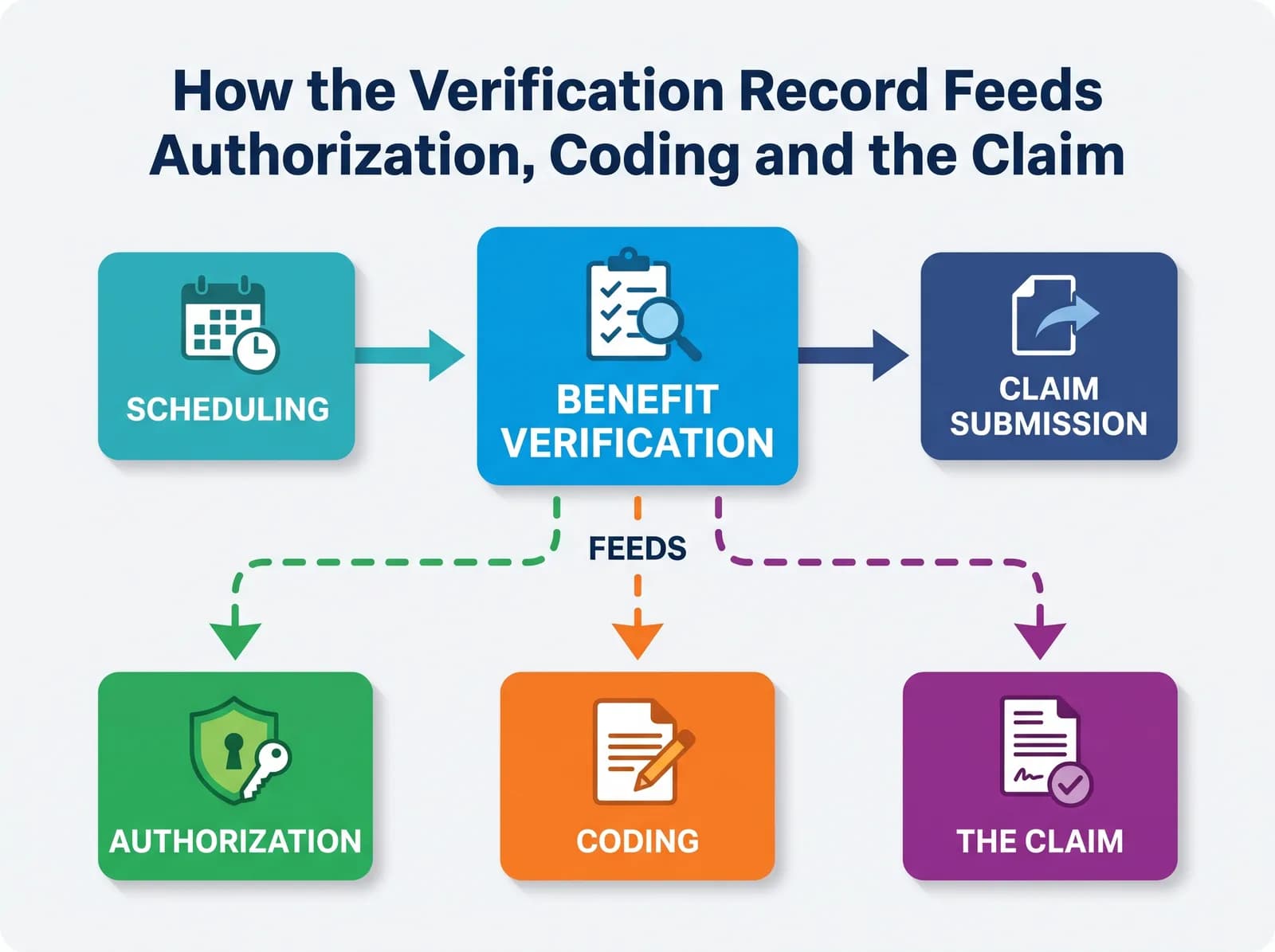 Revenue Cycle Management
Benefit Verification in Medical Billing: Building a Record That Holds Up
A practical guide to benefit verification in medical billing: the data elements a verification record should hold, how it feeds authorization and claims, when to re-verify, and common front-desk failure points.
Read article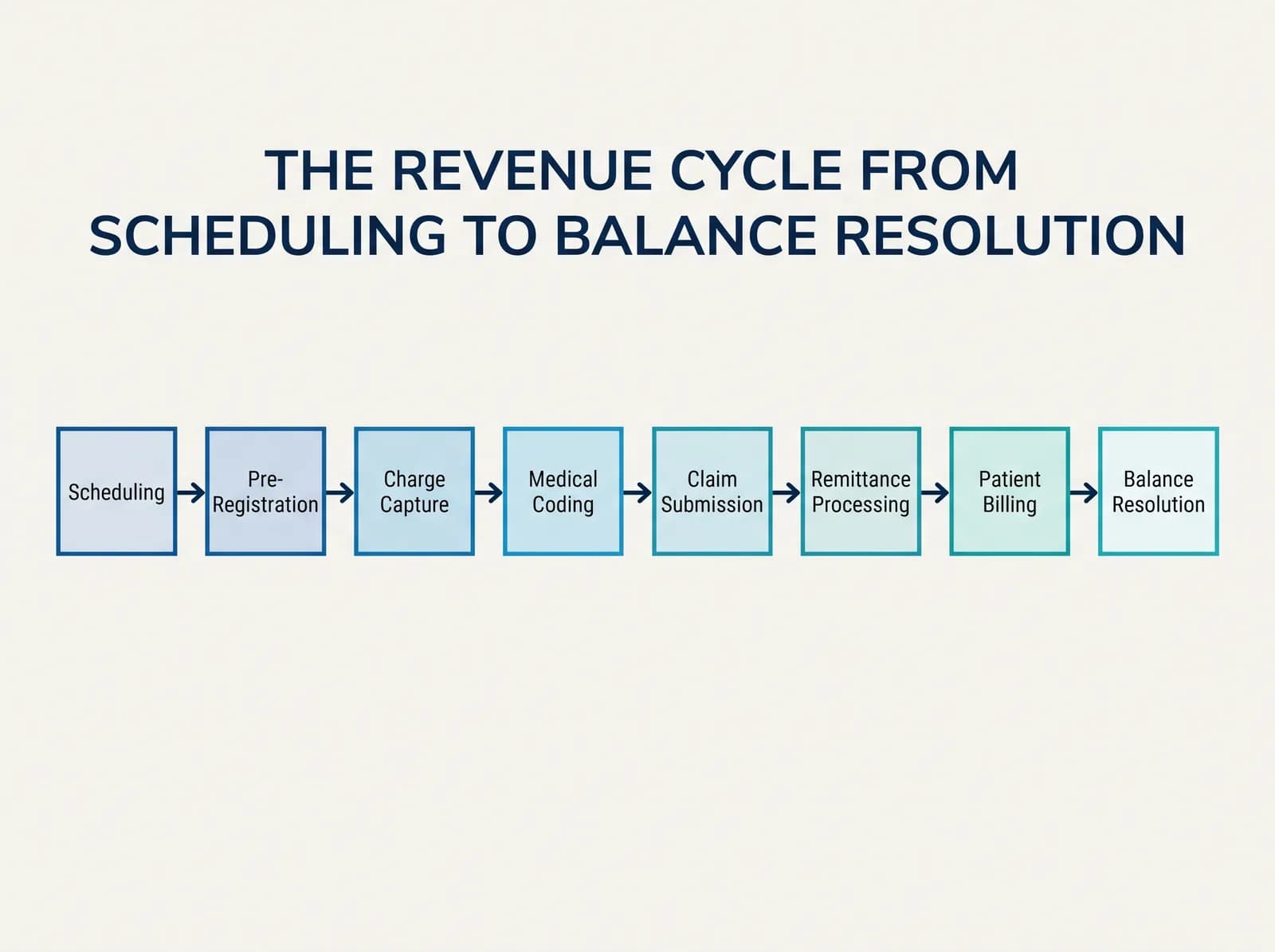 Revenue Cycle Management
 for Independent Practices: A Plain-Language Map
A plain-language walk through the revenue cycle for independent practices, the handoffs where cash most often leaks, and the few numbers worth reviewing every week.
Read article