

Who Owns Each Step in ED Professional and Facility Billing
A workflow ownership map for independent ED groups billing professional and facility claims, covering charge capture through denial follow-up and what to put in writing before signing a billing agreement.
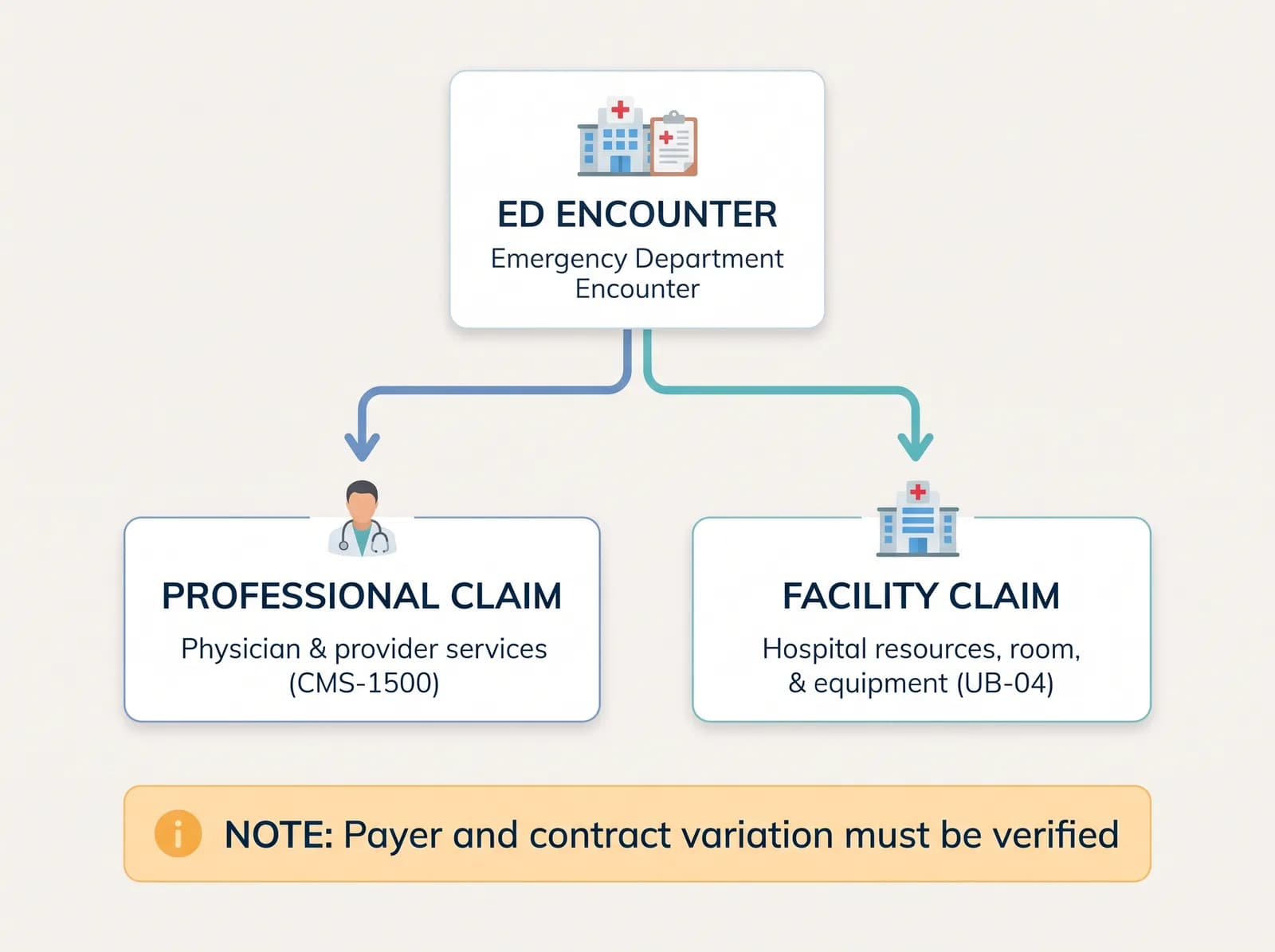
When an independent emergency department group contracts with a hospital or a freestanding ED, the billing arrangement usually gets negotiated late, in the same conversation as the coverage schedule and the subsidy. That is a mistake. The professional claim and the facility claim for the same ED encounter are two different claims, often paid by different payers or drawn from different benefit buckets — though this can vary by payer and plan — and the group rarely owns both. Deciding who touches each step — before the first claim goes out — is the difference between a clean division of labor and a monthly argument about whose denial it was.
This emergency department professional and facility billing workflow ownership map is not a coding guide. It describes where responsibility can sit and what to put in writing, based on general revenue cycle practice rather than ED-specific sourced data. Any payer-specific rule, code set, or filing deadline mentioned here must be verified against current official payer and regulatory guidance before you rely on it.
Professional versus facility ED claims: what each covers
In a hospital-based ED, the physician group typically bills the professional component: the physician's evaluation and management service, procedures the physician performs, and the interpretation of studies the physician reads. The hospital bills the facility component: the emergency department's overhead, nursing and ancillary staff, supplies, and the technical side of imaging and lab. This division can vary by contract and site, so verify it against the specific hospital-group agreement and applicable state law. When the group also operates a freestanding ED, it may bill both components itself, depending on its payer contracts and state licensure and regulations, which is why the same group can have two very different billing operations running side by side.
The practical consequence for an administrator is that "our ED billing" is not one workflow. It is at least two, with different charge masters, different payer contracts, different modifier logic, and different denial patterns. A billing partner that runs professional claims well may have no facility claim infrastructure at all, and vice versa. Ask which one you are buying.
Where the boundary gets blurry
Three places cause most of the confusion: split billing on the same date of service, where the professional and facility claims must be internally consistent; procedures and supplies that could plausibly land on either claim depending on the contract; and observation and admission conversions, where the encounter changes character after the initial ED service. None of these are places to improvise. They are places to document a decision rule and name who applies it.
Step-by-step ownership map: charge capture through denial follow-up
The steps below are a starting point for negotiation, not a recommendation. Either column can be correct depending on your size, your EHR, and your contract with the hospital. What matters is that every row has exactly one accountable owner and a named backup.
1. Patient access and eligibility
In a hospital-based ED, registration usually belongs to the hospital, and the group inherits whatever eligibility data the hospital captured. In a freestanding ED the group often owns registration itself. Decide who verifies eligibility, who re-verifies when a patient's coverage changes mid-encounter, and who is responsible when a claim denies for eligibility. If the group is outsourcing, eligibility and benefits verification can sit with the billing partner — but only if the partner has access to the registration data in real time, not a day later.
2. Charge capture and coding inputs
This is the step most often left ambiguous. The physician documents; someone translates that documentation into charges. In a group-run workflow, the group's coders or the physicians complete the charge ticket. In an outsourced workflow, the billing partner may receive the encounter and apply codes, or may only scrub what the group submits. Be explicit about who assigns codes, who reviews them, and who handles queries back to the physician. If the partner is doing coding, confirm the credentials of the people doing it and how chart auditing is handled. Chart auditing and DRG review are examples of how that oversight can be structured.
3. Claim construction and submission
Claim scrubbing, modifier application, and submission to each payer are usually the billing partner's core function, whether the group keeps the rest in-house or not. The question to settle is not who presses submit but who owns the rejection. A claim rejected at the clearinghouse for a demographic error is a front-end problem; a claim denied for medical necessity is a clinical documentation problem. Assign each category to a named owner.
4. Payment posting and reconciliation
Posting is where small errors compound quietly. If the group posts payments in-house and the partner works denials, the two teams need a shared ledger and a weekly reconciliation. If the partner posts, the group still needs read access and a monthly reconciliation against the bank deposit. Payment posting should never be a black box, regardless of who performs it.
5. Denial management and appeals
Denials split along the same professional/facility line as the claims. A professional denial for missing documentation is a physician-group problem; a facility denial for authorization is the hospital's problem. Write down who works which denial category, who drafts appeals, and who signs them. Denial management works best when the appeal owner also has authority to fix the upstream cause.
6. A/R follow-up and reporting
Someone must own the aging report and the follow-up cadence on unpaid claims. In a well-run arrangement, the billing partner produces a monthly report the group can actually read: charges, payments, adjustments, denials by category, and days in A/R. The group's administrator reviews it and escalates. If nobody on the group side reviews the report, the reporting function is decorative.
Questions to ask before signing an ED billing agreement
Use these as a written checklist. Ask for answers in the contract, not in the sales meeting.
- Which claims — professional, facility, or both — will you actually submit, and under which tax ID and NPI?
- Who assigns codes, and what are the qualifications of the people doing it?
- Who owns each denial category, and what is the appeal turnaround commitment?
- What data do you need from the hospital, and who is responsible for getting it to you?
- How will you report on A/R, and can we see the raw data, not just a summary?
- What happens to our claims if we terminate the agreement — who holds the work-in-progress?
- Which payer contracts and credentialing records are ours, and which are yours?
On that last point, credentialing and contracting are frequently overlooked in ED group arrangements because the hospital often handles them. If the group is contracting independently, confirm who maintains the enrollment records and who handles revalidations. Credentialing and contracting is one example of how that function can be handled, but the important thing is that someone owns it in writing.
What to do next
Before your next contract renewal, sit down with the hospital's finance contact and your billing partner and walk through the ownership map above, row by row. Mark every row where two parties think they own the step. Those are your future denials. If you want a second set of eyes on the division of labor, you can schedule a conversation with Knight Medical Billing.
Sources and verification
This article is a planning framework, not a statement of payer policy or coding rules. The two sources listed below are general directories of medical billing services in Massachusetts, not ED-specific workflow references, and are provided as background only:
- Medical Billing Services in Massachusetts | More Revenue: https://providerscarebilling.com/medical-billing-services-in-massachusetts/
- Top Medical Billing Companies in Massachusetts - 2026 Reviews | Goodfirms: https://www.goodfirms.co/bpo-services/medical-billing-companies/massachusetts
The ownership map above is drawn from general revenue cycle practice rather than a survey of ED billing vendors; treat it as a planning framework to adapt, not as a benchmark. Verify all payer-specific rules, code sets, and filing deadlines against current official guidance before applying them to your contract.
Where this work connects
Related articles.
 Revenue Cycle Management
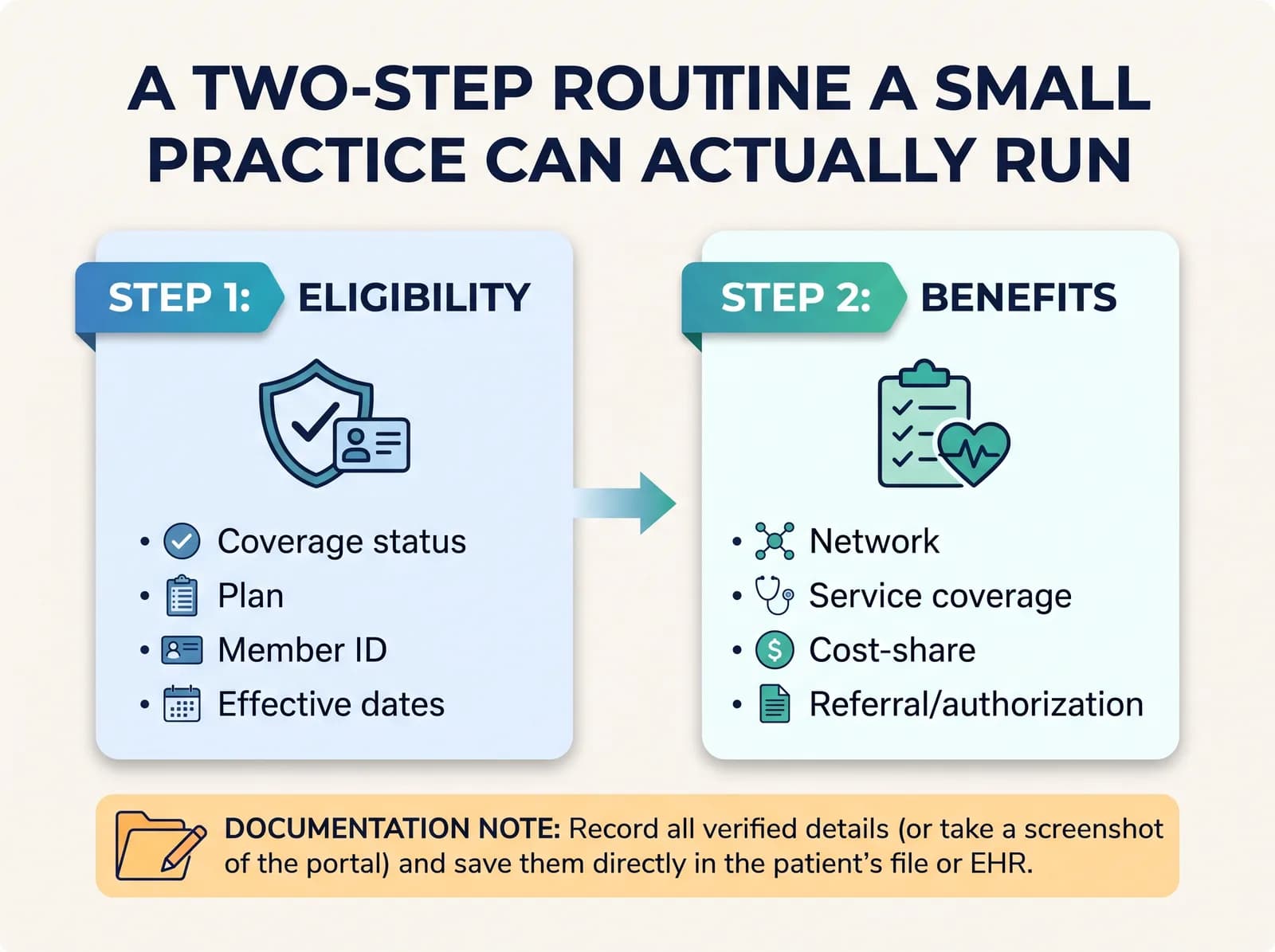
Health Insurance Eligibility vs Benefits: A Front-Desk Guide
Eligibility confirms coverage status; benefits confirm what the plan pays for a specific service. Learn a two-step routine to avoid front-end denials and patient balance surprises.
Read article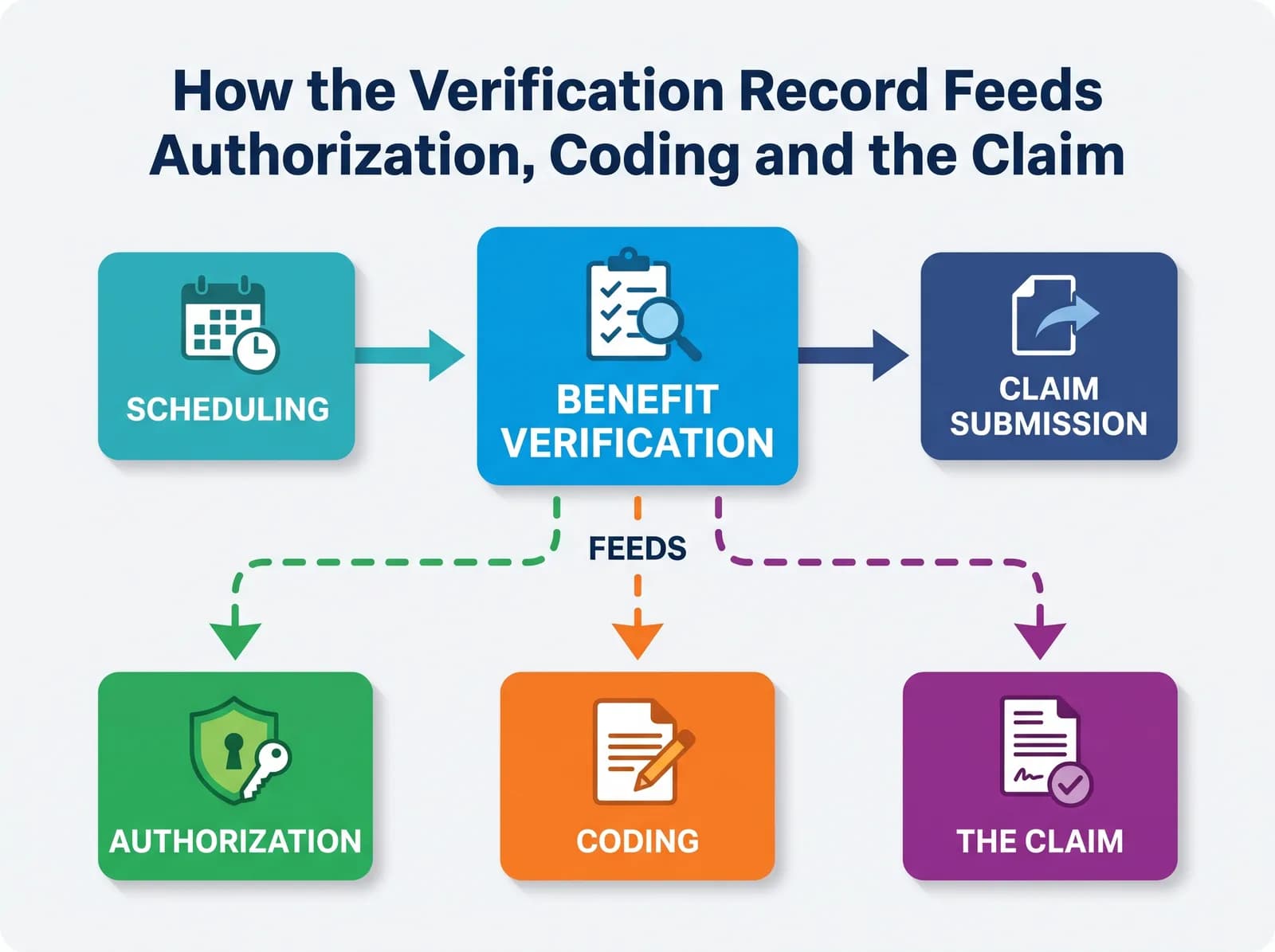 Revenue Cycle Management
Benefit Verification in Medical Billing: Building a Record That Holds Up
A practical guide to benefit verification in medical billing: the data elements a verification record should hold, how it feeds authorization and claims, when to re-verify, and common front-desk failure points.
Read article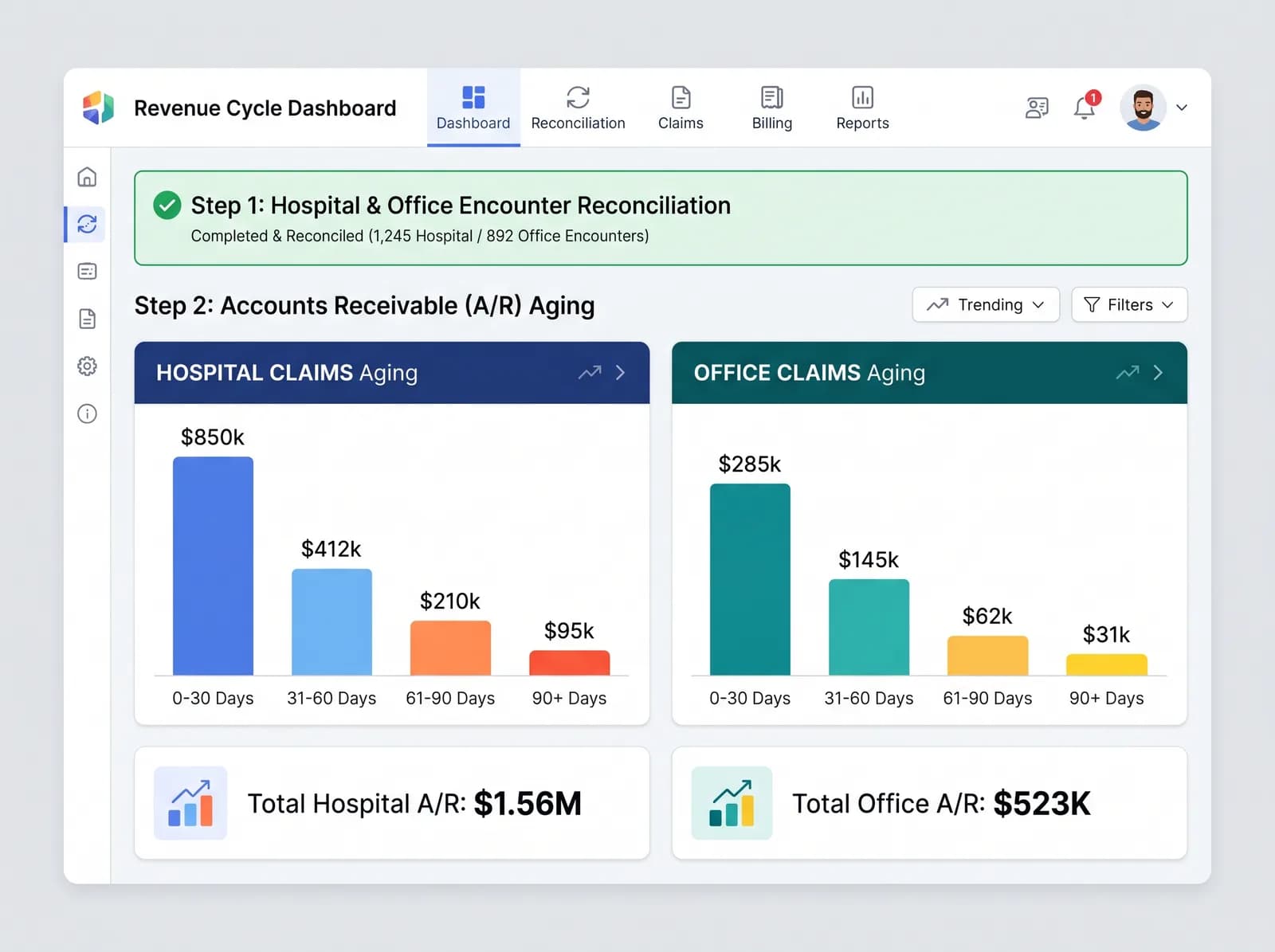 Revenue Cycle Management
Hospitalist Revenue Cycle Management: A Practice Manager's Guide
An orientation for independent practices whose providers round in hospitals: what hospitalist revenue cycle management covers, where charge capture and A/R visibility break down, and what to verify before adding rounding.
Read article