

High-Volume Visit Billing Errors: Where Small Front-End Mistakes Multiply
In busy urgent care and clinic settings, small front-end mistakes compound quickly. Learn where high-volume visit billing errors multiply and how to run a simple review routine.
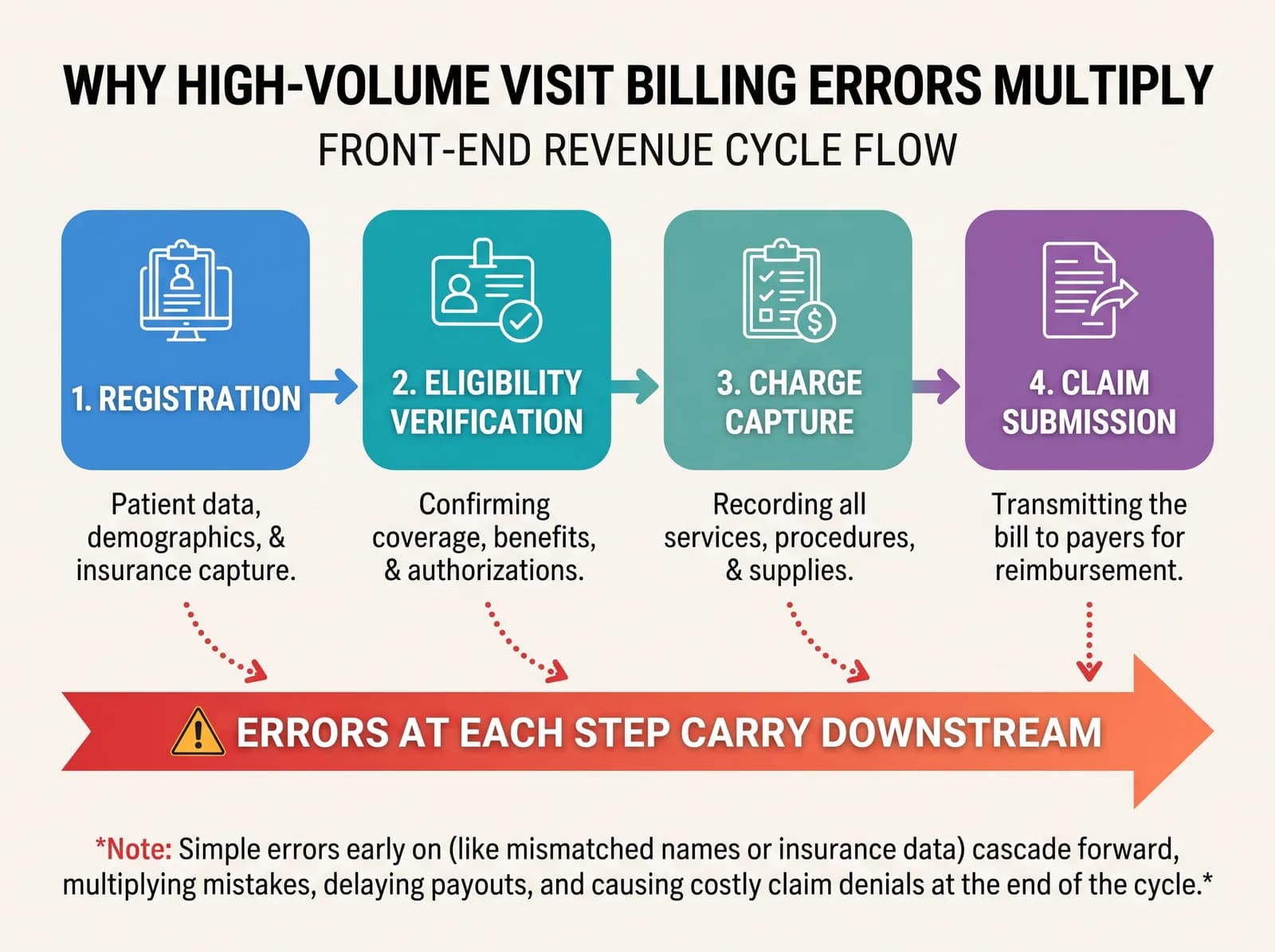
In a clinic that sees forty patients a day, a single transposed digit in a member ID is an inconvenience. In an urgent care site that sees two hundred, the same mistake is a pattern — and patterns are what drain a revenue cycle. The front desk, the eligibility check and the charge capture step don't fail dramatically at volume. They fail quietly, the same way, dozens of times a week, and each repetition adds more rework to the back end.
This guide is for the operations manager who owns registration, eligibility and charge capture across one or more busy sites and needs to decide which high-volume visit billing error to fix first.
Why high-volume visit billing errors multiply
A low-volume site can absorb front-end mistakes because there is slack in the day. Someone notices the missing insurance card scan, calls the patient back, and corrects the claim before it goes out. At volume, that slack disappears. The same small error recurs across more encounters than anyone can manually catch, and the correction work piles up faster than staff can clear it.
The compounding effect is structural, not a reflection of how hard your team works. Three things happen as visit counts rise:
- Errors repeat before they're caught. A registration field that's easy to skip gets skipped on many charts before anyone reviews the pattern.
- Rework competes with new work. Every corrected claim or re-verified eligibility check takes time from the next patient's registration, which produces more errors.
- Denials can arrive in batches. A single recurring front-end gap can generate a cluster of denials weeks later, when the original cause is harder to trace.
That last point matters most for prioritization. The error that hurts isn't always the one most visible at the desk — it's the one that repeats most often and takes the longest to unwind downstream. We're not attaching percentages to these effects here; the size of the impact depends on your payer mix, your systems and your staffing, and it should be measured in your own data rather than assumed from a benchmark.
Common high-volume visit billing errors to review
Most high-volume visit billing errors cluster in three process areas. Walk through each one and ask whether the failure is a people problem, a system problem or a process problem — the fix is different for each.
Registration and patient identity
Registration is where the most consequential errors are cheapest to prevent and most expensive to fix later. Look for:
- Insurance information captured verbally but not verified against the card image.
- Member IDs and group numbers entered without a second check on high-frequency payers.
- Duplicate patient records created when a returning patient isn't matched correctly.
- Coverage order (primary vs. secondary) recorded inconsistently for patients with more than one plan.
Duplicate records and coverage-order mistakes are especially costly at volume because they can corrupt eligibility checks and claims downstream. The specific data elements each payer requires should be confirmed against that payer's current guidance — requirements vary and change.
Eligibility and benefits verification
Eligibility is the first gate, and at volume it's the one most often run "just in time" or skipped when the waiting room is full. The recurring failure isn't that eligibility is never checked — it's that it's checked inconsistently. Some patients get a real-time verification; others get a verbal "yes, I have insurance" and nothing more. That inconsistency is what produces surprise denials. A structured eligibility and benefits verification process defines which visits require a check, what counts as a completed check, and what happens when a check can't be completed before the visit. Benefit details and coverage rules must always be verified against the payer's current response, not assumed from a prior visit.
Charge capture and coding handoff
In urgent care and clinic settings, the gap between what was done and what was documented is a frequent source of lost or delayed charges. Watch for:
- Services rendered but not captured on the encounter form before the chart closes.
- Procedure and diagnosis documentation that's too thin for the coder to support the charge.
- Charges entered after the claim window has narrowed, forcing rushed review.
Coding and documentation rules are outside what an operations manager should resolve alone — those decisions belong with certified coders and should be checked against current official coding guidance. Your job is to make sure the handoff is complete and timely, not to adjudicate codes.
A simple review routine for high-volume visit billing errors
You don't need a large audit to find your biggest front-end leak. You need a repeatable sample that you actually run. A workable routine:
- Pull a fixed sample weekly. Choose a set number of recent encounters — enough to be representative, small enough to finish — and review them against a short checklist covering registration accuracy, eligibility completion and charge capture.
- Log every defect by type, not by person. The goal is to find the recurring process gap, not to assign blame. A defect log sorted by category shows you which failure repeats most.
- Rank by repeat frequency and downstream cost. Fix the error that appears most often and takes the longest to correct first. One high-frequency registration defect usually beats three rare ones.
- Change one thing at a time. Adjust the process, then re-run the same sample next week to see whether the defect rate moves. If you change three things at once, you won't know what worked.
- Verify against payer guidance. Any rule you're enforcing — required fields, timely filing windows, coverage order — should be confirmed against the payer's current published guidance before you build a process around it.
If you'd rather see where the leakage concentrates before committing staff time, a revenue leak calculator can help frame the conversation, and our overview of claims management describes how front-end accuracy connects to submission and follow-up, and our denial management services address the downstream rework these errors create.
What to do next
You don't have to overhaul your front desk to make progress. Start with the weekly sample above and let your own defect log tell you which error to fix first. If it would help to have someone walk through your registration, eligibility and charge capture workflow with you, we're glad to do that — no pressure and no obligation. You can schedule a conversation or contact us with questions. Knight Medical Billing works inside the systems a practice already uses, so the discussion starts with your workflow rather than a preset package.
Sources and verification
No external sources or statistics were supplied for this article, and none are cited. The process observations above are general and should be validated against your own encounter data. Payer requirements, coding rules, coverage order and filing deadlines vary and change — confirm any specific rule against the payer's current official guidance or your compliance resources before building a process around it. This article is operational guidance, not legal, coding or clinical advice.
Where this work connects
Related articles.
 Revenue Cycle Management
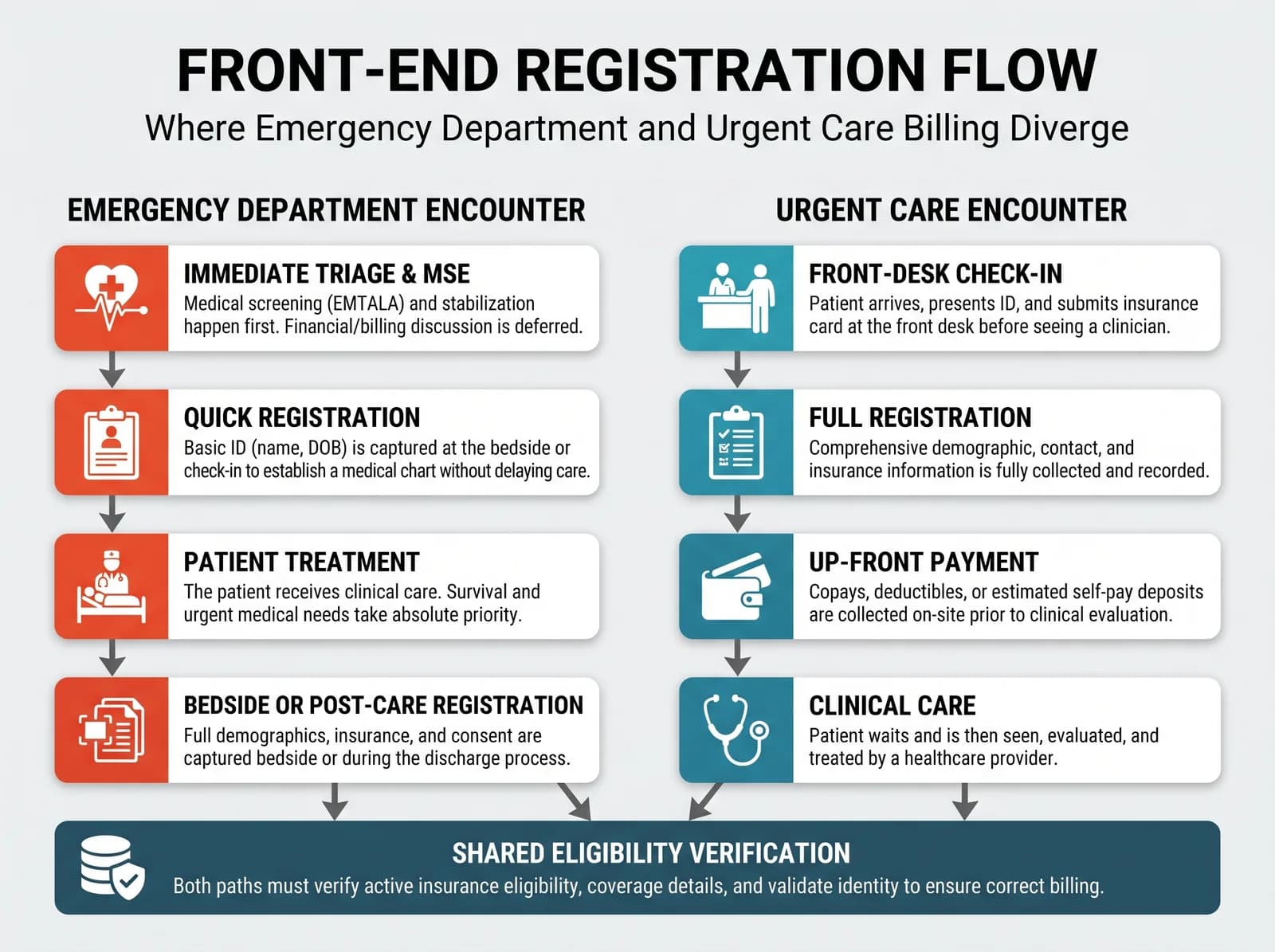
Emergency Department and Urgent Care Billing: What Differs When One Organization Runs Both
A practical guide for revenue cycle leads running an emergency department and urgent care sites together: where the workflows diverge, what risks they share, and the questions to answer before consolidating billing.
Read article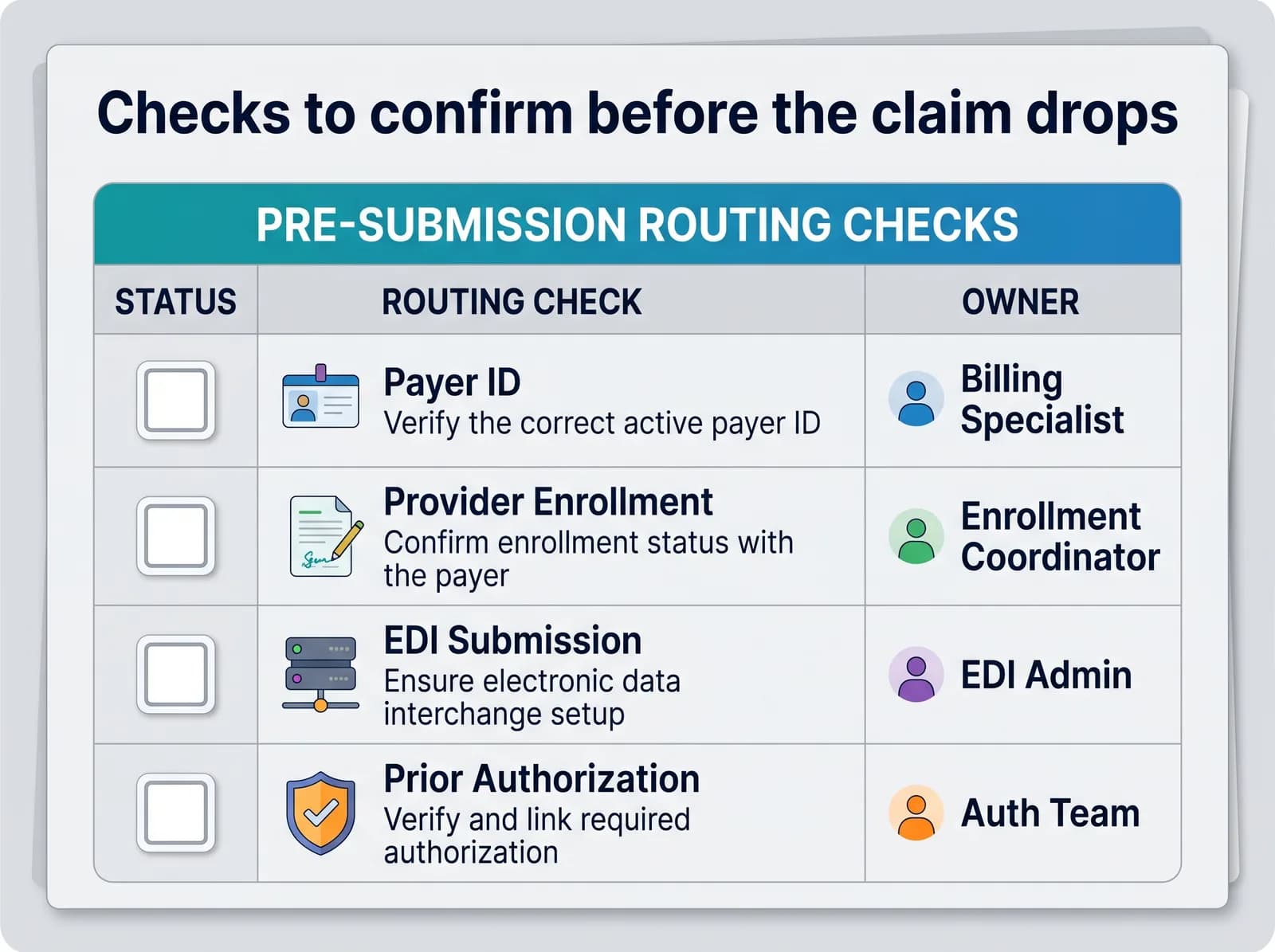 Revenue Cycle Management
Payer-Specific Claim Routing: What Independent Practices Should Verify
A practical pre-submission routine for independent practices: verify payer IDs, enrollment, EDI setup and payer-specific claim requirements before a claim leaves your system.
Read article Revenue Cycle Management
What Changes in Billing When an Independent Practice Adds a Second Location
A second location changes provider enrollment, charge capture, coding consistency and reporting. Here is what to put in place before the new site opens.
Read article